








Bracelets for women: here are the styles to choose from
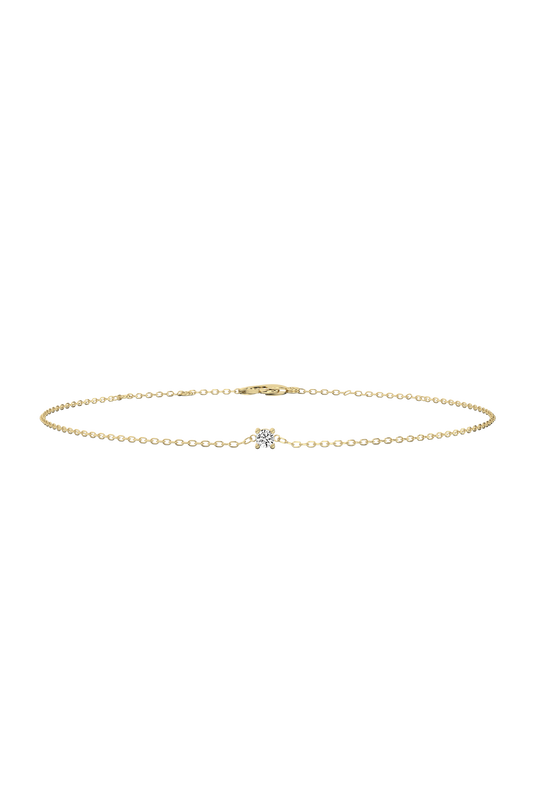
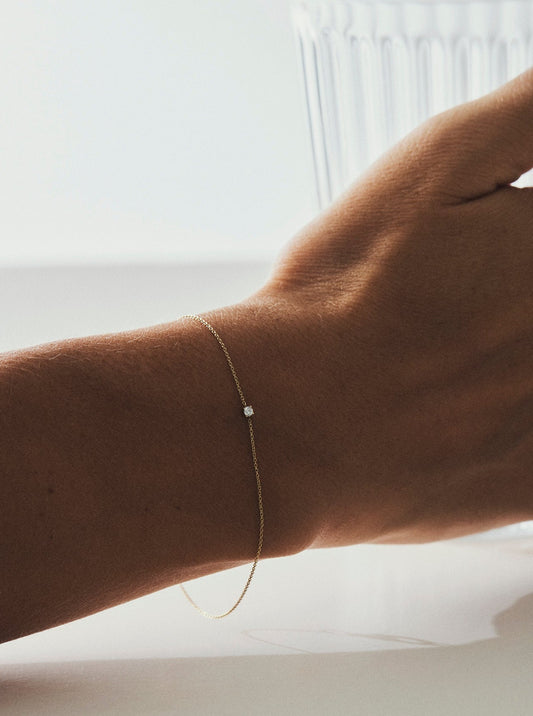
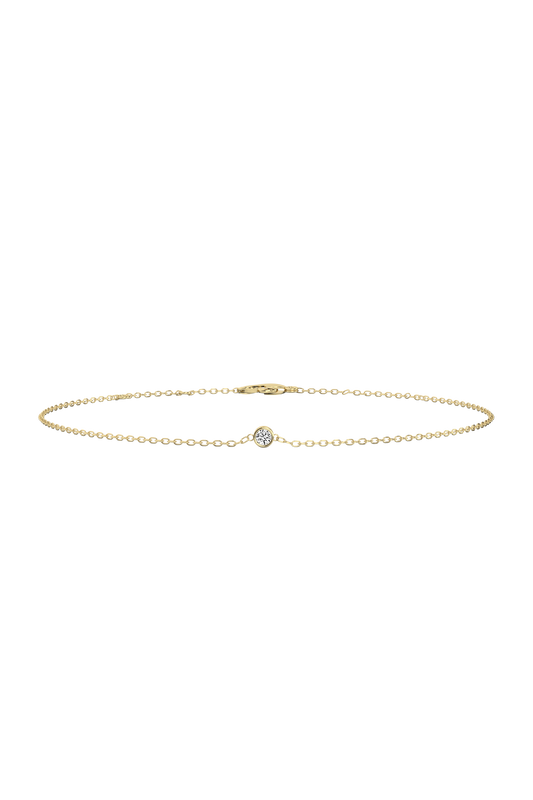
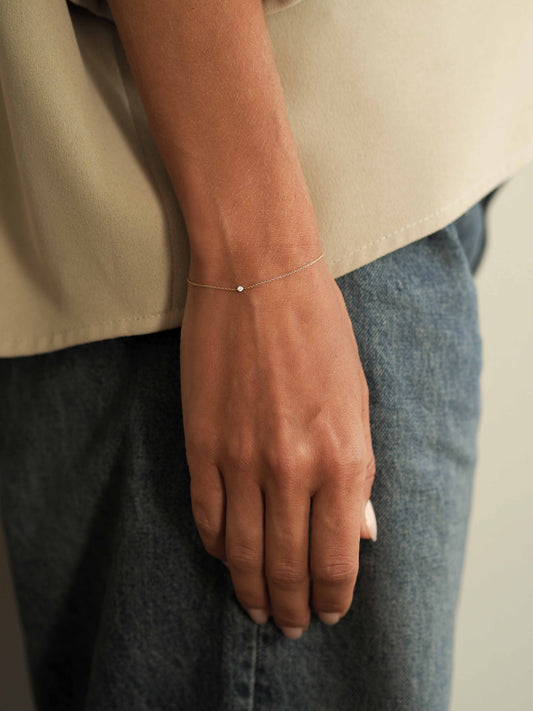
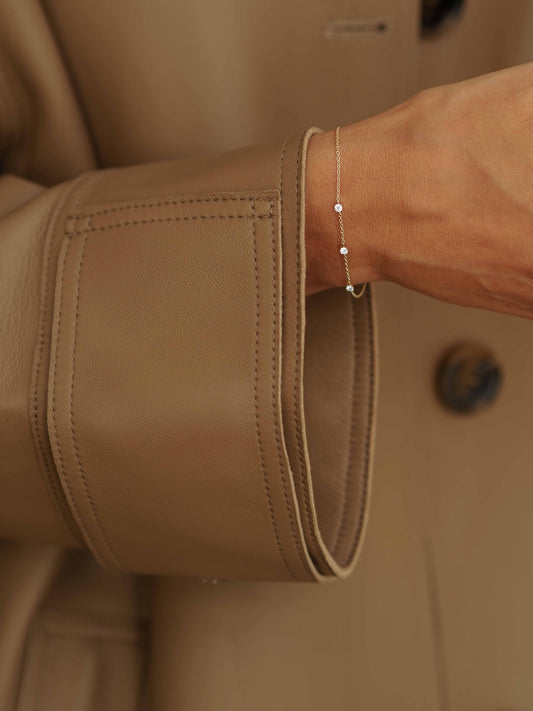
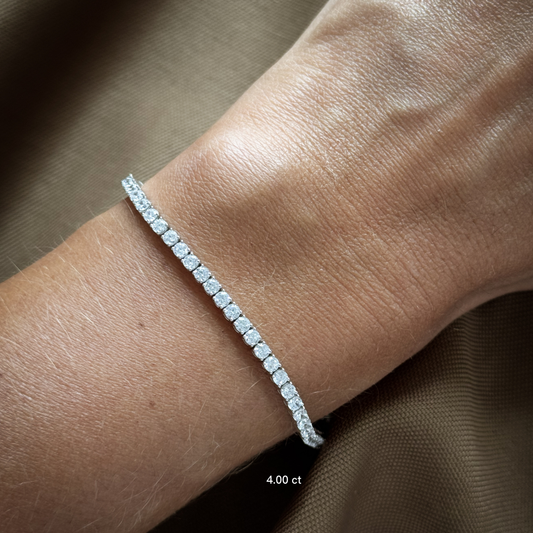
A bracelet for a woman falls in practice into a few distinct expressions, and the choice between them determines most of it. The fine, discreet line is chains and thin bands with a single small stone, like a Bezel Diamond Bracelet - 14K Yellow Gold (0.03 ct.), where the diamond sits in a bezel, that is a closed metal edge all the way around the stone. It is the type that is easily worn every day and readily stacked with others. At the other end lies the more striking tennis bracelet, where diamonds sit side by side all the way around the bracelet, from a single Tennis Diamond Bracelet - 14K Yellow Gold (2 ct.) up to considerably heavier variants. In between are rigid bangles, which hold their shape, and the classic chain bracelets. The entire selection is gathered under bracelets, from where it is easy to sort by the expression you are after.
Gold or white gold: what matches her other jewellery
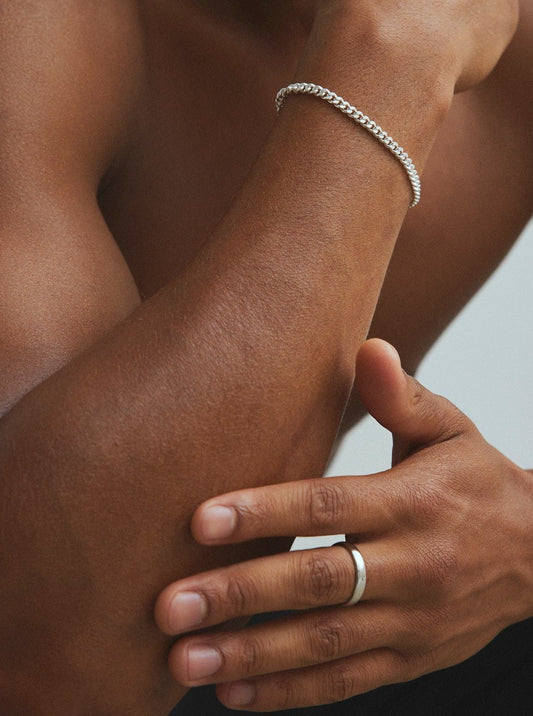
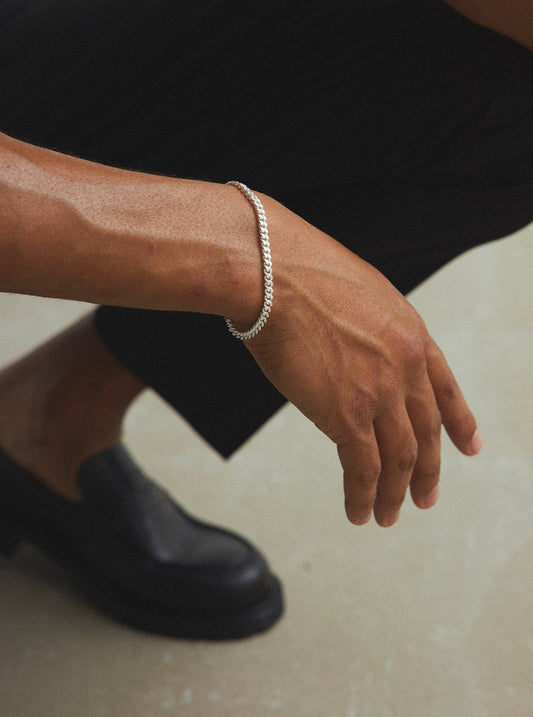
The choice of metal is mostly about what she already wears. If her rings and earrings are in yellow, a bracelet in gold best suits the collection of jewellery, while a cooler expression leans towards white gold. Several of the models come in both colours, so the same design can be chosen in the shade that matches the rest. If it is a more understated or lower-priced choice, bracelets in silver are also available, for example a Panzer Chain Bracelet Silver with a heavier, more masculine-inspired link. If she has sensitive skin or reacts to certain metals, 14 karat gold and white gold are generally a safer choice than gold-plated bracelets, where the outer layer can wear over time and let an underlying metal show through.
Natural or lab-grown diamonds: same stone, different origin
Several of the bracelets come in two versions with the same design: one with natural diamonds and one with lab-grown diamonds. A lab-grown diamond is grown in a laboratory and has the same chemical and optical properties as a natural diamond, so the difference between lab-grown and natural diamonds cannot be seen with the naked eye. This means you can choose a Bezel Lab-grown Diamond Bracelet - 14K Yellow Gold (0.03 ct.) over the corresponding natural version and typically get more carats for your money, or conversely place emphasis on a natural stone. If you want to see the entire selection of that type, they are gathered under Lab-Grown Diamond Bracelets. The background on how the stones are grown is explained in the article What Are Lab Grown Diamonds.
How do you measure the right bracelet size?
The most precise way is to measure around the wrist with a measuring tape, where the bracelet is to sit, that is just above the wrist bone towards the hand. If you do not have a soft measuring tape, a strip of paper or a string can be laid around the wrist and afterwards measured against a ruler. For the bracelet's actual length, you normally add a little to that number, so it has room to fall naturally rather than tighten: a chain bracelet sits nicely when it can slide a little on the wrist, while a fixed bangle is chosen so that it can get over the hand and still stay on. If you are in doubt between two measurements, it is usually best to go for the larger, because a bracelet that is too tight is neither comfortable nor pretty.
How loosely should a bracelet sit?
A chain bracelet should be able to move freely on the wrist without sliding over the hand. A good rule of thumb is that there should be room to fit a finger between the bracelet and the skin. If it sits too tight, it strains during movement and leaves marks; if it sits too loose, it risks catching on things or sliding off. A rigid bangle works differently, because it does not close around the wrist but must be able to be pulled over the hand. Here the fit is determined by the width of the hand over the knuckles rather than by the wrist's own circumference, and therefore a bangle by nature sits a little looser on the wrist itself than a chain bracelet does.
How to close a bracelet with a clasp, even when wearing it yourself
Most chain bracelets close with a spring ring or a lobster clasp, where a small spring-loaded arm is opened with the thumbnail and hooked onto a ring at the other end. The challenge is that you only have one free hand when the bracelet is already on the wrist you want to close. A simple trick helps: put the bracelet in place, hold the end with the ring firmly against the skin with the thumb or little finger of the same hand, and then bring the clasp to the ring with the free hand. A paperclip or a special little bracelet helper can hold one end in place while you work. A more detailed walkthrough can be found in How To Close A Bracelet With A Clasp.
Which hand is the bracelet worn on?
There is no fixed rule for which hand a bracelet should sit on. Many choose the wrist they use least, that is the non-dominant hand, because the bracelet then interferes less in daily life and is exposed to fewer knocks and wear. If you are right-handed, that usually means the left wrist. If there is already a watch on one wrist, the bracelet is often placed on the opposite one, or it is deliberately worn together with the watch for a layered look. In the end it is a matter of what feels comfortable and looks right for the person wearing it.
A personal bracelet: a letter as a gift
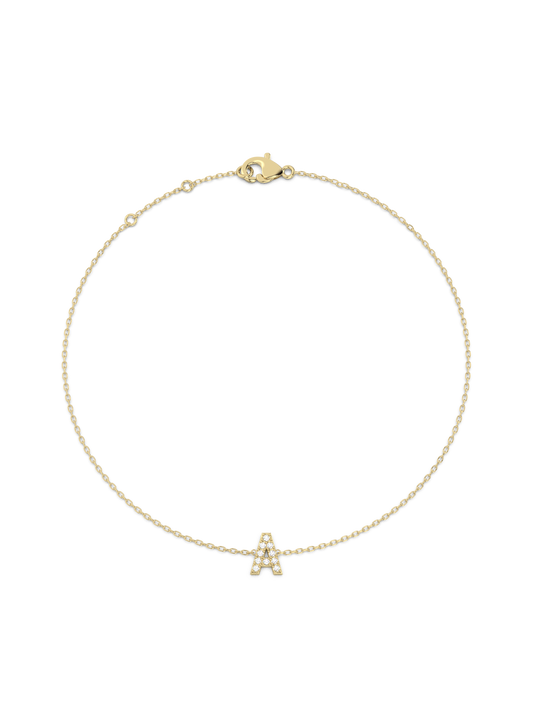
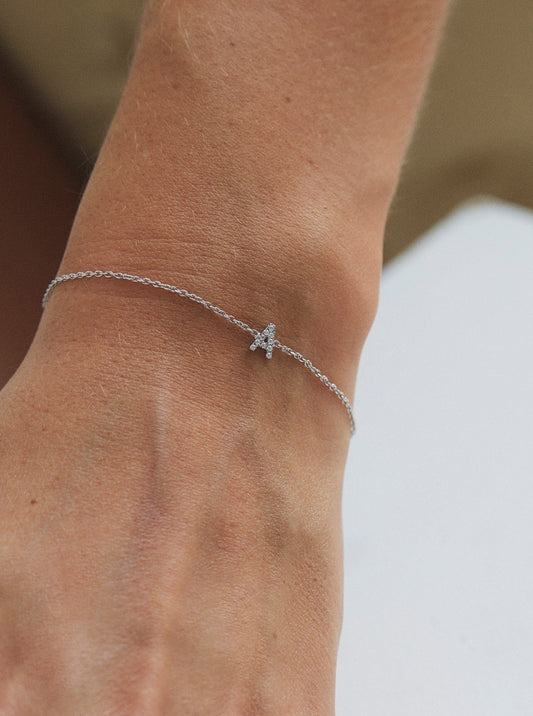
If the bracelet is to be a gift with a personal touch, it comes with a single letter set with a diamond, for example the initial of the recipient or of a child. A Letter Diamond Bracelet | A-Z | - 14K White Gold (0.04 ct.) is available in the entire alphabet, and the same design also comes in a lab-grown version. That makes it a gift that points to a specific person rather than a neutral piece of jewellery, and the letter combines nicely with a more simple chain bracelet on the same wrist. Several letter pieces are gathered under letters.
Stacking: several bracelets on the same wrist
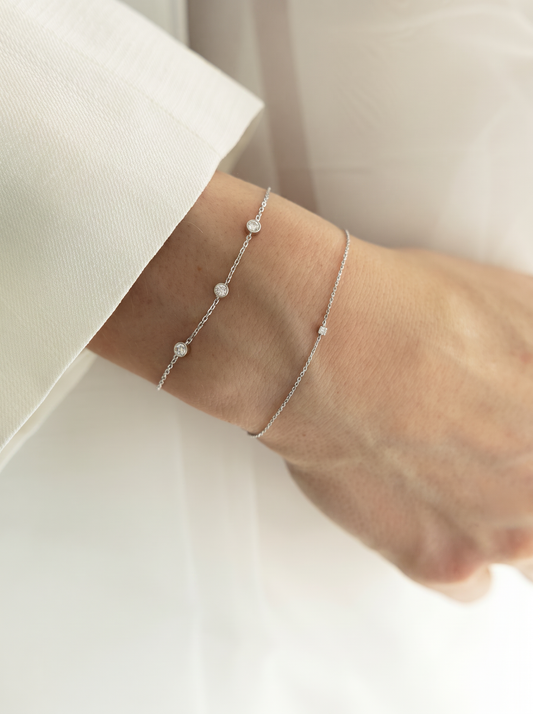
Part of the point of the fine, thin bracelets is that they can be worn several at a time. A discreet bezel bracelet, a rigid bangle and a letter can sit side by side, where the difference in thickness and structure gives depth rather than competing. If you want to keep it calm, you stick to the same metal colour; if you want more play, yellow and white are deliberately mixed. A bangle like a Bezel Diamond Bangle - 14K Yellow Gold (0.29 ct.) works well as the firm anchor in a stack, because it holds its shape while the lighter chain bracelets fall softly around it. For the woman who only wants one bracelet, a single tennis bracelet or a fine bezel band is enough in itself.