









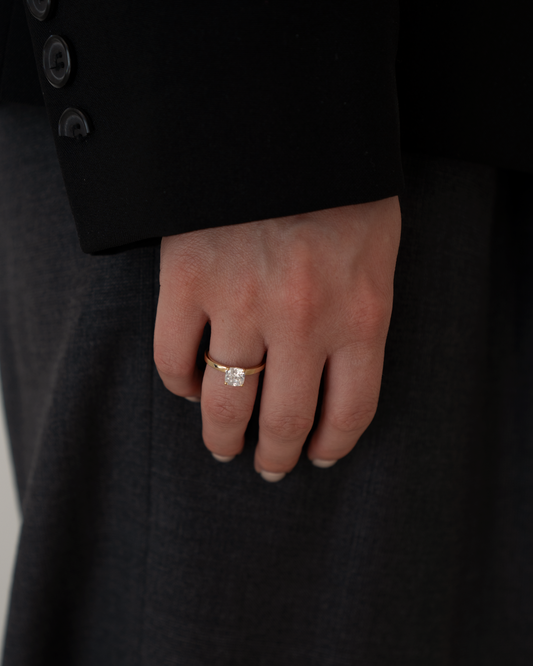

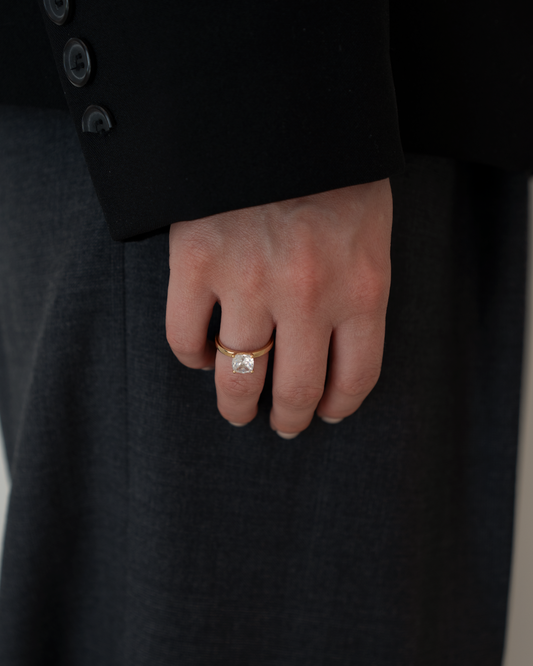










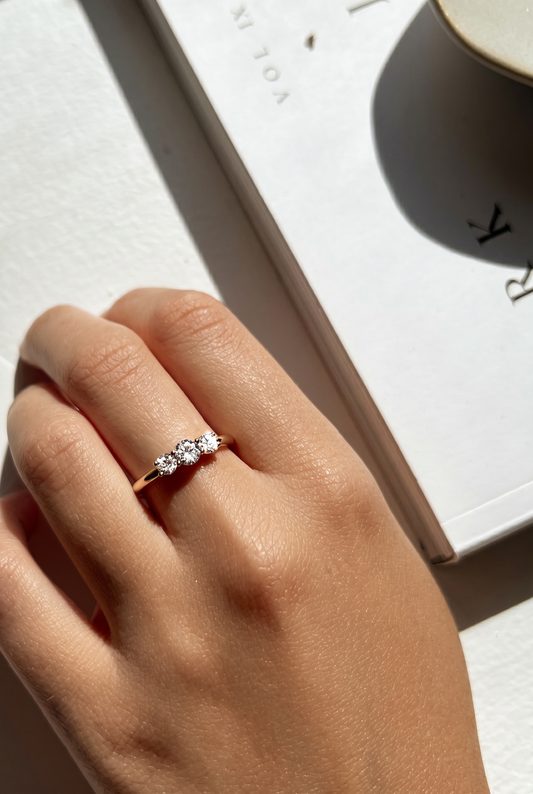


The same stone as a natural diamond
A lab-grown diamond is chemically, physically and optically identical to a natural diamond. It is pure crystallised carbon and rates 10 on the Mohs hardness scale, exactly like a natural diamond. The only difference is where it was formed. A lab-grown diamond grows in a laboratory under the same conditions of pressure and heat that form a diamond in nature, while a natural diamond forms deep within the earth over a long period of time. To the naked eye the two look the same, and they are cut, graded and set in the same way.
In practice, this means that the rings in this collection have the function and the brilliance you expect from a diamond ring, even though the stone is lab-grown. If you want to read more about how the stone is made and assessed, the article what are lab-grown diamonds goes into depth on it.
Solitaire, eternity, pavé and trilogy
The rings here are built around a few basic shapes, and the shape determines how much the stone fills the hand.
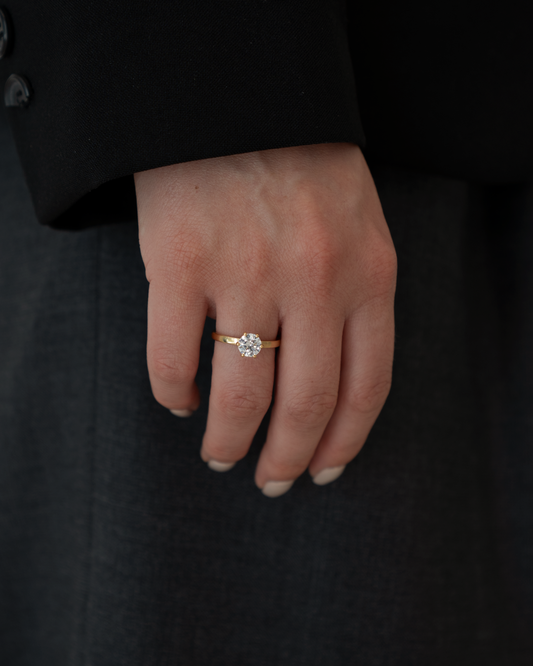
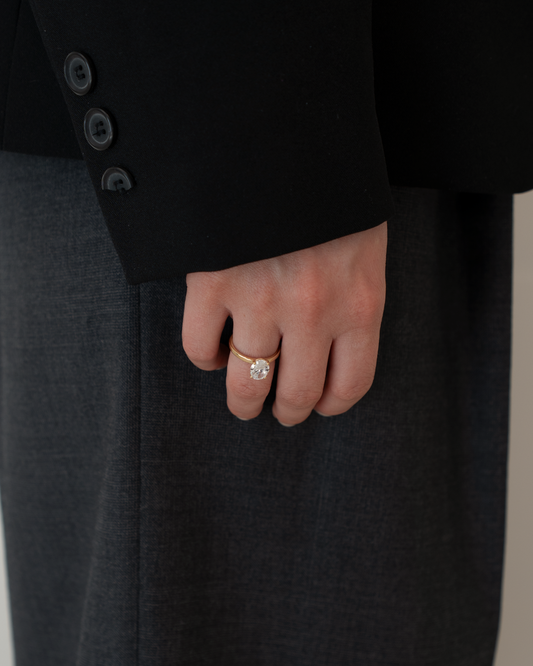
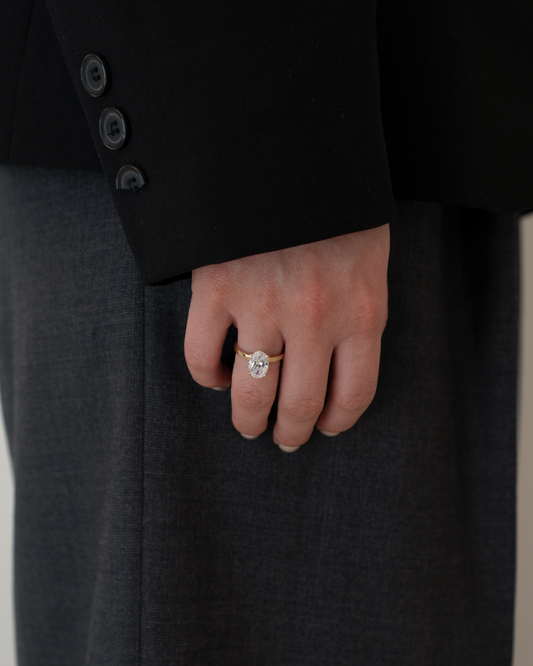
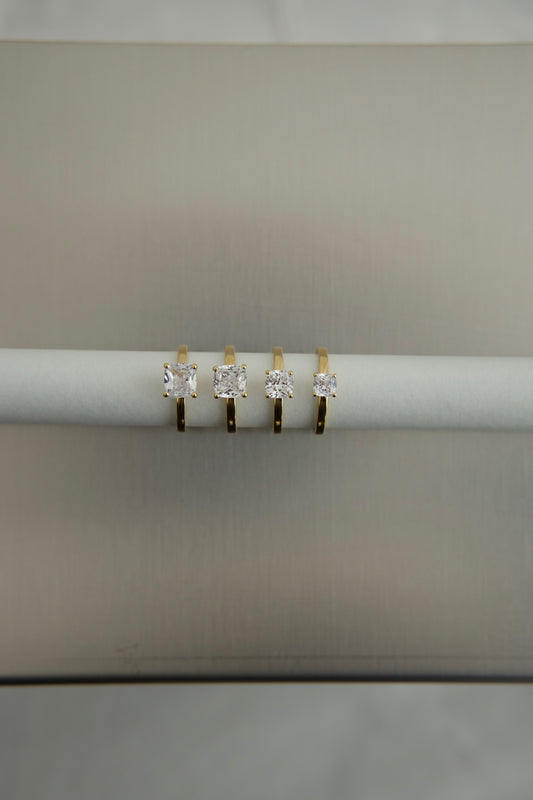
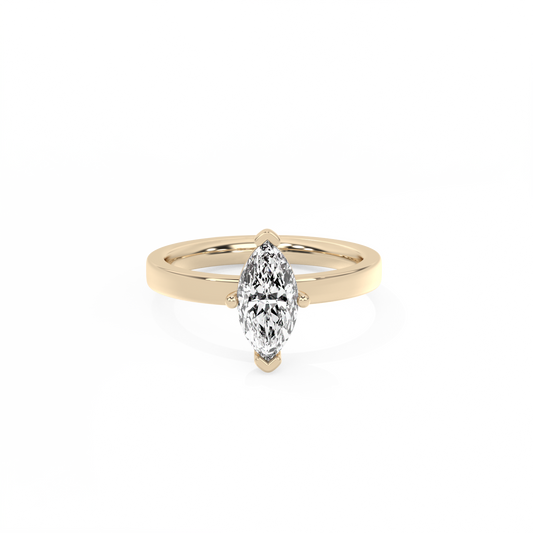
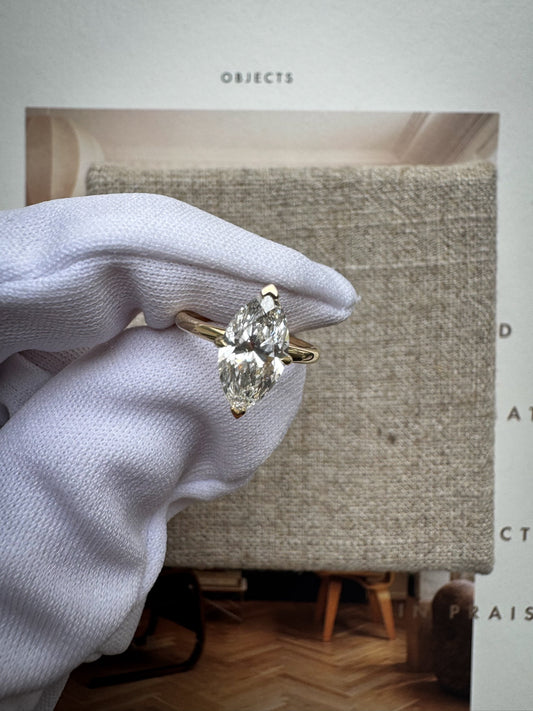
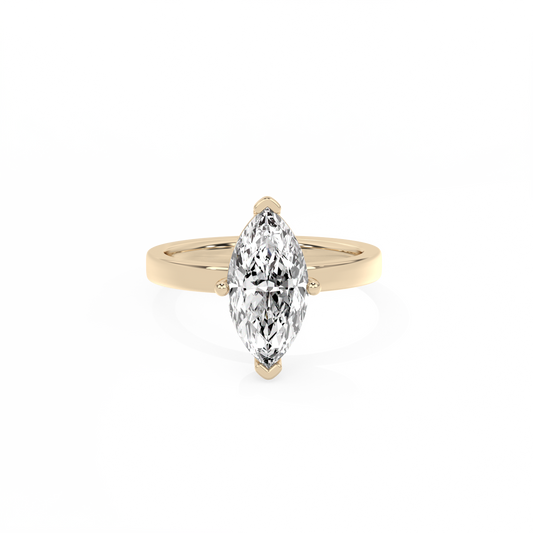
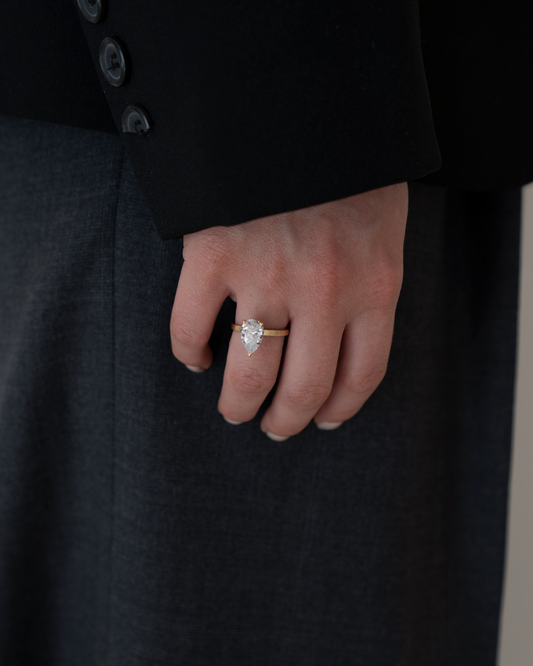
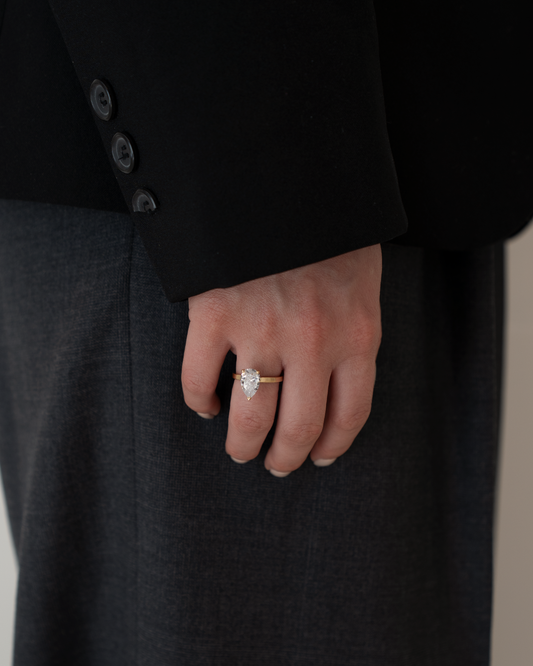
A solitaire ring has one centre stone that sits on its own. It comes in several stone shapes, so the look changes with the cut. You can choose a round solitaire with a round, brilliant-cut stone, an oval solitaire, a cushion solitaire with soft, squared corners, a pointed marquise solitaire or a teardrop-shaped pear solitaire.
An eternity ring has small diamonds all the way around the band, so it sparkles from every angle. A half eternity ring has diamonds halfway around, typically on the upper part that faces upward. If you are looking for a ring with even brilliance without a single large stone, eternity rings are the place to start.
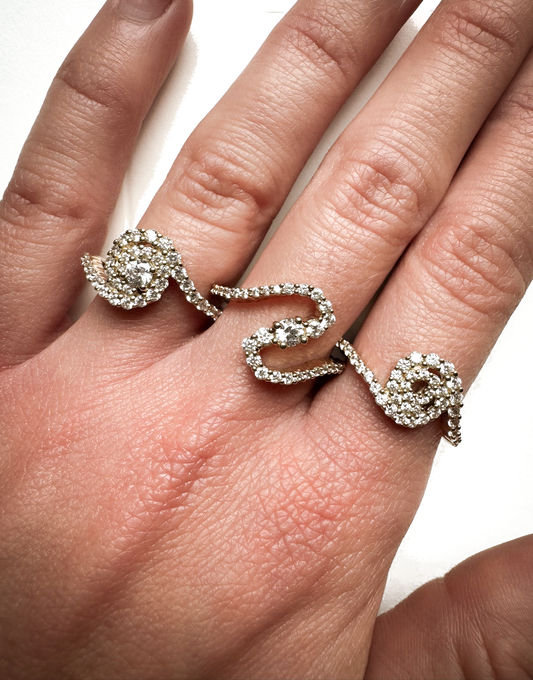
A pavé ring has many small diamonds set closely into the surface. This is seen in a round pavé, where the entire band is covered with small stones, and in a pear pavé, where the teardrop-shaped stone sits surrounded by pavé.
A trilogy ring has three stones in a row. Here you can choose a petite trilogy with three smaller stones or a round trilogy with noticeably more carat.
14K gold or 14K white gold
Most designs come in both 14K gold and 14K white gold, so the choice of metal is about what look you want and what else you wear. 14K gold gives a warm, golden tone that highlights the stone with contrast. 14K white gold gives a cooler, silver-like surface that lets the diamond blend more into the metal.
Several of the rings appear in both metals. A snail solitaire with its twisted band comes in both gold and white gold, as do the organic wave and the striking bold pear. If you already wear a lot of gold or white gold in your other jewellery, it is easiest to choose that metal so the ring fits in with the rest. If you want to see the two tones side by side, you can dive into both gold and white gold.
From 0.02 to 2 carat
Carat indicates the diamond's weight, where 1 carat corresponds to 0.2 grams, and it is the single factor that most clearly determines how large the stone appears on the hand. The rings in the collection span widely. A discreet tiny solitaire bezel with a single stone set within a rim is 0.02 ct. and gives a fine, almost imperceptible glint. At the other end sit large solitaire rings of up to 2 ct. and an oval wide band of 1.50 ct. on a broad band.
If the ring is to be worn every day, a smaller centre stone or a half eternity ring can be easier to live with, because it sits closer to the hand and does not catch on clothing. If it is to mark a special occasion, a larger centre stone draws more attention. The bezel setting, where the metal surrounds the stone all the way around, is worth looking at if you want a ring that withstands daily wear. They are gathered under bezel setting.
How to find the right size
The rings in the collection typically come in sizes 48 to 60, and the size number corresponds to the ring's inner circumference in millimetres. A ring in size 54 thus has an inner diameter of 17.2 millimetres, and a size 52 corresponds to 16.6 millimetres.
A ring should be able to slide over the knuckle with a little resistance and sit without being too tight. If you measure a ring you already have, measure the inner diameter and use that as a starting point.
A few designs have a different size range. Some of the bezel-set rings, including a medium solitaire bezel, come all the way up to size 68. If you are unsure how to find your measurement, the article how to measure ring size walks through the procedure step by step.
Engagement ring, a marker or an everyday ring
A solitaire with one distinct centre stone is the classic engagement ring, and the large round, oval, cushion, marquise and pear-shaped solitaire rings in the collection are perfect for exactly that. If you want to read about what such a ring is and how it differs from the wedding ring, what is a solitaire ring explains it further.
An eternity ring or half eternity ring is often used as a wedding ring or as a ring given on a special occasion, because it sparkles without having a single dominant stone. A tiny half eternity sits close and fine and lets itself be stacked together with other rings.
For everyday wear, the smaller, bezel-set rings are practical, because the stone sits protected. If the ring is to be a gift, you can narrow the selection by price under gifts over 4500 DKK or see what can be shipped straight away under ready to ship.