





How to navigate the selection
A diamond bracelet covers very different pieces of jewellery, from a classic tennis bracelet with an unbroken row of diamonds to a slender bracelet with a single stone in a setting. Whether you are choosing a gift for an anniversary, a birthday or an engagement, the choice depends on how much presence the bracelet should have on the wrist, which metal it should be, and how many carats you want. This guide goes through the models Longvé carries, so you can see the difference between them, choose the right size, and decide whether the bracelet should have lab-grown or natural diamonds.
Tennis bracelet with an unbroken row of diamonds
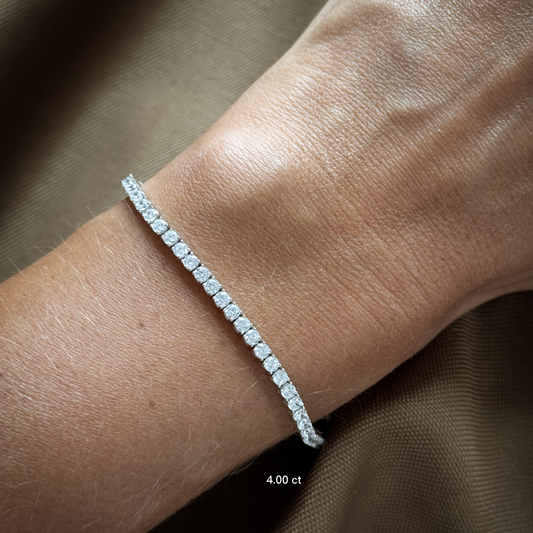
The tennis bracelet is the model most people think of when it comes to a diamond bracelet. It consists of a continuous row of identical, brilliant-cut diamonds all the way around the wrist, with no visible gaps. The result is a fine, flexible line that follows the shape of the wrist and catches the light from every angle.
At Longvé, the tennis bracelet ranges from a fine look to a bold statement piece. If you want the slender line, the model comes in 14K gold with both a tennis diamond bracelet (1.5 ct.) and a tennis diamond bracelet (2 ct.). If you want something heavier, the same design is available with more carats, all the way up to a tennis diamond bracelet (6 ct.), where each stone is larger and the line wider. In 14K white gold, the row is available among other things as a tennis diamond bracelet (3 ct.). The entire series can also be chosen with lab-grown diamonds. If you want to see all the variants gathered in one place, you will find them in the tennis bracelets collection.
Bezel setting or prong setting on the row
The diamonds in a tennis bracelet can sit in two ways, and the difference is both visual and practical. In a prong setting, each stone is held by small metal prongs that lift the diamond clear of the rail, so as much light as possible reaches it from the sides. This gives the most open, sparkling line.
In a bezel setting, each diamond is enclosed by a thin rim of metal all the way around. The rim protects the edges of the stone and gives a rounder, more subdued silhouette that does not catch on clothing or hair. If you want the enclosed version, a bezel tennis diamond bracelet (1 ct.) is available in 14K gold and likewise in 14K white gold. All of the setting variants are gathered in the bezel tennis necklace collection together with the rest of the bezel design. A bezel bracelet is often the more robust choice for everyday wear, while the prong setting has the most visual presence.
Bangles and bracelets with a single diamond
Not all diamond bracelets are a full row of stones. If you want something more subdued or a piece that is easier to wear every day, there are several alternatives.
A bangle is a rigid, closed bracelet that holds its round shape rather than following the wrist loosely. At Longvé, it is available with a single enclosed stone as a bezel diamond bangle (0.29 ct.), and with closely set small diamonds along the rail as a pavé diamond bangle (0.90 ct.). Both are also available in 14K white gold and with lab-grown diamonds.
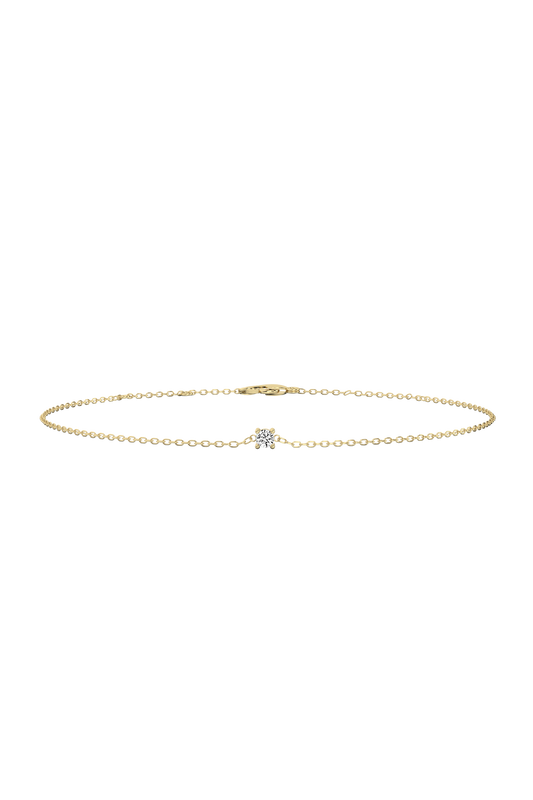
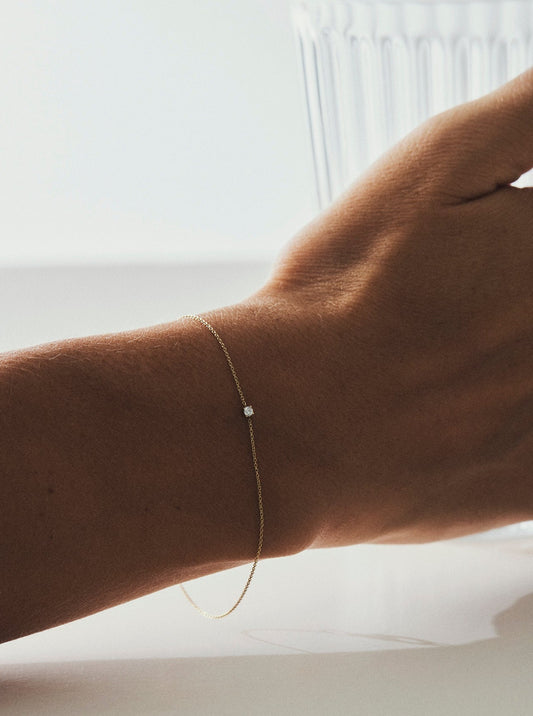
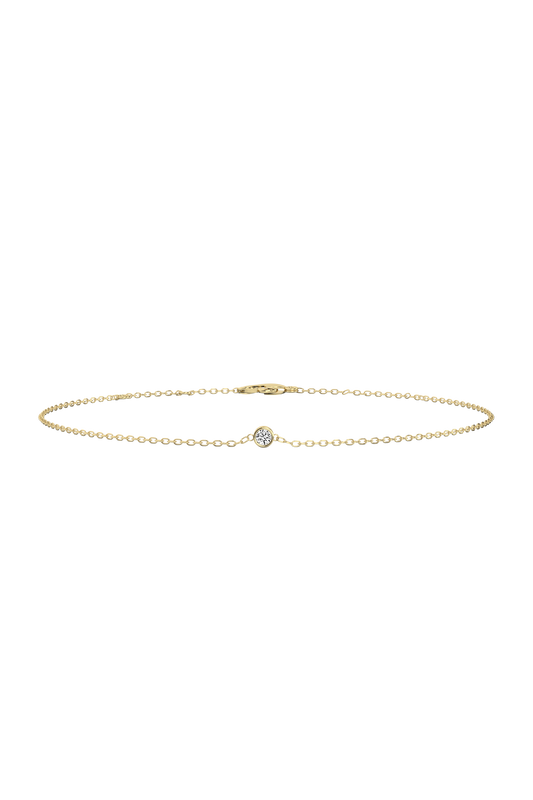
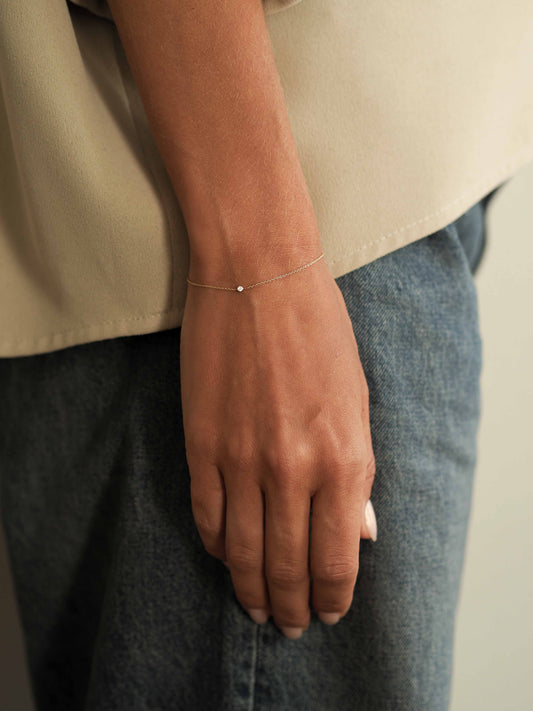
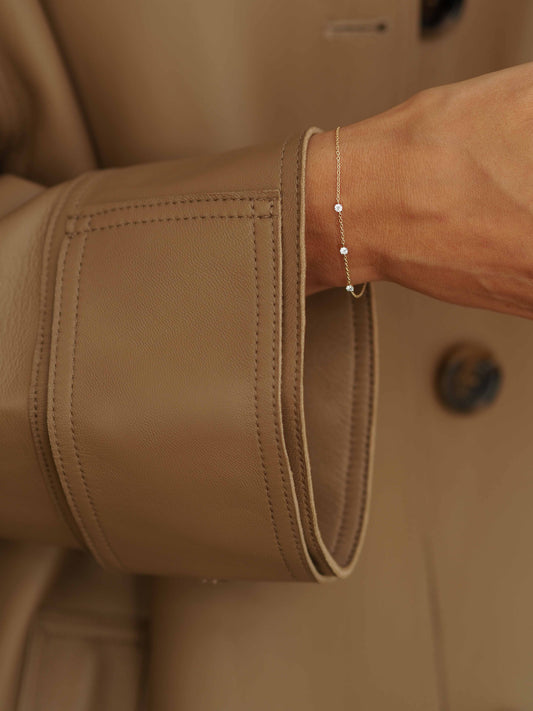
If you want a slender chain bracelet with a single diamond, it is available both in an enclosed version as a bezel diamond bracelet (0.03 ct.) and in a prong-set one as a prong diamond bracelet (0.03 ct.). If you want a larger centre stone, the same design is available with more carats, among other things a bezel diamond bracelet (0.18 ct.). Several of these fine models are gathered in the thin bracelets collection.
Bracelet with a letter in diamonds
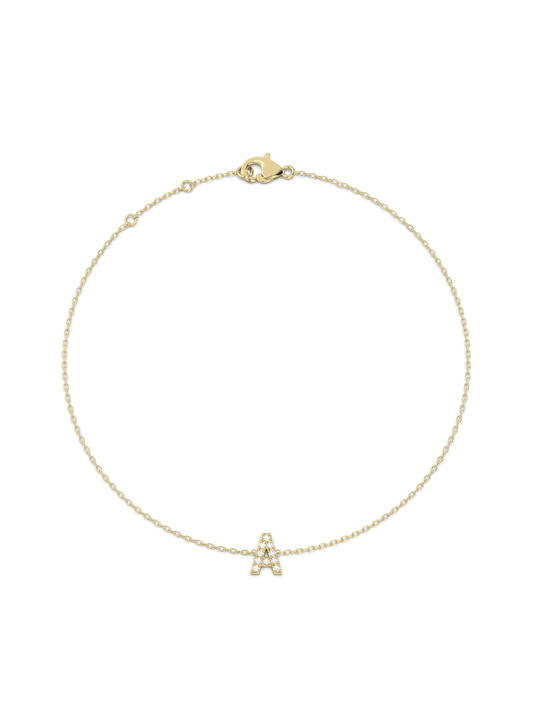
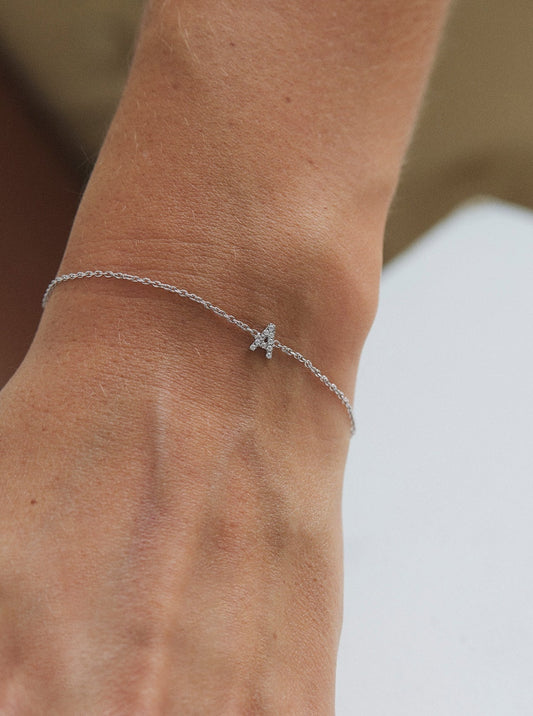
If the bracelet should be personal, there is a model with a letter set in small diamonds. It is available from A to Z, so you can choose the initial of the person the bracelet is for. A letter diamond bracelet (0.04 ct.) is available in 14K gold, and the same design is available in 14K white gold as well as with lab-grown diamonds. It is an obvious choice when the bracelet should be a named gift rather than a neutral piece of jewellery. The entire letter series, which also includes pendants and necklaces, can be found under letters.
Gold or white gold for a diamond bracelet
Longvé's diamond bracelets are available in 14K gold and 14K white gold, and the choice is mostly about look and about what the recipient otherwise wears. 14K gold gives a warm tone that highlights the diamonds against a golden background and suits skin tones with warm undertones well. 14K white gold has a cool, silvery-white surface that lets the diamonds blend more with the metal and gives a more discreet line.
If the recipient already wears gold or white gold every day, the easiest thing is to choose the same metal, so the bracelet can be worn together with the rest. If you want to read more about what distinguishes the two metals, it is covered in the article what is white gold. You will find both metals in the collections gold and white gold.
Lab-grown or natural diamonds
Most of Longvé's bracelets are available with both lab-grown and natural diamonds in the same design. A lab-grown diamond has exactly the same chemical composition and crystal structure as a natural diamond and is just as hard, namely 10 on the Mohs scale, which is the highest value. It sparkles the same way, and the difference cannot be seen with the naked eye.
The difference lies in how the stone came to be. A natural diamond is formed deep in the earth over a long time, while a lab-grown diamond is grown under controlled conditions that mimic the same circumstances. For the same carat and appearance, lab-grown is often what gives the most stone for the budget, which is worth knowing if you want to go up in carats without compromising on the design. If you want to understand the process better, the article what are lab-grown diamonds covers it in more detail. Both types are gathered in the collections diamonds and lab-grown diamonds.
How to find the right size
A diamond bracelet should sit so it can move a little on the wrist without sliding over the hand. Most of Longvé's bracelets and bangles are available in sizes 15 to 19 centimetres, so there are lengths for both slender and heavier wrists.
Measure the circumference of the wrist just below the wrist bone with a tape measure, or wrap a piece of string around it and measure it on a ruler afterwards. Add a couple of centimetres to the measured circumference, so the bracelet falls loosely and does not feel tight. A tennis bracelet may have a bit of room to move, so it can roll freely, while a rigid bangle must be able to go over the hand and at the same time not be so large that it slides off. If you are in doubt between two lengths on a loose bracelet, the larger one is usually the most comfortable choice.
- Measure the circumference just below the wrist bone.
- Add a couple of centimetres for room to move.
- Choose the larger of two lengths if you are in doubt about a loose bracelet.
Several of the bracelets can be found gathered under bracelets and diamond earrings can be added if the gift should match across pieces of jewellery.
How to keep the bracelet sparkling
Diamonds lose their shine because skin oil, soap and cream settle as a film on the surface of the stone and dim the light. A bracelet that is worn often therefore becomes duller over time, even though the diamond itself cannot be scratched in daily use.
Clean the bracelet in lukewarm water with a drop of mild dish soap, and gently brush around the settings with a soft toothbrush, so you reach in under the stones, where the dirt collects. Rinse afterwards, and pat dry with a soft cloth. Take the bracelet off before you bathe, do sport or use hand cream, so no film builds up. Store it separately from other jewellery, so the metal does not get scratched. You will find a more thorough guide in the article how to clean jewellery.