Why is it called a tennis bracelet?
-

-
A tennis bracelet is not called that because you play tennis while wearing it. The name comes from a single incident on a tennis court in the 1980s, where the American tennis player Chris Evert lost her diamond bracelet in the middle of a match at the US Open. The clasp sprang open, the bracelet fell off, and the match was paused while she searched for it. The story was told again and again, and the term "tennis bracelet" stuck to the type of jewellery she was wearing: a narrow, flexible row of matching diamonds all the way around the wrist.
Before that incident, the same piece of jewellery was typically called a diamond bracelet or a diamond line. After Chris Evert's match, the tennis name gradually took over in everyday speech, and today "tennis bracelet" is the common term for exactly this style.
What actually happened on the tennis court?
The details vary a little from one telling to the next. Some sources place the incident in the late 1970s, others at the US Open in 1987, and there is also disagreement about whether the bracelet actually came off or whether the clasp simply gave way. What everyone agrees on is the core: Chris Evert was wearing a narrow diamond bracelet during a match, it broke, and she asked for play to be stopped so she could find it.
The interesting thing is not the exact year, but that a sporting moment gave a piece of jewellery its name. The combination of top-level sport and diamonds was unusual back then, and that is precisely why the story was remembered.
What characterises a tennis bracelet?
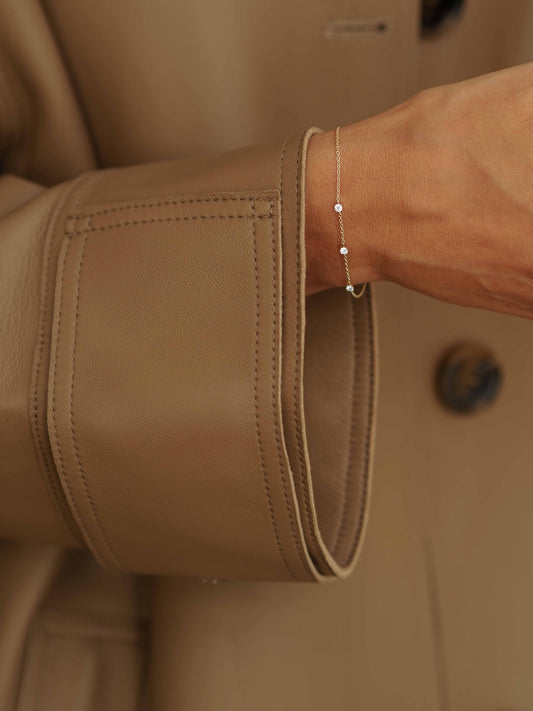
A tennis bracelet is a row of matching, cut diamonds set all the way around the bracelet. The stones sit close together and in the same size, so the bracelet appears as an unbroken line of light around the wrist. The construction is jointed, so the bracelet is soft and follows the shape of the wrist instead of sitting stiffly.
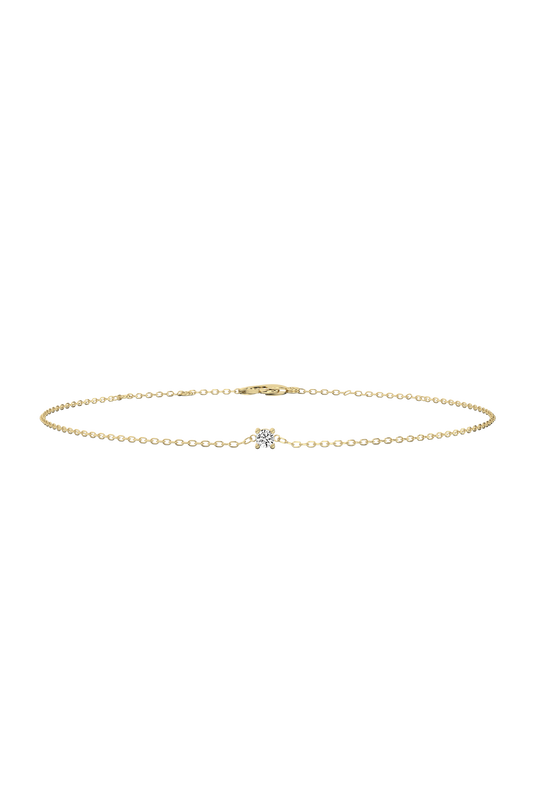
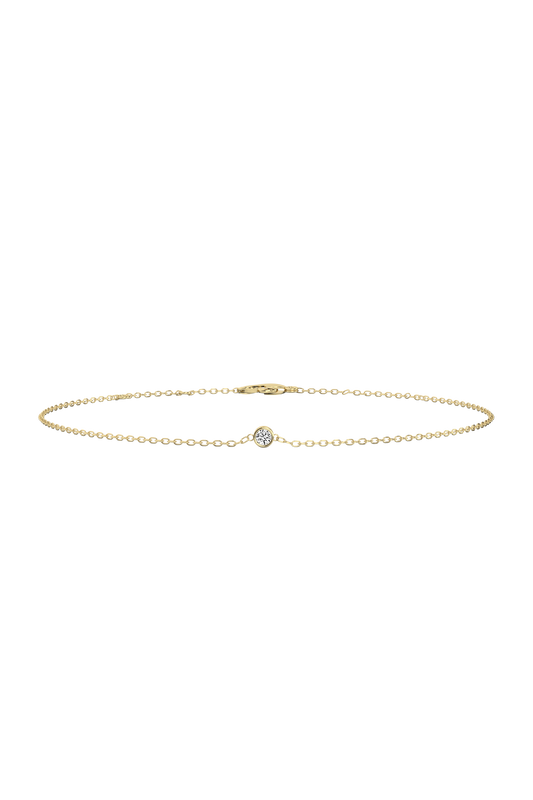
The classic version uses round, brilliant-cut diamonds, because that cut reflects the most light. The setting itself can vary: at Longvé, tennis bracelets are available both with a prong setting, where small metal prongs hold each stone, and in a bezel variant, where a rim of metal surrounds each diamond all the way around. A tennis bracelet with a prong setting gives an open look, where as much of the stone as possible is visible, while a bezel tennis bracelet has a more rounded and robust edge. The entire selection is gathered under tennis bracelets.
How many carats are there in a tennis bracelet?
The total diamond weight depends on how large the individual stones are and how many sit in the row. A tennis bracelet is therefore often described by its total weight in carats, where 1 carat equals 0.2 grams. The higher the total carat, the wider and more striking the row of stones appears.
At Longvé, tennis bracelets are available in a wide range of total weights, so you can choose anything from a fine, discreet line to a wider bracelet with larger stones. A lower carat figure gives a lighter, everyday-friendly piece of jewellery, while a higher carat figure creates a more pronounced effect.
Metal and stones in a tennis bracelet
Tennis bracelets are typically made in gold, and at Longvé the supporting metals are 14K gold and 14K white gold. The choice between the two is mostly about which shade you prefer, and how the bracelet should play together with the rest of your jewellery choices.
The diamonds themselves are available both as lab-grown diamonds and natural diamonds, often in exactly the same design. A lab-grown diamond is grown in a laboratory, but is chemically and physically the same stone as a natural diamond and has the same hardness of 10 on the Mohs scale. To the naked eye there is no visible difference between lab-grown and natural diamonds, and both appear in the same jointed bracelet design. If you specifically want the grown stones, they are gathered under lab-grown diamonds bracelets.
Does the tennis design exist in other jewellery?
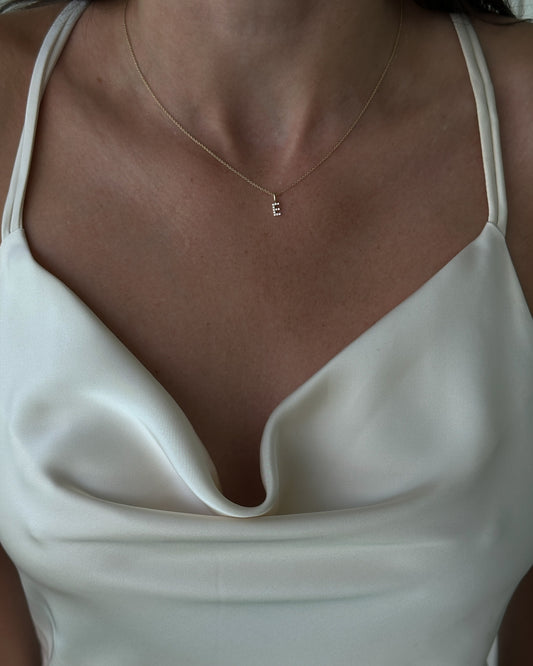
The same idea - a close, unbroken row of matching diamonds in a setting - is not used only for bracelets. The design also recurs in necklaces, where the stones run along the chain in the same way as along the bracelet. A bezel tennis necklace follows exactly the same principle around the neck as around the wrist.
If you want to gather several pieces of jewellery with the recurring diamond look, you can take a look at necklaces and bracelets, where the tennis style appears side by side with other designs. The name was born on a tennis court, but the style itself, with its fine, continuous diamond line, has long since become a fixed element in classic jewellery.