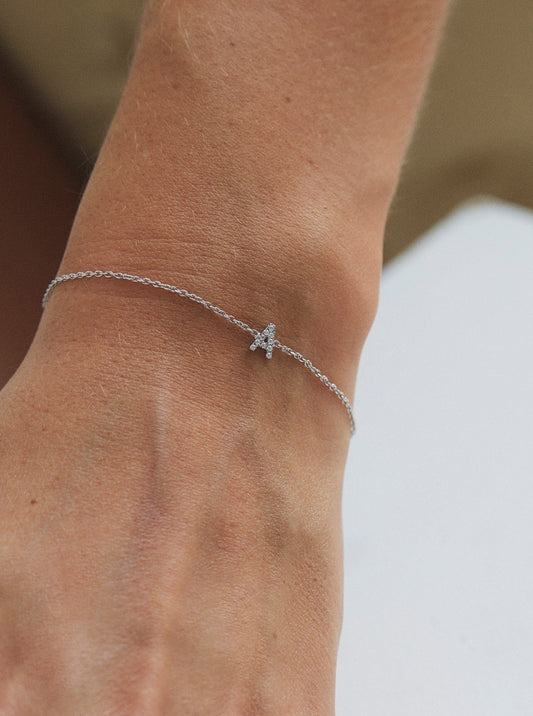
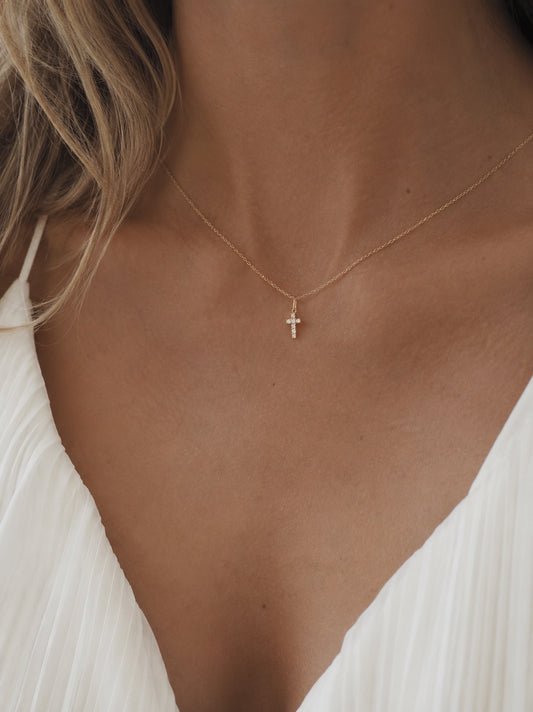
Which arm do you wear a bracelet on?
-

-
There is no rule for which arm a bracelet should sit on. It is entirely up to you, and both arms are equally correct. In practice, however, most people choose the left arm, and there is a practical reason for this: the vast majority of people are right-handed, and a bracelet sits more comfortably and is exposed to less wear on the hand you use least in daily life.
If you are left-handed, the same applies in reverse. Then it is often the right arm that is the most obvious choice, because it is the least active. The idea behind it is the same regardless: the bracelet gets in the way least and lasts best when it sits on the hand you do not write, eat and work with.
This is why most people choose the left arm
The hand you use most comes into contact with keyboards, door handles, bags and all sorts of other things throughout the day. If the bracelet sits there, it knocks against edges and surfaces more often. If you instead wear it on your non-dominant hand, you avoid some of that wear, and the bracelet itself is less in the way when you, for example, write or lift things.
For right-handed people this means the left arm, for left-handed people the right arm. That is the whole logic, and it is practical rather than a rule that someone has set.
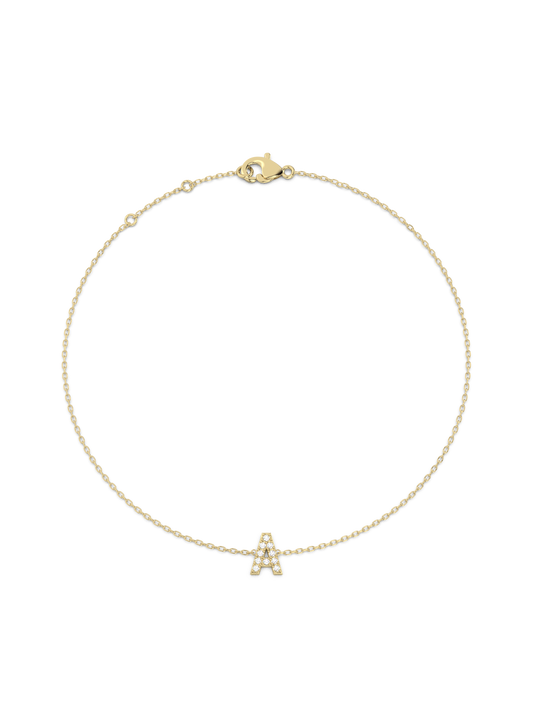
If you have a flat, smooth bracelet like a simple chain bracelet, you notice the difference less than if the stones sit close together. On a diamond-set design like a tennis bracelet, the stones sit all the way around, and here it makes especially good sense to choose the arm that is exposed to the least. Longvé carries several tennis bracelets in various carat sizes, and you will find the selection under tennis bracelets.
Bracelet together with a watch on the same arm
If you wear a watch, it traditionally sits on the non-dominant hand - that is, the left for most people. This naturally draws the bracelet over to the same arm, so the watch and bracelet go together. Many people like to gather their jewellery and watch on one arm and keep the other more free.
If you want to wear several bracelets together, it is also easiest on the watch arm, where they can lie side by side. Some put the bracelet above the watch, others below - there is no fixed way, and it mostly comes down to what feels best and how tightly the watch sits.
If you have a lot of movement on that arm during the day, it may be a reason to distribute the jewellery so that a fine bracelet does not rub against the watch strap.
Should the bracelet match the rest of your jewellery?
A bracelet does not have to stand alone. Many people choose it in the same metal and style as their other jewellery, so it works together with both necklace and earrings. If you mainly wear 14K gold, a gold bracelet suits the rest, and if you wear white gold, a 14K white gold bracelet matches better.
Longvé makes many designs in both gold and white gold, so you can keep the metal consistent across your jewellery. To pull together a complete look, you can browse matching jewellery, and you will find the bracelet selection under bracelets.
If the bracelet sits on the same arm as a diamond bracelet or a bangle, it creates a cohesive look if the stones and metal are related. A pavé bangle with many small diamonds set closely together is an example of a piece that works both alone and layered together with a finer chain bracelet.
How loose should a bracelet sit?
A bracelet should be able to move freely on the wrist without sliding off over the hand. A good rule of thumb is that you should be able to fit a finger between the bracelet and your skin when it is in place. Then it sits comfortably and does not feel tight, but is at the same time not so loose that it risks falling off.
If it sits too tightly, it pinches when you bend your wrist and leaves marks. If it sits too loosely, it slides down over your hand and can, in the worst case, be lost. Most chain bracelets have a little play, but a fixed design like a bangle needs to fit more precisely, because it cannot be adjusted.
If you measure your wrist with a tape measure and add about one to two centimetres, you typically arrive at a good length for a chain bracelet.
How to put on a bracelet with a clasp by yourself
Closing a bracelet with one hand is the part many people struggle with, precisely because the dominant hand cannot reach to help. It is easier than it seems when you do it in the right order.
Lay the bracelet across the back of your hand so the clasp faces up, and hold one end firmly against your skin with the thumb of the hand the bracelet is to sit on. Then you have your free hand to guide the other end over to the clasp and click it into place. A spring clasp or lobster clasp is opened by pressing the mechanism, guiding the pin into the ring and releasing.
If it is a spring ring, you can use a fingernail or a small tool to hold the ring open while you guide the other end in. It can help to support your hand against the edge of a table so the bracelet lies still while you work. You will find a more detailed walkthrough in the article on how to close a bracelet with a clasp.
Does it matter which arm you choose?
There is no special meaning attached to wearing a bracelet on one arm rather than the other. Unlike certain rings, where the placement on a particular finger can carry a signal, the bracelet's arm is a purely practical and aesthetic choice.
That makes it easy: choose the arm where the bracelet sits best and bothers you least in everyday life. For most people that is the left, but if the right is more comfortable for you, it is just as correct.