What special properties do diamonds have?
-

-
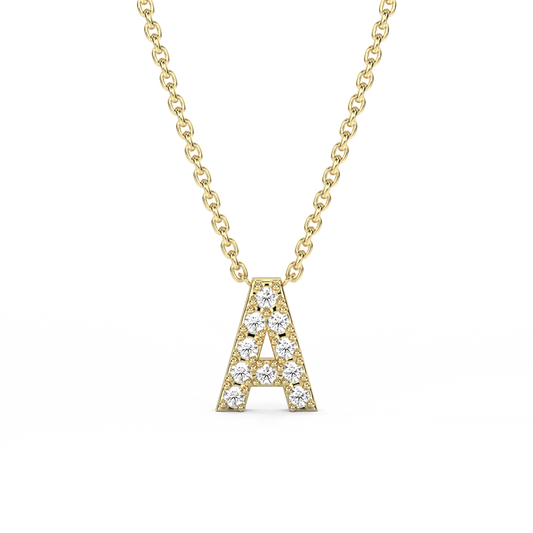
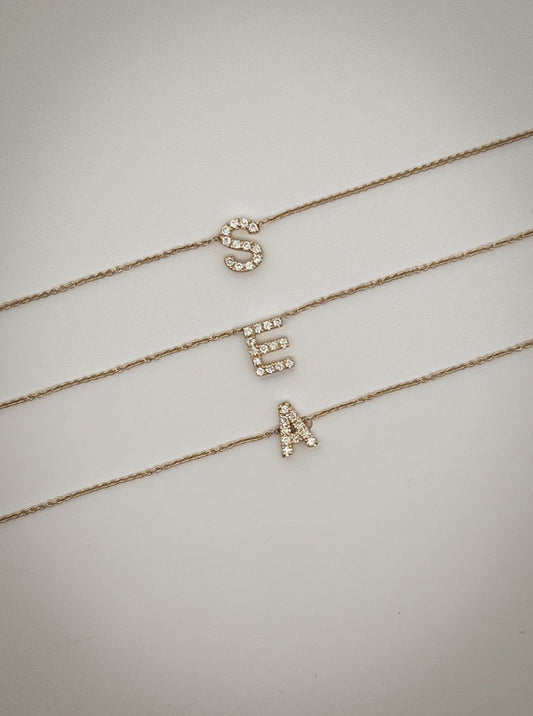
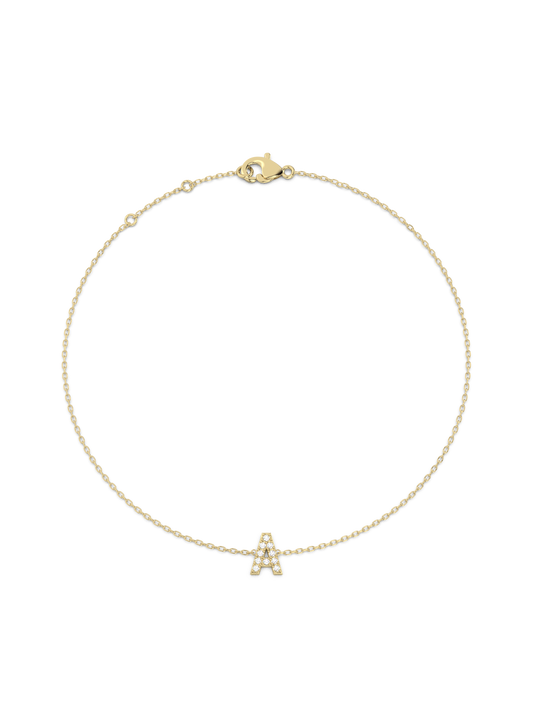
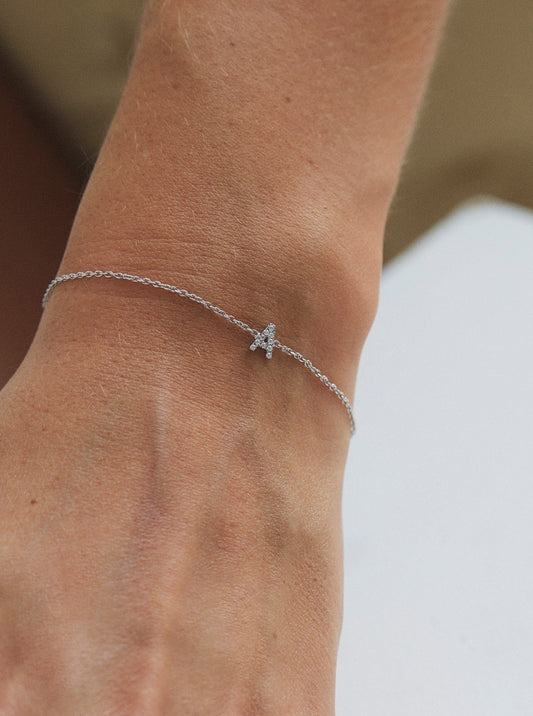
A diamond's special properties come from one thing: it is pure carbon, packed into an exceptionally dense and regular crystal lattice. This makes the stone the hardest known natural material, causes it to bend light more strongly than almost anything else in a piece of jewellery, and lets it conduct heat unusually well. That is precisely why the diamond is used where a piece of jewellery must both sparkle and withstand daily wear - in everything from a solitaire ring to a tennis bracelet.
These properties are the same, whether the stone was formed deep in the earth over a long time or grown in a laboratory. A lab-grown diamond and a natural diamond have the same chemical composition and the same crystal structure, and therefore they behave physically in exactly the same way. The difference lies in where the stone came to be - not in what it is.
Why is diamond the hardest material?
Diamond sits at the top of the Mohs hardness scale with a value of 10. The scale ranks materials by what can scratch what, and a diamond can scratch all other known materials, while none of them can scratch it. By comparison, most other gemstones sit further down the scale.
The hardness is due to the chemical bonds. Each carbon atom is bound to four neighbouring atoms in a rigid three-dimensional pattern, and those bonds are both short and strong. There are no weak directions in the lattice in the same way as in softer stones, and the result is a surface that resists scratches from daily contact with clothing, countertops and other jewellery.
For a piece of jewellery worn every day, this means that the diamond's facets and edges keep their sharpness over time. A stone that retains its faces and edges also retains its play of light. That is one of the reasons the diamond is the standard choice in a solitaire rings, where a single centre stone sits free and exposed in a claw setting.
Hardness should not, however, be confused with the stone being impossible to damage. A diamond is hard against scratches, but a hard, precise blow in the right direction can still cause chipping. This is a common property of crystals and not a particular sign of weakness in diamond specifically.
How does the diamond create its play of light?
What most people notice about a diamond is the way it handles light. Here two optical properties work together: a high refractive index and a high dispersion of light.
The refractive index describes how strongly a material bends light as it passes into the stone. Diamond has one of the highest refractive indices among colourless gemstones, and that is the reason a well-cut stone can throw much of the incoming light back towards the eye instead of letting it escape through the bottom. This gives the strong white shine often called brilliance.
Dispersion is the stone's ability to split white light into the colours of the rainbow, the way a prism does. It is the property that gives the small flashes of red, blue and yellow you see moving in the stone as the hand turns. In technical language this is called fire.
Both depend strongly on how the stone is cut. The angles and proportions of the facets determine whether light hits the inner surfaces at the right angle and is thrown back, or whether it seeps out and leaves the stone dull. A round brilliant cut is specifically designed to make maximum use of the diamond's optics, and it is the cut used in products like a tennis bracelets, where a long row of identical round stones must sparkle uniformly all the way around.
The cut also means that different shapes make use of light differently. A round pavé ring sets many small stones closely together across the surface, so the play of light becomes a single, sparkling surface rather than flashes from one large stone.
What does the diamond's pure carbon mean for the stone?
A diamond is the element carbon in crystal form. The same element also appears as graphite - the soft, dark material in a pencil - but the two have vastly different properties, because the atoms are arranged completely differently. In diamond the atoms sit in the dense, rigid lattice; in graphite in loose layers that slide apart. It is one of the clearest examples of how much the structure itself determines a material's properties.
Because diamond conducts heat unusually well, a diamond often feels cool to the touch. Thermal conductivity is a property that distinguishes diamond from many glass-clear imitations, and it is found unchanged in both lab-grown and natural diamonds.
Most diamonds in jewellery are close to colourless, but completely pure, colourless stones are not the norm. Small amounts of other elements or small inclusions in the lattice can give the stone a hint of colour or microscopic characteristics. These are the aspects that colour and clarity grades describe, and they are assessed the same way for lab-grown and natural diamonds.
How is a lab-grown diamond created?
A lab-grown diamond is formed by recreating the conditions that cause carbon to crystallise as diamond. This happens in two ways. One uses high pressure and high temperature, abbreviated HPHT, where carbon is subjected to a pressure and heat that mimic the conditions deep in the earth. The other is called Chemical Vapor Deposition, abbreviated CVD, where a carbon-containing gas is broken down in a chamber, so the carbon atoms deposit layer upon layer onto a small starting crystal and build the stone up.
Both methods produce a stone with exactly the same crystal structure as a natural diamond. Therefore the hardness, the optics and the thermal conductivity are the same. A lab-grown diamond is thus not an imitation, but a diamond formed in a different way than in nature.
Because the properties are identical, the same design is often found in both variants side by side. An eternity rings can be set with lab-grown or natural diamonds without any difference in how the small stones sparkle around the band.
What do the properties mean for the care of a diamond piece?
The diamond's hardness makes the stone robust, but the setting and the metal it sits in are softer. At Longvé the diamonds are typically set in 14K gold or 14K white gold, and gold scratches and bends more easily than the stone itself. That is why care is mostly about protecting the setting and keeping the stone clean.
A property worth knowing in everyday life is that diamond attracts grease. Skin oils and cream settle easily on the stone's surface and dampen precisely the play of light that the hardness and optics otherwise provide. A diamond that looks dull is therefore more often dirty than damaged. Lukewarm water with a little mild soap and a soft brush removes it and brings the shine back.
Because diamond is so much harder than other stones, two diamond pieces stored together can scratch each other's metal and any softer stones. This also applies if a diamond piece lies loose together with, for example, a piece with sapphires, which are softer than diamond. Storing the pieces separately is the simplest way to avoid this.
The properties - the hardness, the strong bending of light and the dense carbon structure - are the same from the smallest stone in a pendant to the largest centre stone in a ring. They are the reason the diamond keeps both its appearance and its durability through many years of wear.