What is the difference between 8 and 14 karat gold?
-

-
The most important difference between 8 and 14 karat gold is how large a proportion of pure gold the metal contains. 14 karat consists of 585 parts pure gold out of 1000, that is 58.5 percent, while 8 karat only contains 333 parts, around a third. The rest in both cases is other metals such as copper, silver and zinc, which are blended in to make the gold stronger and give it a particular colour. The higher gold content in 14 karat gives a warmer, more saturated gold colour and a metal that stays looking good through many years of use.
Karat is a measure of purity, not of weight. Pure gold is 24 karat, and the lower the number, the less gold and the more added metals. 8 karat and 14 karat are therefore the same type of alloy seen from the outside, but with very different composition: where 14 karat is just over half gold, 8 karat is dominated by the added metals.
How much pure gold there is in each alloy
The gold content is often stated as a per-mille figure, which corresponds directly to the karat number. 8 karat gold is typically stamped 333, because it contains 333 thousandths pure gold. 14 karat is stamped 585 and correspondingly contains 585 thousandths. The number therefore tells you exactly what you are paying for in terms of precious metal.
The difference between the two is significant. A piece of jewellery in 14 karat has almost twice as much gold as the same piece in 8 karat. You notice it in the weight, in the colour and in how the metal behaves over time.
The added metals are collectively called alloy metals. They are not a stopgap, but necessary: pure 24 karat gold is too soft for most jewellery that is to be worn daily, so a certain proportion of other metal makes the piece usable. The only question is how large that proportion should be.
Why 14 karat gives a warmer gold colour
The more pure gold an alloy contains, the more clearly the yellow colour comes through. 14 karat gold has a rich, warm golden tone, because more than half of the metal is gold. 8 karat gold appears paler and more greyish or light yellow, precisely because the added metals make up two thirds and draw the colour away from the classic golden gold.
The colour can be adjusted a little depending on which metals are blended in. More copper gives a reddish tint, more silver a cooler one. But regardless of the mixture, an 8 karat alloy cannot reach the same depth of colour as 14 karat, simply because the gold proportion is too low.
This is one of the reasons why many people experience 14 karat as what resembles "real" gold in everyday speech.
Wear resistance and durability in daily use
A higher gold content does not mean that the metal is softer. On the contrary, pure gold is very soft, and it is the alloy metals that provide hardness. Here 8 karat can actually be hard, because it contains a large proportion of the harder metals. But hardness is not the same as durability in practice.
14 karat strikes a well-balanced combination of sufficient hardness to withstand scratches and knocks and a gold content that is high enough for the colour to stay and the metal not to oxidise or discolour over time. Alloys with low gold content are more prone to the added metals reacting with sweat, air and skin products, which over time can cause tarnishing or altered colour.
For jewellery worn every day, most things therefore favour the higher karat. An engagement ring or a pair of prong studs, which are to accompany you for many years, get both a more stable metal and a colour that does not fade.
What Longvé uses and why
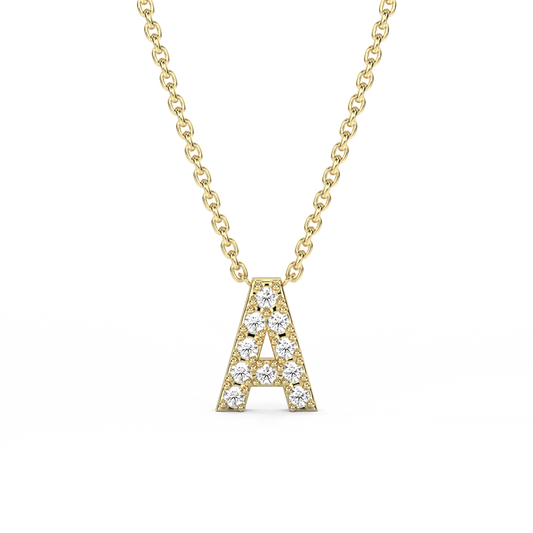
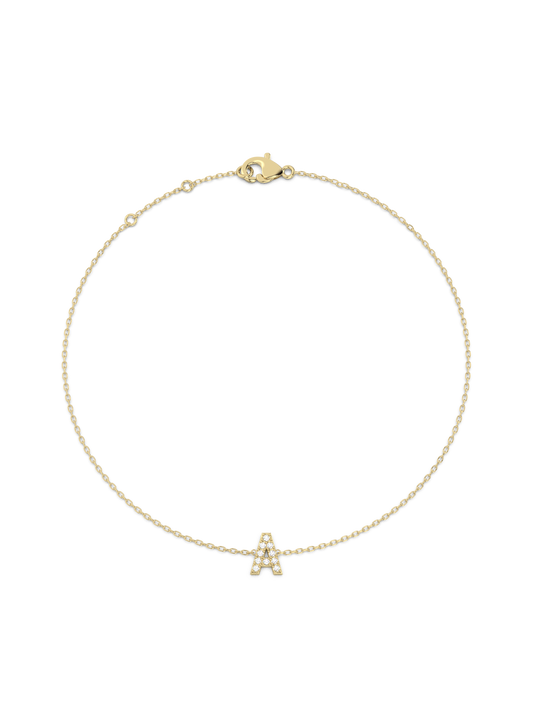
Longvé's jewellery is made in 14K gold and 14K white gold. The choice relates to the balance described above: 14 karat gives a saturated gold colour and a metal that is robust enough for daily use, without the gold content becoming so high that the piece becomes too soft.
This applies across the range, whether it is an eternity ring, a solitaire ring or a piece from necklaces. The diamonds are available both as lab-grown and natural diamonds in many of the same designs, but the metal itself is consistently 14 karat.
White gold deserves a brief mention here. It is still a 14 karat alloy with 585 parts gold, but the added metals are chosen so that the colour becomes white instead of yellow. The entire selection in white gold therefore rests on the same gold content as yellow gold, just with a different composition of alloy metals.
When the karat number actually matters for the choice
For most jewellery, 14 karat is the natural choice, because it unites colour and durability. 8 karat is still on the market, often because it is cheaper due to the lower gold content, but the compromise lies in the colour and in how the metal ages.
If the choice is between the two, it is worth considering how much the piece will be worn. A piece used only on special occasions places different demands than a ring that is never taken off. The more daily use, the more there is to favour the higher karat.
The stamp in the jewellery always reveals what you are dealing with. If you see 333, it is 8 karat; if you see 585, it is 14 karat. That number is the quickest way to know exactly how much pure gold is in the piece.