How do you fasten a bracelet with a clasp?
-

-
A bracelet is fastened by bringing the two parts of the clasp together until they click or hook into place. Exactly how this is done depends on which clasp the bracelet has. Most jewellery bracelets use either a lobster clasp, a spring ring, a box clasp or a magnetic clasp, and each is operated a little differently. The big challenge is rarely the mechanism itself, but holding both ends of the bracelet in place at the same time - especially on the hand you don't have free.
Here is a run-through of the common clasp types, how to fasten each one, and what to do when you only have one hand available.
How to fasten a lobster clasp
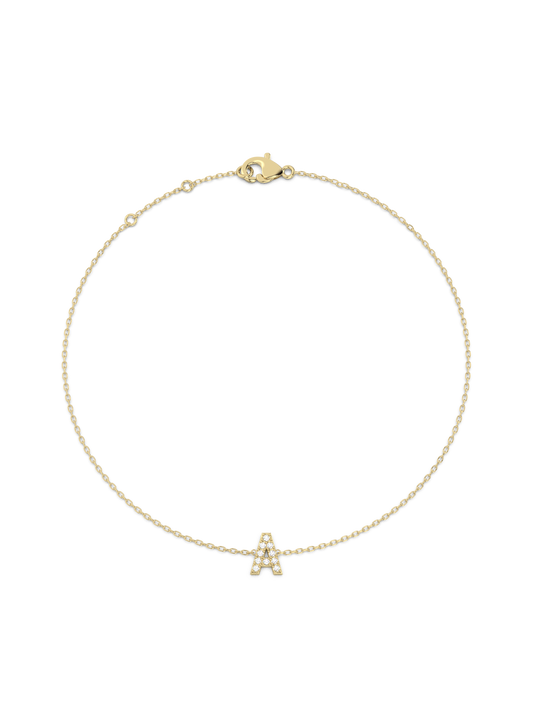
The lobster clasp is the most widespread clasp on bracelets and necklaces. It consists of an elongated metal hook with a small spring-loaded arm that can be pushed inwards. At the other end of the bracelet there is a fixed ring or an open end loop for the hook to catch onto.
You open the clasp by pressing the small arm in with your thumb or index finger, so that an opening appears in the hook. Guide the hook around the ring and release the arm. The spring pushes the arm back, and the hook closes around the ring. A small tug on both ends confirms that the clasp is secure. The same mechanism is used on Longvé's chain bracelets, including a panzer chain bracelet in sterling silver.
Spring ring - the small round clasp
A spring ring is a small round clasp with a spring-loaded pin that can be pulled aside with a small lever on the edge of the ring. It is often seen on finer chains and lighter bracelets, where a large lobster clasp would look too heavy in relation to the piece.
Push the small lever around with your nail, so that a gap opens in the ring. Hold the opening, guide the fixed end of the bracelet into the gap, and release the lever again. Because the lever is small, the spring ring usually requires a nail or a fingertip to operate, and it is among the harder clasps to handle with only one hand.
Box clasp and fold-over clasp on tennis bracelets
Diamond bracelets with stones all the way around typically use a more solid closure than a simple hook, because the clasp has to bear the weight of the entire row and should ideally be discreet. A box clasp consists of a flat metal tongue that slides into a matching opening until it clicks into place. Often there is an extra safety catch or a fold-over mechanism on top of the box clasp, so the bracelet cannot open by accident.
The clasp is fastened by guiding the tongue straight into the opening until you hear a click. If there is a safety catch, it folds down over the clasp afterwards. A fold-over clasp works on the same principle, but folds together like a link that locks with a press. This type is found, among others, on a tennis bracelet in 14K gold and recurs across the entire collection of tennis bracelets.
Magnetic clasp and other click clasps
Some bracelets fasten with a magnetic clasp, where the two ends are drawn towards each other on their own once they come close enough. This makes the closure simple, but a pure magnetic clasp does not always hold as well as a mechanical clasp, and it is therefore often combined with a small rail or a notch that secures it further.
Bring the two ends towards each other and let the magnet pull them together. If there is an extra rail, slide the ends into place in it until it holds. Click clasps without a magnet work in the same down-to-earth way: two parts are brought together until they hook into place with a distinct click.
How do you fasten a bracelet with only one hand?
The difficult part of fastening a bracelet is rarely the clasp itself, but holding both ends steady while you operate it - once the bracelet is already on your wrist, you only have one free hand left.
A simple trick is to lay the end with the fixed ring across the back of your hand and hold it in place with a couple of fingers from the hand the bracelet is going onto. Then the free hand has both fingers free to open the hook and guide it into the ring. If that doesn't work, the bracelet can be laid on a table so that both ends stay still while you join the clasp - then lift it into place.
A third option is a clasp helper, a small tool with a clip that grips the fixed end, so you can pull the clasp shut with your free hand. For jewellery that is worn often, a more finger-friendly clasp such as a lobster clasp generally makes it easier than a small spring ring.
How to take the bracelet off again
Opening the bracelet follows the same mechanism in reverse. A lobster clasp is opened by pressing the arm in and pulling the hook free of the ring. A box clasp is opened by first lifting any safety catch and then pressing the tongue or squeezing its sides together, so it slides out of the opening. A magnetic clasp is simply pulled apart.
Be careful not to tug hard on the chain itself or the row of stones when you open it. Instead, pull on the clasp parts, so the strain is placed where the mechanism is built to take it.
How loose should a bracelet sit, and how do you measure?
A clasp is only as easy to operate as the bracelet's fit allows. If the bracelet sits too tightly, there is no room to manoeuvre the clasp, and if it sits too loosely, it slides around the wrist so that the clasp ends up on the underside, where it is hard to reach.
A bracelet should be able to move a couple of centimetres back and forth on the wrist without being able to slide over the hand. Measure the circumference of the wrist with a tape measure right where the bracelet will sit, and add about one to two centimetres, depending on how loose you prefer it. A rigid bracelet, a bangle, is measured differently from a soft chain bracelet, because it has to be guided over the hand itself to get on.
Is a bracelet worn on a particular hand?
There is no fixed rule for which hand a bracelet should sit on. Many people choose the hand they don't write with, because the bracelet then gets in the way the least in everyday life and is exposed to fewer knocks and less wear.
It is also the most practical solution when it comes to the clasp: if you wear the bracelet on your non-dominant hand, it is your strongest and most reliable hand that operates the closure. So in practice, the choice of hand is just as much a question of how you most easily get the bracelet fastened as of how it looks.