



















How a white gold ring is constructed
A white gold ring at Longvé is cast in 14 karat white gold. Gold is yellow in itself, so the cool, silver-white colour comes from blending pure gold with white alloy metals and usually adding an outer layer of rhodium. Rhodium is a white precious metal in the platinum group, and it is precisely this film that gives a white gold ring its sharp, bright shine. 14 karat means that 14 of 24 parts are pure gold, that is about 58.5 percent. It is a deliberate balance: enough gold for the ring to be genuine and hold its colour, and enough alloy for it to withstand being worn every day without bending or wearing out quickly. If you want to read more about what sets the material apart from ordinary gold, the article what is white gold goes into depth with it.
White gold ring with diamond in natural or lab-grown version
Almost all rings in this collection have a diamond, and most models come in two versions: one with a natural diamond and one with a lab-grown diamond. A lab-grown diamond is grown in a laboratory under the same pressure and heat that creates a diamond in the earth, and it therefore has the same chemical and optical composition as a natural diamond. The difference is the origin and the price, not the material. If you want a larger stone for the same amount, you typically get furthest with lab-grown, while the natural diamond appeals to those who value the stone having formed in the earth over millions of years. Both are genuine diamonds. You can see the entire selection of lab-grown diamond rings gathered on its own, and if you want to know more about how they are made, what are lab-grown diamonds explains it thoroughly.
Solitaire, pavé, trilogy and eternity
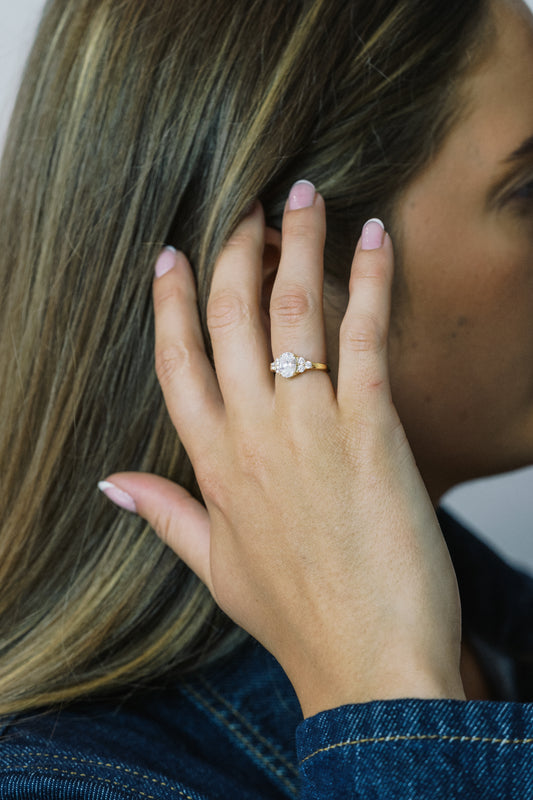
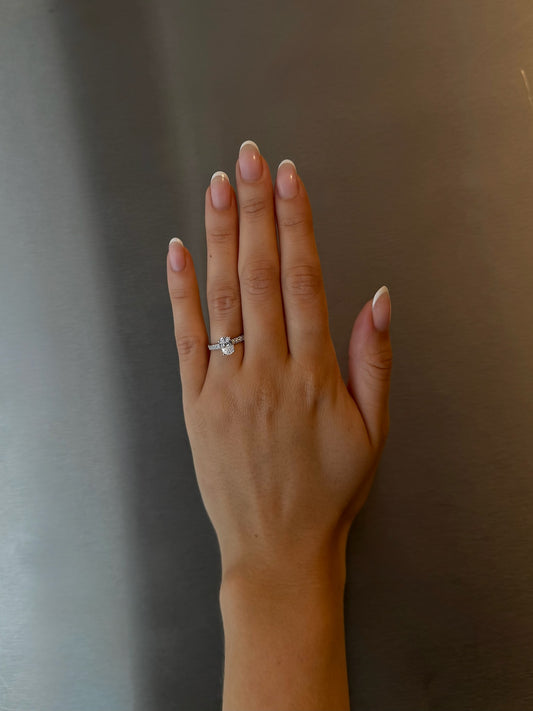
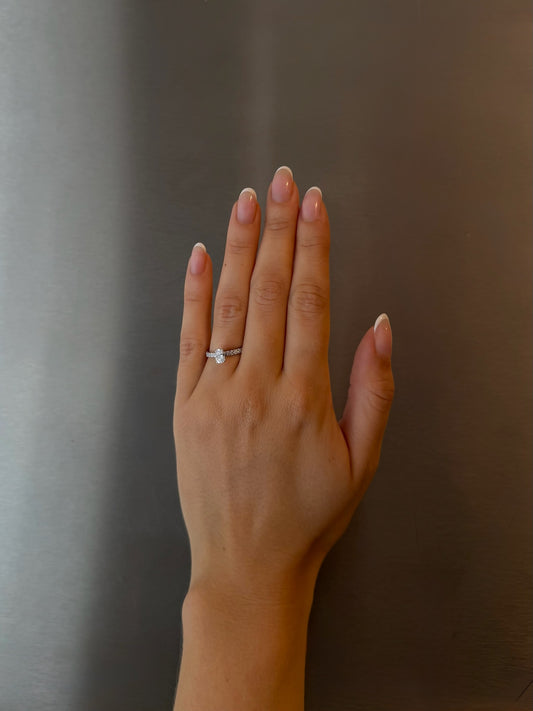
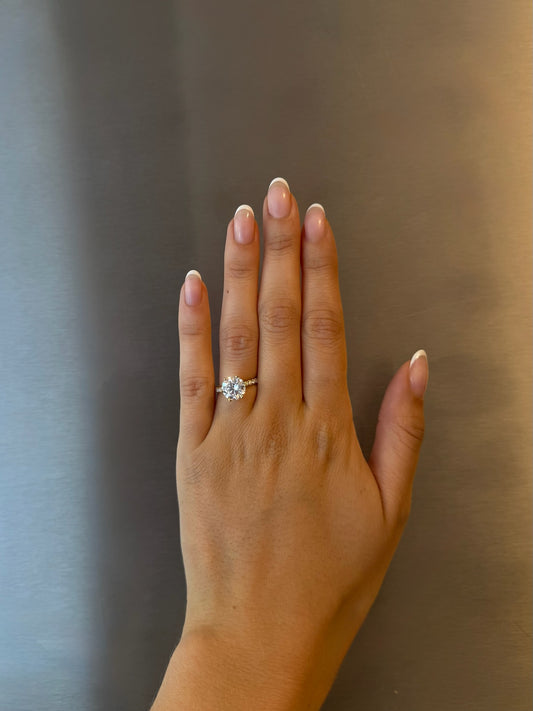
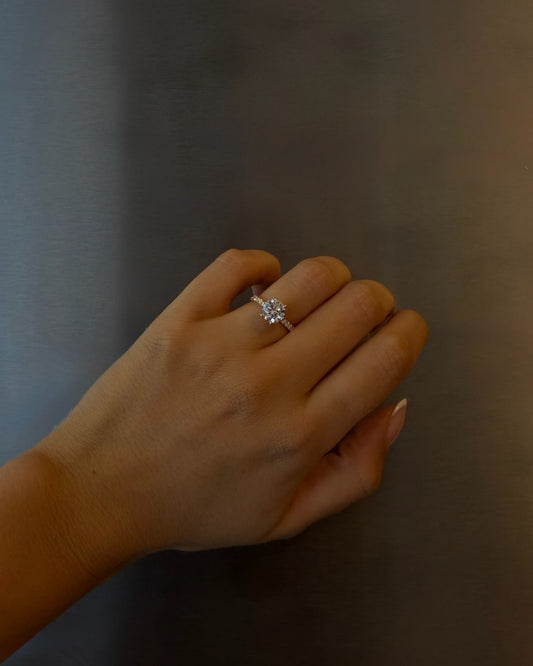
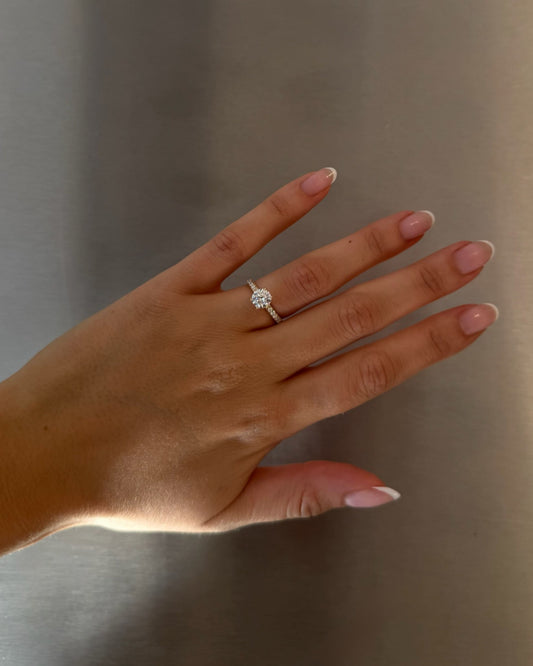
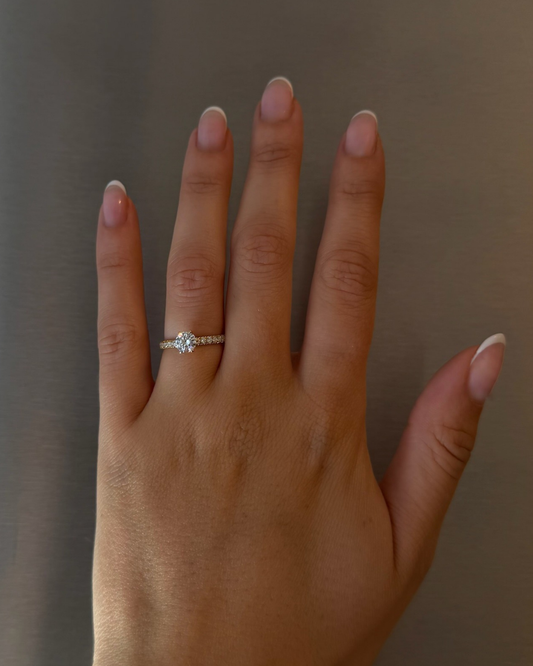
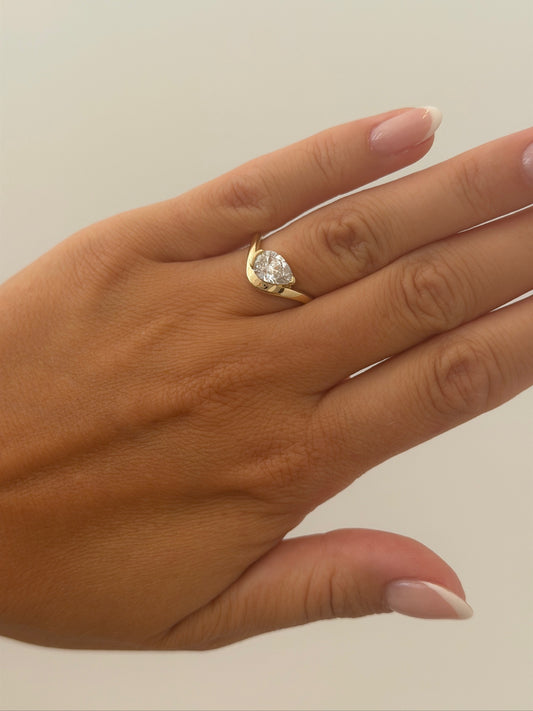
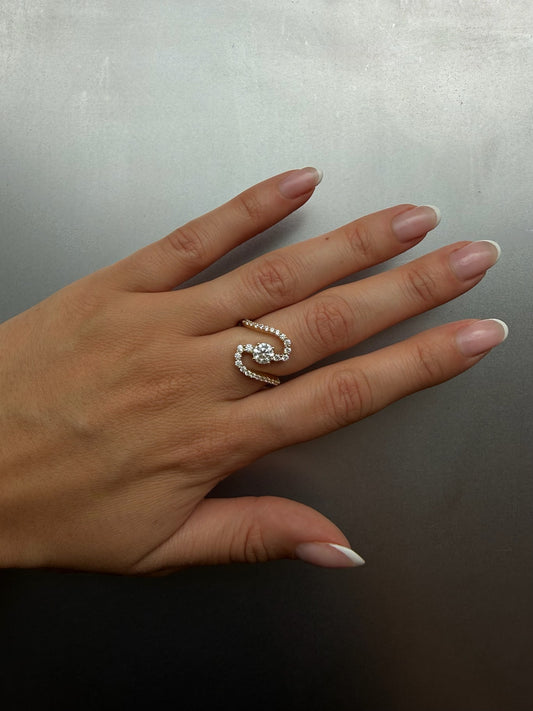
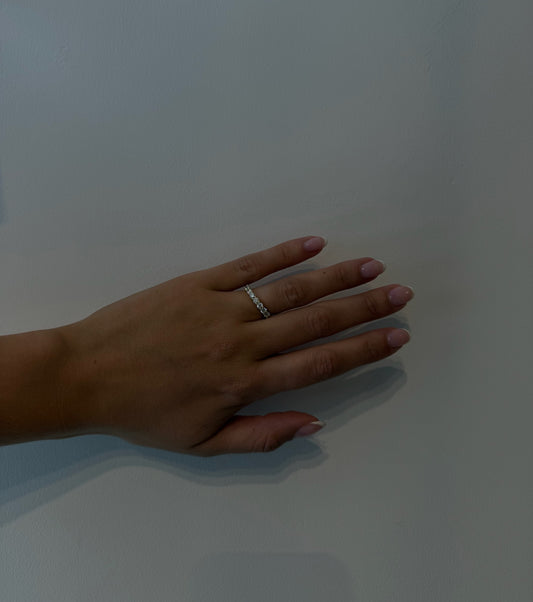
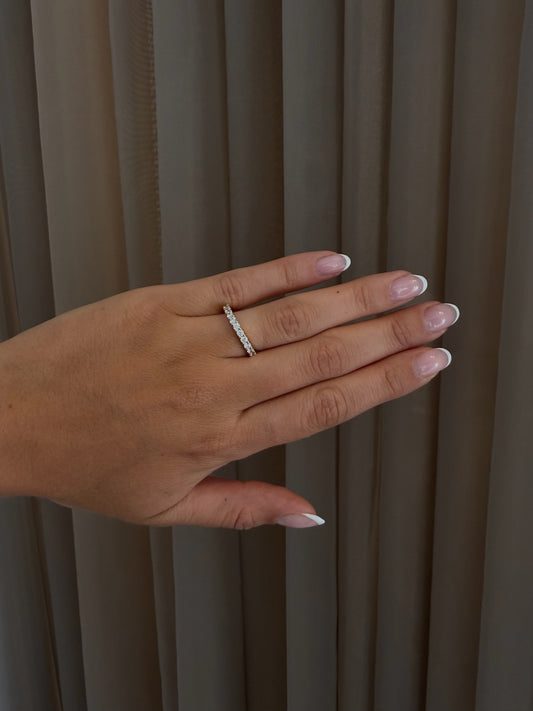
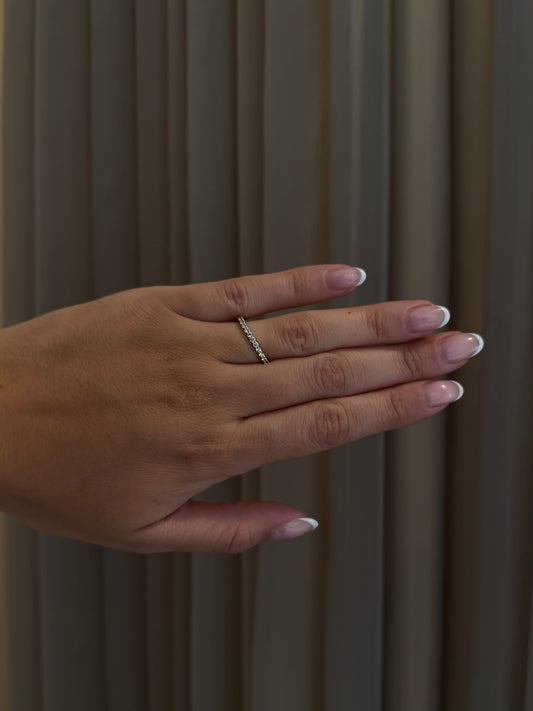
The setting determines how the ring is perceived more than any other detail. A solitaire ring carries one single diamond as the centre stone and is the classic choice for an engagement; here it comes in round, oval, pear, cushion and marquise cut stones from 0.5 to 2 carat. A pavé ring has small diamonds set closely along the band, so the ring sparkles all the way around, as on the round pavé solitaire diamond ring - 14K white gold (0.72 ct.). A trilogy ring has three stones, where the two smaller ones flank the large one in the middle, and an eternity ring has diamonds all the way around the band. If you want to dive into the individual expression, Longvé has dedicated pages for solitaire rings, solitaire pavé rings, trilogy rings and eternity rings.
The diamond cut changes the ring's expression
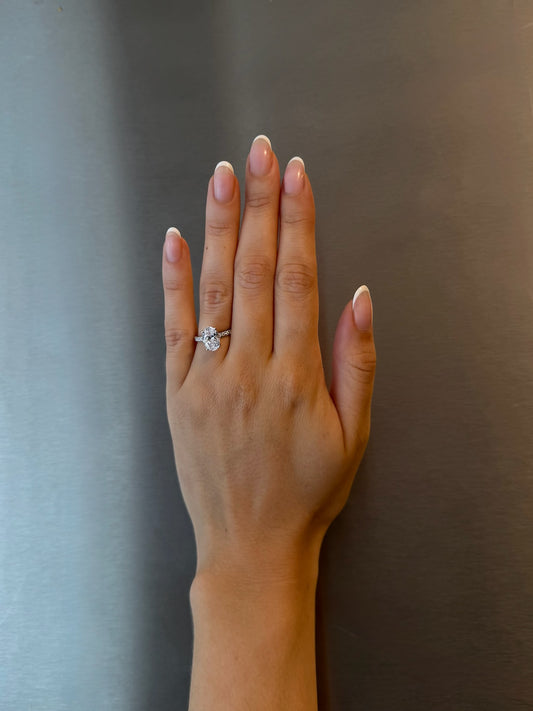
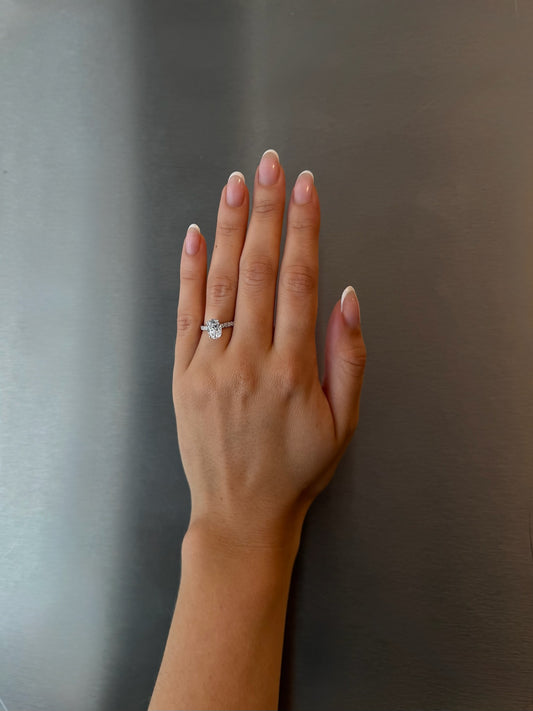
The carat weight tells how large the diamond is, but the cut determines how it looks on the finger. A round brilliant reflects the most light and appears classic, and if you are looking for precisely that type, a brilliant ring in white gold covers it here. An oval or pear-shaped stone makes the finger appear long and slim, while an emerald cut has broad, calm facets and a more subdued, architectural sparkle. Marquise is pointed at both ends and appears larger than the carat weight suggests, because the stone is long. In the collection, the natural solitaire rings range from the discreet tiny solitaire bezel diamond ring - 14K white gold (0.02 ct.) all the way up to striking stones such as the round solitaire diamond ring - 14K white gold (2 ct.), so you can freely choose both shape and size.
Bezel or prong setting
How the diamond is held in place matters both for the expression and for everyday use. A bezel setting closes an edge of white gold all the way around the stone, so it sits protected and flush with the ring. This gives a clean, modern expression and is practical if you use your hands a lot, because there is nothing that catches on things. The Medium Solitaire Bezel Diamond Ring - 14K White Gold (0.17 ct.) is a good example. A prong setting holds the stone with narrow claws and lifts it clear of the band, so light enters from the sides and the diamond appears larger and more sparkling. Longvé gathers the two approaches on separate pages, bezel jewellery and prong jewellery, if you want to see the principle recur across rings, earrings and necklaces.
White gold ring for engagement or wedding
Many buy a white gold ring precisely for an engagement or a wedding, and the two things are not the same. The engagement ring is typically the one with a visible diamond, while the wedding ring is often more simple and may be a slim eternity ring with stones all the way around. Some choose to wear them together, and here it is an advantage that both are in the same 14 karat white gold, so the colours match. If you are in doubt about the difference, what is the difference between an engagement ring and a wedding ring explains it, and Longvé has curated selections under selected engagement rings and selected wedding rings.
How to find the right ring size
All rings in the collection come in sizes 48 to 60, which correspond to the inner circumference in millimetres. A size 54 therefore means that the ring's inner edge measures 54 mm all the way around. This is the European standard, and it is easy to check: if you measure the circumference of a finger or of a ring that already fits, you have the number directly. The ring should be able to slide over the knuckle with a little resistance and stay in place without falling off when the hand hangs down. The fingers are often slightly larger in the afternoon and in warm weather, so measure when the hand is neutral. The guides how to measure ring size and how tight should a ring sit take you through it step by step if you want to be sure before ordering.
Rhodium plating and maintenance over time
A white gold ring requires a little more attention than gold, precisely because of the rhodium layer. Rhodium is hard, but it is a thin surface layer, and over years of daily wear it can become thinner, especially on the underside of the band, where the ring rubs against other things. When this happens, a faint, warmer gold tone may shine through. It is not a flaw, but a natural consequence of the ring being used, and a goldsmith can re-plate it with rhodium so that it regains its cool whiteness. How often this is necessary depends entirely on how much the ring is worn. For daily care, it is enough to wipe the ring with a soft cloth and wash it gently in lukewarm water with mild soap. If you want to know more about caring for gold, how to clean gold is a good place to start.
White gold or gold for skin tone and jewellery collection
The choice between white gold and gold is mostly about what you find beautiful and what the rest of your jewellery is made of. White gold has a cool, silvery sheen that is often perceived as discreet and modern, and it makes a white diamond appear even clearer, because there is no yellow tone to be reflected. Gold is warmer and more classic. If you already have a collection in one colour tone, there is much to be said for staying in it, so the rings play together when you wear several at once. If you want to see the same design in the warm tone, Longvé has a wide gold ring selection alongside, and the entire ring selection is gathered under rings.