












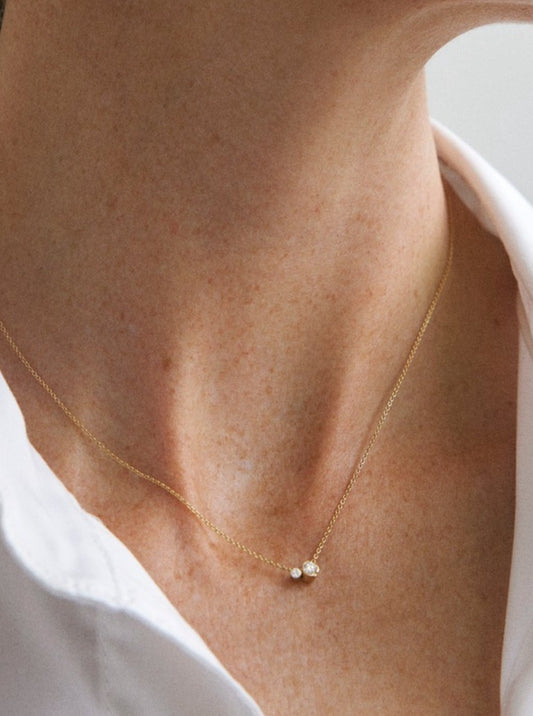
What characterises a gold necklace from this collection?
The necklaces here are all cast in solid 14 carat gold, mainly gold, with a few variants in white gold. 14 carat means that the gold consists of 585 parts of pure gold out of 1000, that is 58.5 percent, while the rest are other metals that give the chain strength. Pure 24 carat gold is too soft for jewellery worn daily, and therefore 14 carat is one of the most common choices for necklaces that need to be worn often without bending or scratching easily.
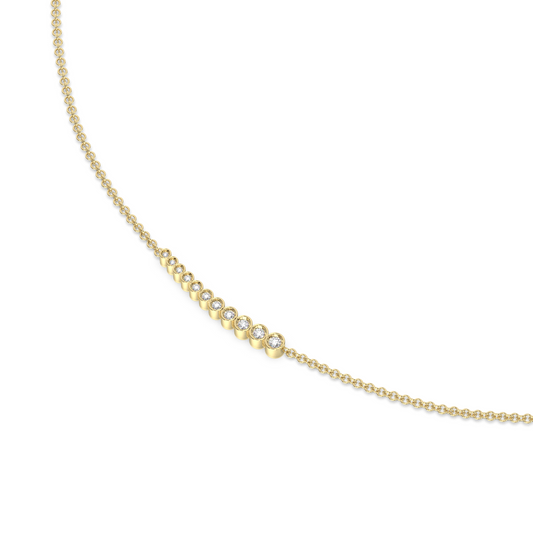
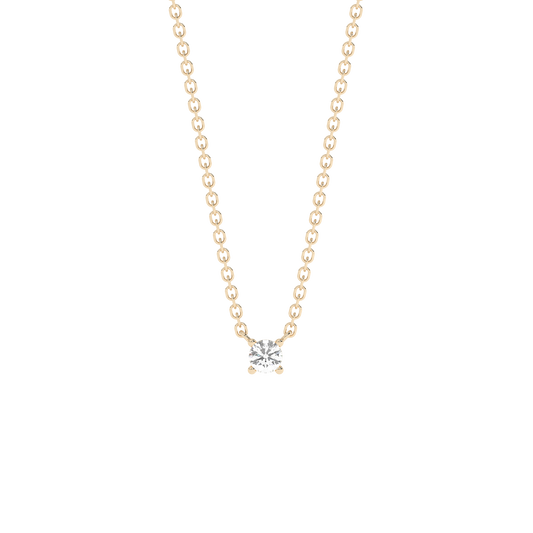
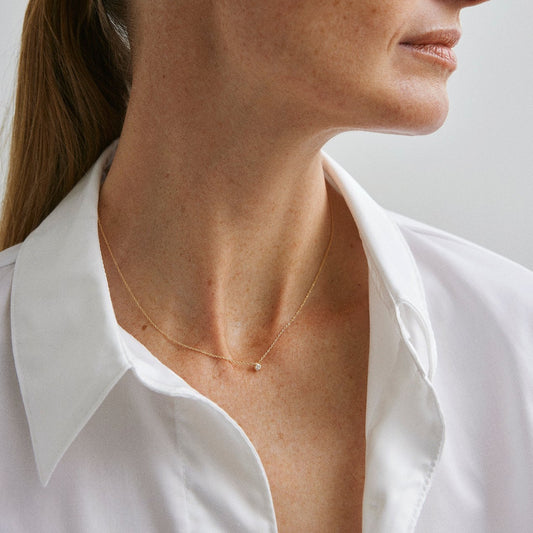
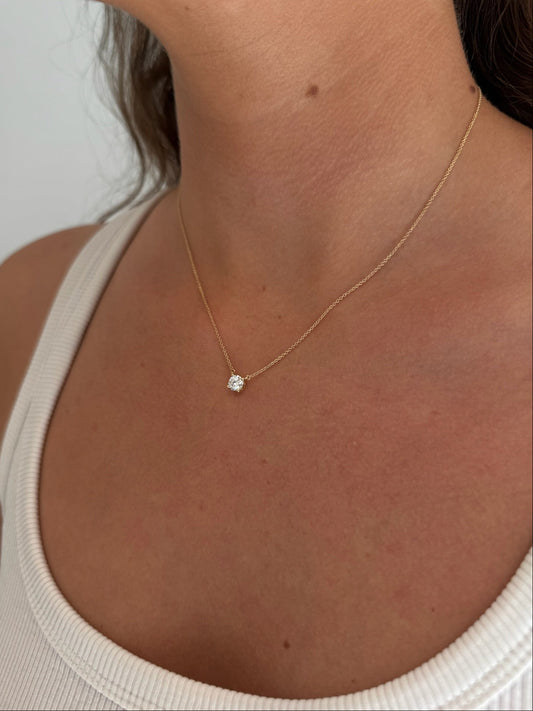
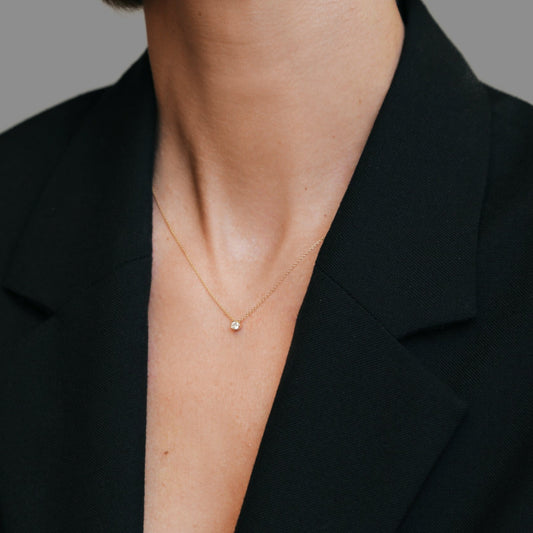
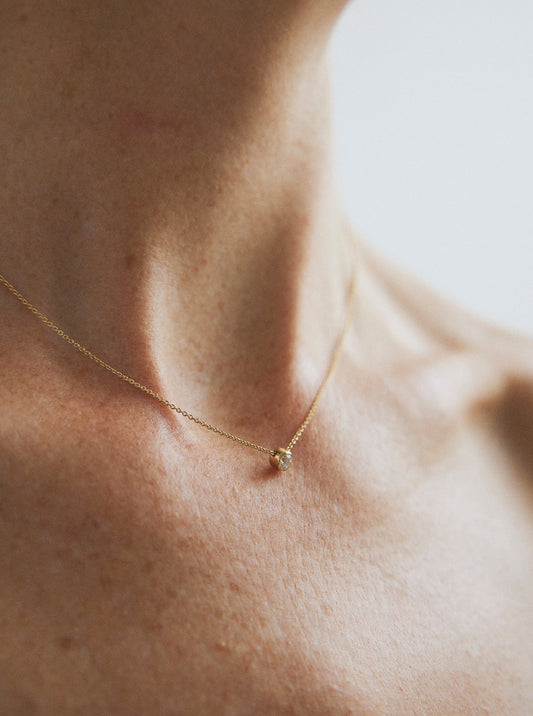
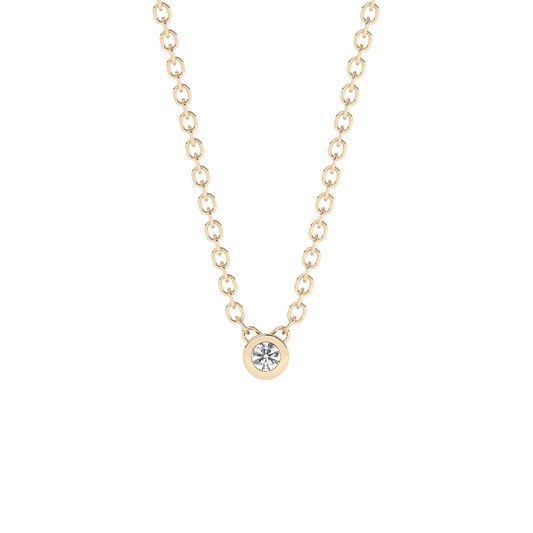
Common to the collection is that the gold carries a diamond or a series of diamonds. It ranges from a single small 0.03 carat stone in the Tiny Bezel Diamond Necklace to striking solitaires of up to 2 carat in the Prong Diamond Necklace. If you want pure gold without stones, they are found in the Plain Necklaces collection.
What length should the necklace be?
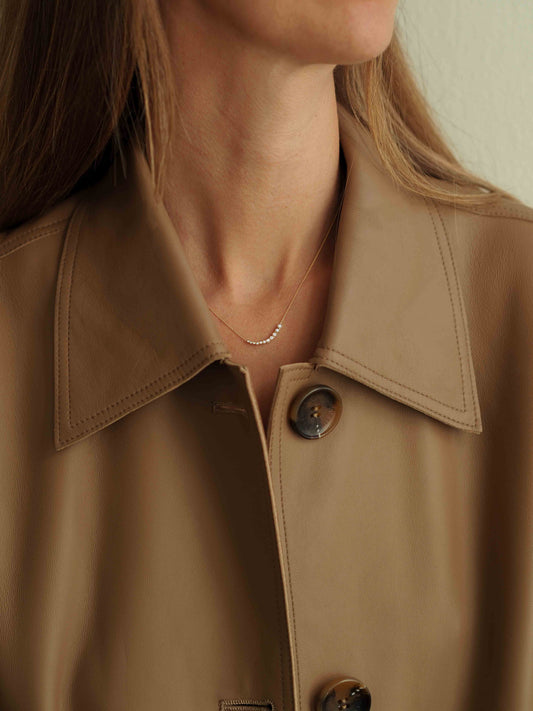
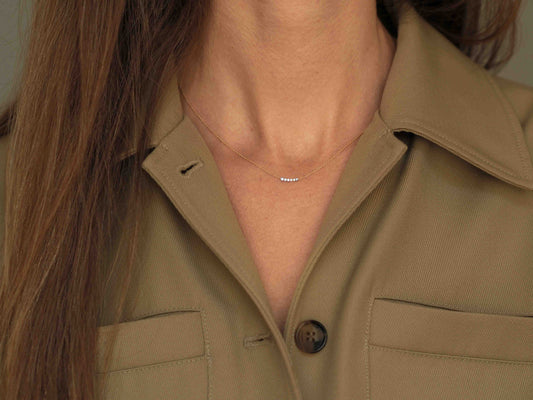
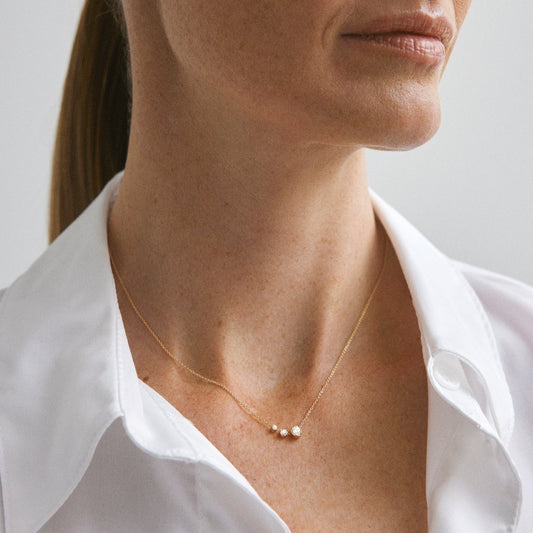
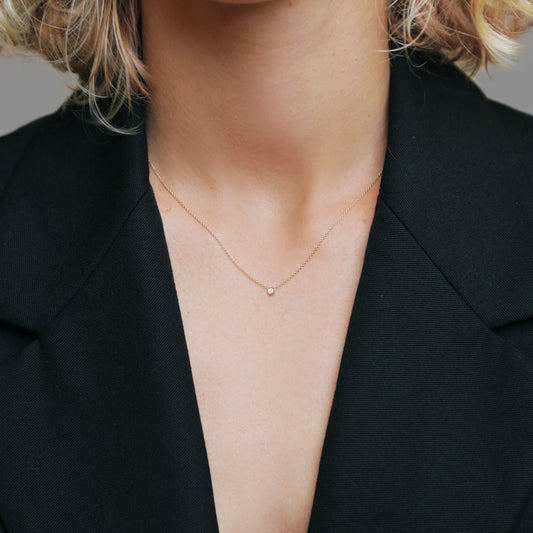
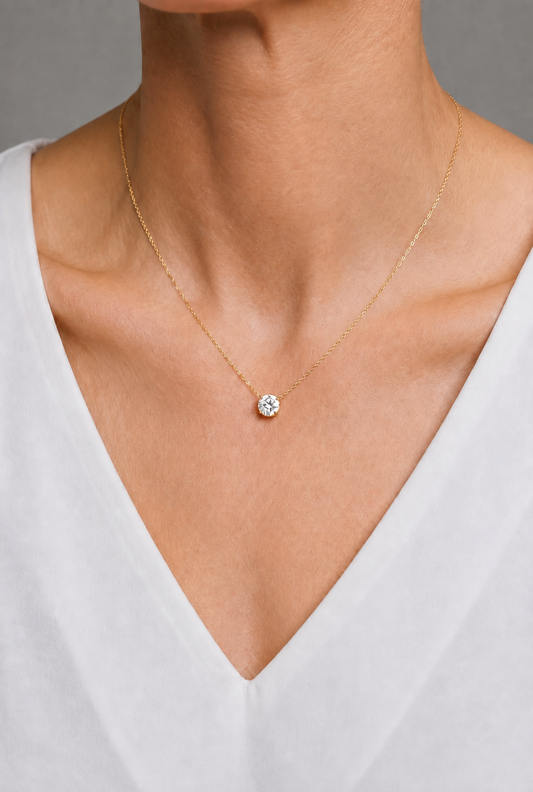
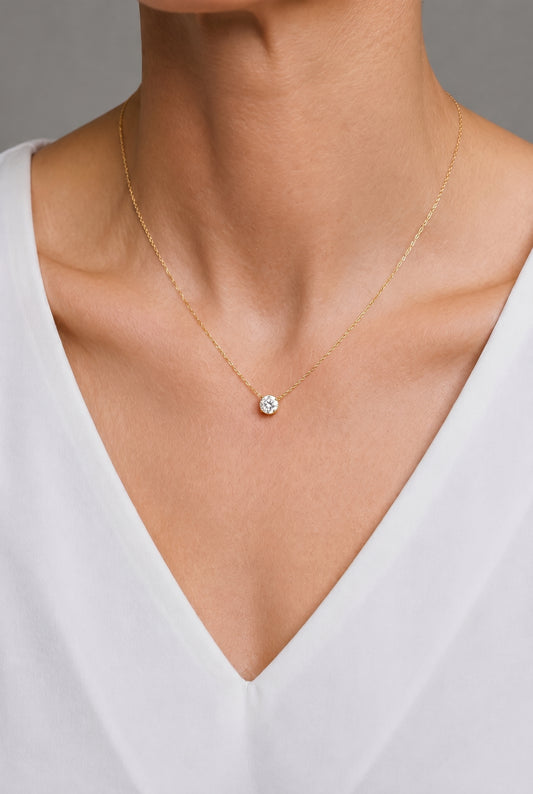
The length determines where on the chest the chain falls, and thus how it looks with a given neckline. A short chain of around 40 to 42 centimetres, often called choker or collar length, sits close around the neck. 45 centimetres, princess length, is the most common standard length for adults and falls just below the hollow of the throat, where a single diamond comes clearly into its own. 50 to 55 centimetres, matinee length, falls down towards or below the breastbone and works well for layering with several chains.
The best way to find your length is to measure a chain you already have and are fond of, while it lies flat. Alternatively, you can lay a tape measure loosely around the neck at the desired drop height. If you want to wear several chains at once, it helps to choose lengths a few centimetres apart, so they do not lie on top of each other. For layering and matching sets, suggestions are gathered in matching jewellery.
Bezel or prong: how is the diamond set?
The setting is the way the diamond is fixed in the gold, and it determines both the look and the robustness. In a bezel setting, a rim of gold surrounds the entire stone along the edge. This gives a round, smooth silhouette without protruding parts, and because the metal protects the stone's edge all the way around, bezel is a practical choice for a chain you wear daily. The bezel necklace collection gathers these models, from the discreet Tiny Bezel Diamond Necklace to the larger Large Bezel Diamond Necklace.
A prong setting, by contrast, holds the stone with small claws of gold, so that light can hit the diamond from several sides, and the stone appears more open and raised. This emphasises the sparkle and often makes the stone look a little larger. They are gathered under prong necklace, where the range goes from fine 0.03 carat all the way up to solitaires of 2 carat.
Natural diamond or lab-grown diamond?
Several of the chains are available both with a natural diamond and with a lab-grown diamond. A lab-grown diamond is grown in a laboratory, but is chemically, physically and optically the same stone as a natural diamond that has formed in the earth over a long time. The difference lies in the origin, not in the material, and a lab-grown diamond can therefore not be distinguished from a natural diamond with the naked eye.
A lab-grown diamond typically costs less than a natural diamond of equivalent size and quality, which makes it possible to get a larger or cleaner stone for the same amount. If you want to compare the two, the individual models are gathered under Lab-Grown Diamond Necklaces and Natural Diamonds. The background is elaborated in the article what are lab-grown diamonds.
A letter or a tennis necklace: two looks in the collection
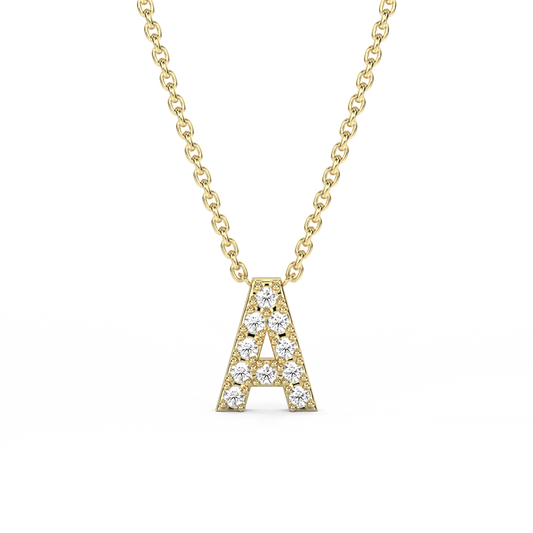
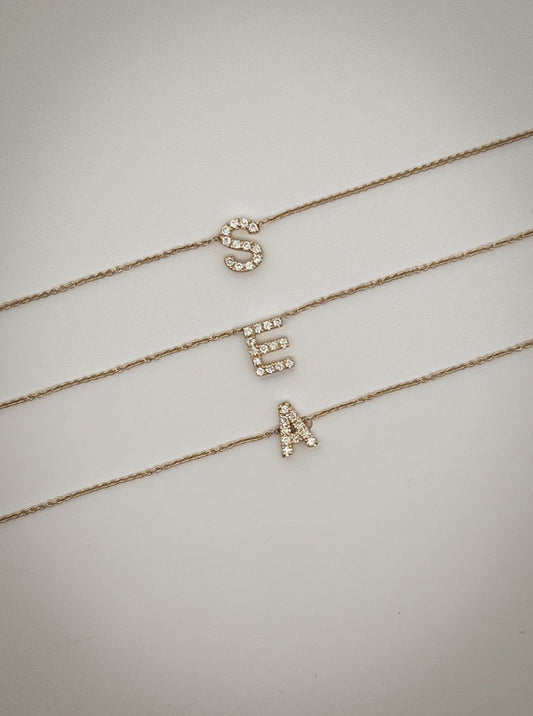
In addition to the classic solitaire chains, the collection holds two more distinctive directions. The Letter Diamond Necklace carries a letter in 14 carat gold set with a small diamond and is available in the entire alphabet from A to Z, which makes it a personal chain with the initial of yourself or someone you love.
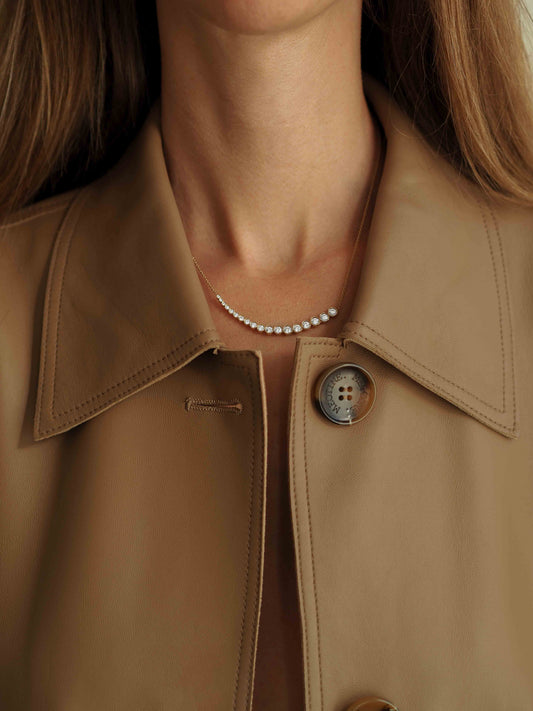
At the other end of the scale stands the tennis necklace, where an unbroken row of diamonds runs all the way around in the gold. It is available from a fine Bezel Tennis Diamond Necklace Tiny of 0.11 carat to a striking medium of 1.53 carat. Several variants are gathered in bezel tennis necklace.
How do you care for a gold necklace?
14 carat gold does not tarnish and withstands daily use, but the chain retains its shine longest if it is protected from hard knocks, chlorine and cosmetics. Take the necklace off before bathing, the swimming pool and sport, and keep it clear of other jewellery, so the chain does not tangle or scratch against harder metals. Perfume, hairspray and cream over time leave a film that dulls the shine of both the gold and the diamond, so the jewellery gets the most out of being put on after you are ready.
A gold necklace is easily cleaned at home in lukewarm water with a little mild soap and a soft brush, after which it is rinsed and patted dry. The procedure applies to both the gold itself and the diamond. A more detailed walkthrough is found in how do you clean jewellery. If you want to read more about what the price of a gold necklace depends on, how much does a gold necklace cost goes through the relationship between carat, weight and diamond.