







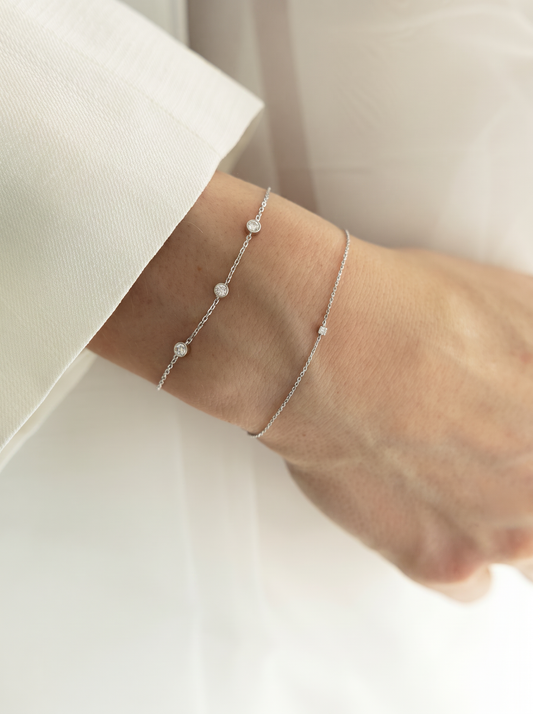


Gold bracelets in 14 carat gold: what you'll find here
The bracelets in this collection are all made in 14 carat gold, the carat grade in which most Danish fine jewellery is crafted. 14 carat means that 14 of 24 parts are pure gold, while the rest are other metals that make the alloy hard enough to withstand daily wear without bending or scratching too easily. It's a deliberate balance: pure gold (24 carat) is soft and dents easily, while a lower carat grade gives a duller, less golden colour. 14 carat lands close to the point where the colour is still warm and clearly golden, but the metal can also be worn every day.
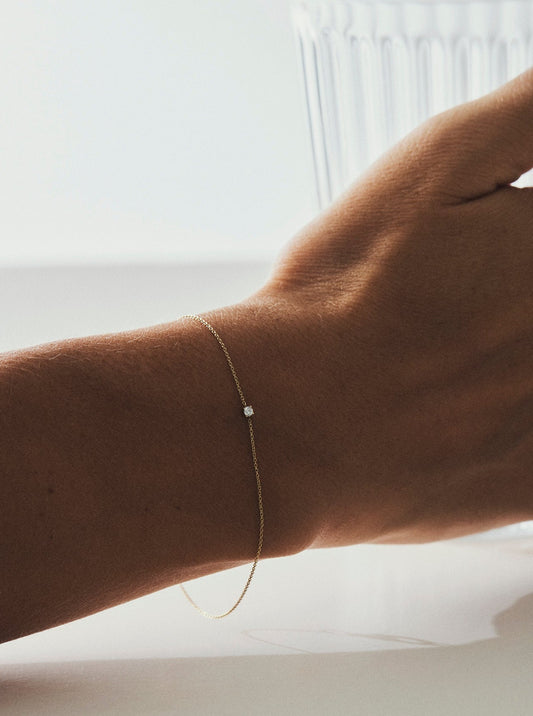
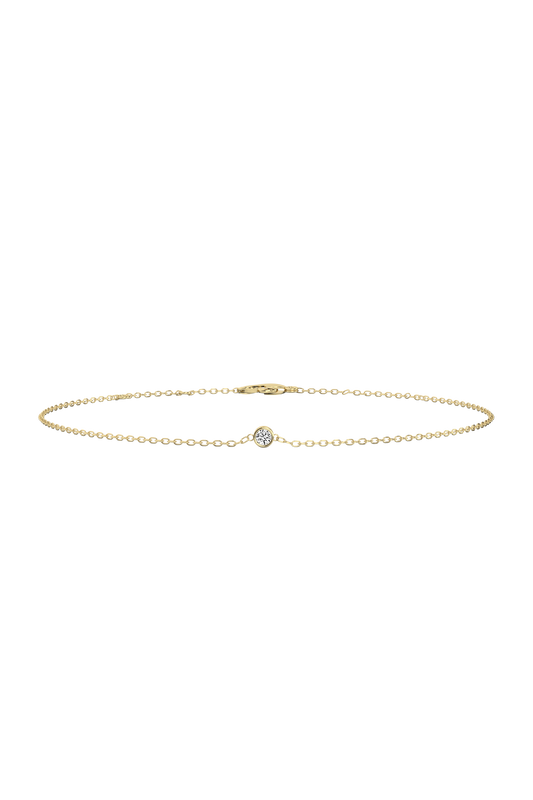
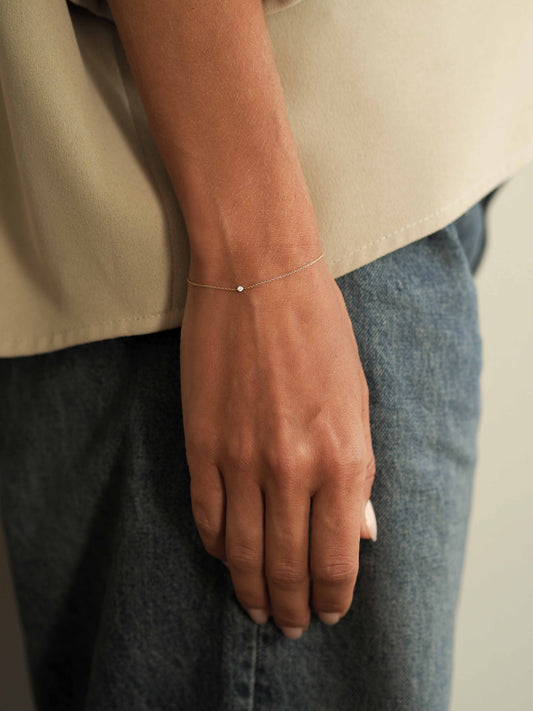
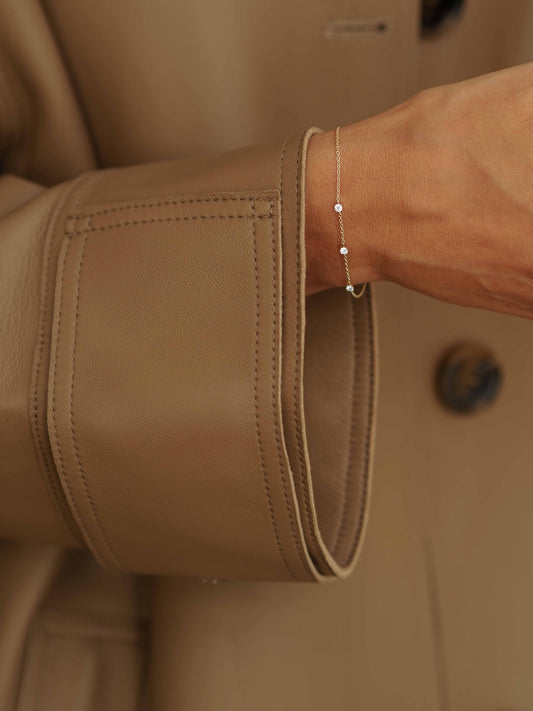
The selection ranges from the discreet to the striking. At the lighter end are the slim diamond bracelets with a single 0.03 carat stone, such as the Bezel Diamond Bracelet - 14K Yellow Gold (0.03 ct.), where the stone is set in a bezel, meaning a closed metal rim all the way around the diamond. At the other end are the tennis bracelets, where the diamonds run all the way around the wrist in weights of up to 6 carat. If you want to see the entire bracelet range together, it's under bracelets.
How do you measure the right length for your wrist?
The size of a bracelet is about the circumference of your wrist, not about ring size or clothing size. Wrap a tape measure or a strip of paper around your wrist where the bracelet is to sit, meaning just above the wrist bone, and note the measurement in centimetres. That number is your wrist circumference.
How much you add on top determines how the bracelet falls. A bracelet that measures the same as the wrist sits tightly and stays high up. If you add around one to two centimetres, you get the light movement most people prefer, where the bracelet slides slightly down towards the hand without falling off. Rigid bangles work differently: they have to be able to pass the hand to get on at all, so here the measurement over the knuckles is what matters, not the wrist. If you're in doubt between two lengths for a soft chain bracelet, the longer one is usually the most comfortable, because a bracelet that sits too tightly both feels confined and wears more on the clasp.
Tennis bracelets from 1 to 6 carat: what the difference means
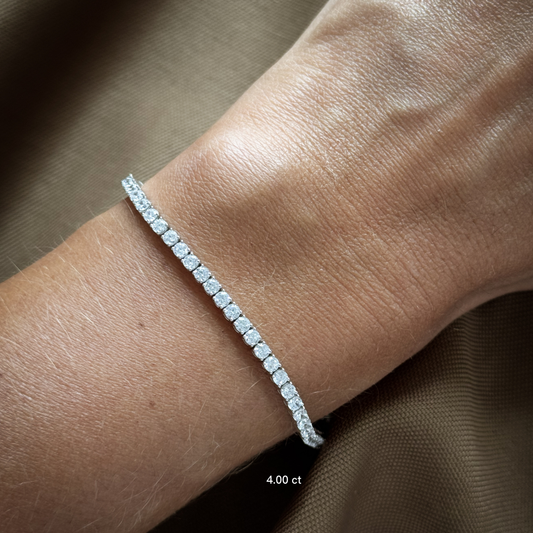
The tennis bracelet is a long, supple row of identical diamonds set one after another all the way around the wrist. The name comes from the tennis world, but what really distinguishes the models here is the total diamond weight. The collection goes from 1 carat to 6 carat, and the jump is felt in both expression and price.
The lighter versions give a thin, almost continuous glittering line, where the individual stones are small and the light runs evenly along the bracelet. It comes in two settings: the Bezel Tennis Diamond Bracelet - 14K Yellow Gold (1 ct.), where each stone is framed by a gold rim, and the prong variants, where the stones are held by small claws, so more of the diamond is exposed and catches light from more angles. The higher the carat number rises, the larger the individual stones become, and the bracelet gains more volume and width. A Tennis Diamond Bracelet - 14K Yellow Gold (3 ct.) is a clear statement piece, while the versions at 4, 5 and 6 carat are among the most striking bracelets in the range. If you want to compare the breadth of the selection, they are gathered under tennis bracelets.
Bezel or prong: two ways to set the diamond
Several of the bracelets come in both a bezel and a prong version, and it's not just a cosmetic choice. A bezel setting encloses the diamond with a closed gold rim all the way around. It gives a calm, modern look, protects the stone's edge against knocks, and there are no protruding parts that can catch on clothing or hair. That makes bezel a practical setting on a bracelet in particular, which is constantly in contact with sleeves and surfaces.
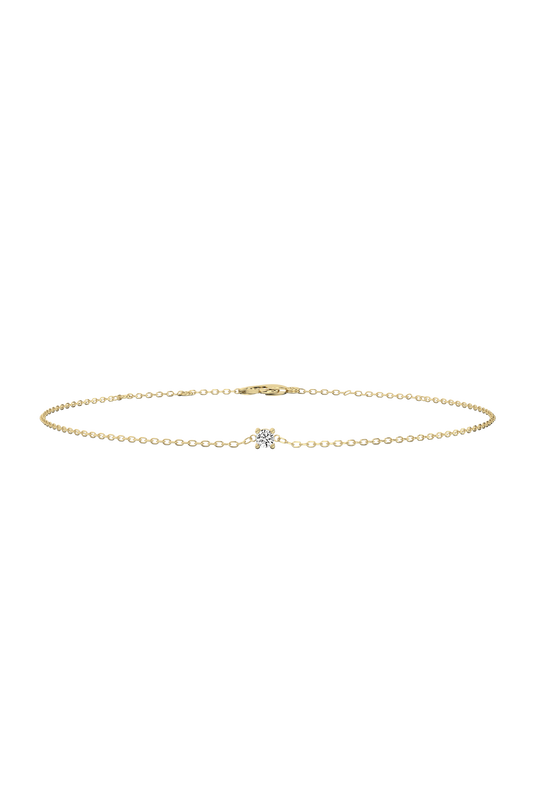
A prong setting, on the other hand, holds the diamond with small metal claws. The advantage is that more of the stone lies exposed, so light can hit it from the sides and not only from above, which gives more sparkle. In return, the claws stand out slightly. In the collection you can compare the two directly: Prong Diamond Bracelet - 14K Yellow Gold (0.18 ct.) against the corresponding bezel model at the same diamond weight, Bezel Diamond Bracelet - 14K Yellow Gold (0.18 ct.). If you want to see the two setting types across the entire jewellery range, they are found under bezel jewellery and prong jewellery.
Bangle or chain bracelet: rigid versus soft
The collection's bracelets split into two basic forms, each with its own way of being worn. A bangle is rigid and holds its round shape, while a chain bracelet or a tennis bracelet is supple and shapes itself to the wrist. The difference matters both for how the piece sits and for how it looks.
The bangle sits more loosely and slides back and forth on the arm, which gives it a characteristic, light movement and a sound when several are worn together. Here the choice is for example the Bezel Diamond Bangle - 14K Yellow Gold (0.29 ct.) with diamonds set in a gold rim, or the more diamond-dense Pavé Diamond Bangle - 14K Yellow Gold (0.90 ct.), where pavé means that the surface is closely paved with many small diamonds. The chain bracelets lie closer to the skin and fall softly, and they are fastened with a clasp rather than having to be pulled over the hand. The entire selection of rigid models is under bangles.
Which hand do you wear a bracelet on?
There is no fixed rule for which hand a bracelet should sit on, and it is very much a question of comfort and habit. Many choose the hand they use least, meaning the right hand for left-handed people and vice versa, because the bracelet then interferes less with writing and daily tasks and is exposed to fewer knocks against table edges and keyboards. It's practicality, not etiquette.
If you already wear a watch, some place the bracelet on the same arm as a deliberate stacking, while others keep the two apart so the metal parts don't rub against each other. For diamond bracelets like the tennis models, there is a concrete argument for choosing the least active hand: the less the wrist bumps into things during the day, the less the settings are exposed to knocks over time.
Gold bracelet with a letter as a personal gift
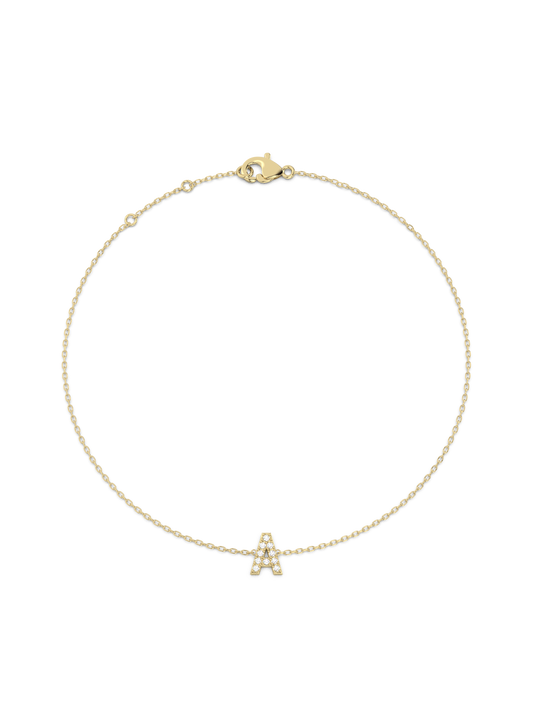
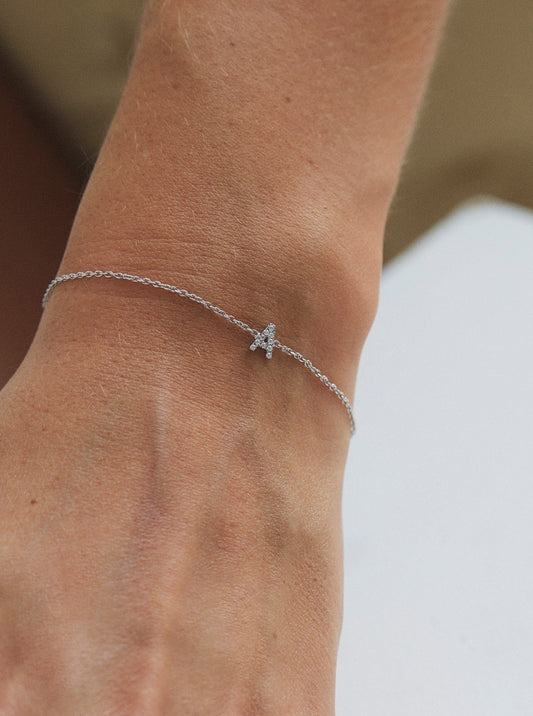
If the bracelet is to mean something specific, it comes with a single diamond-set letter. The model is available for the whole alphabet from A to Z, so it can carry an initial, and the 0.04 carat diamond adds a little light to the letter without making it heavy. That makes the type an obvious choice as a gift with a personal mark rather than a generic piece of jewellery.
It comes in two versions that look alike in expression but differ in the diamond's origin: Letter Diamond Bracelet | A-Z | - 14K Yellow Gold (0.04 ct.) with a natural diamond and Letter Lab-grown Diamond Bracelet | A-Z | - 14K Yellow Gold (0.04 ct.) with a lab-grown diamond. Both are in the same 14 carat gold, so the choice comes down solely to the diamond type. More letter jewellery is gathered under letters.
Natural or lab-grown diamond: what the choice means for your bracelet
Several of the bracelets come in two versions, where one has a natural diamond and the other a lab-grown diamond. A lab-grown diamond is chemically and optically the same stone as a natural diamond; the difference lies in the origin, where one is formed in the earth over a very long time, while the other is grown in a laboratory under controlled conditions. With the naked eye the two cannot be distinguished.
In practice the choice means that for the same carat weight you typically get a different price, and that some choose based on the origin as a deliberate consideration. The collection lets you compare directly, for example Bezel Lab-grown Diamond Bracelet - 14K Yellow Gold (0.18 ct.) against the corresponding model with a natural diamond at the same weight and setting. If you want to dive into what a lab-grown diamond is, there is a review in the article What Are Lab Grown Diamonds, and the entire selection of bracelets with grown stones is under Lab-Grown Diamond Bracelets.
How to fasten and take off the bracelet yourself
A chain bracelet with a clasp can be awkward to fasten with one hand, precisely because the free hand is the one wearing the piece. The simplest trick is to lay the bracelet on a table or in your lap, hold one end in place with a finger or a bit of tape, and then bring the clasp together with the other hand, rather than trying to balance both ends in the air.
Most of the collection's bracelets use a spring clasp, where a small arm is pressed in, guided into the opposite ring and released, so the spring locks it in place. To take the bracelet off again, you press the same arm in and pull gently, so you don't bend the clasp. A rigid bangle has no clasp and is instead pulled over the hand. A more detailed review of clasp types and techniques can be found in the article How To Fasten A Bracelet With A Clasp.