

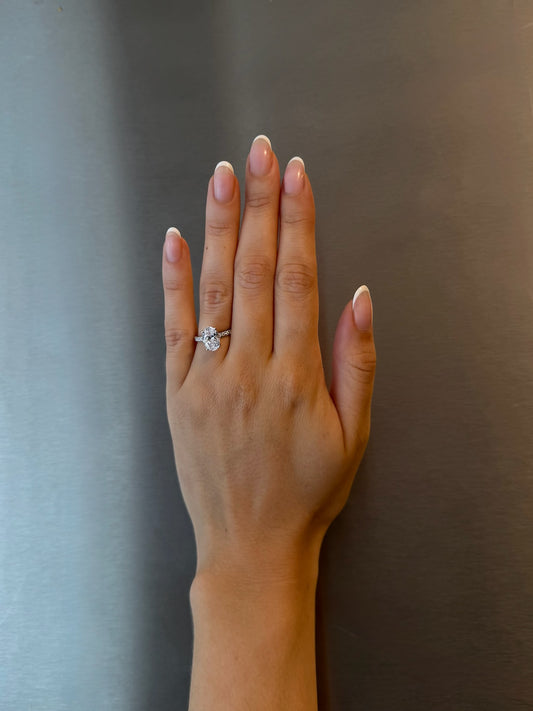

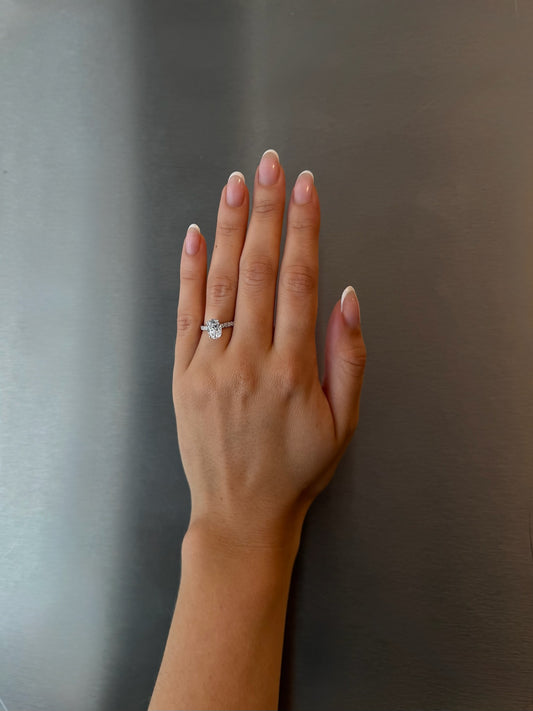

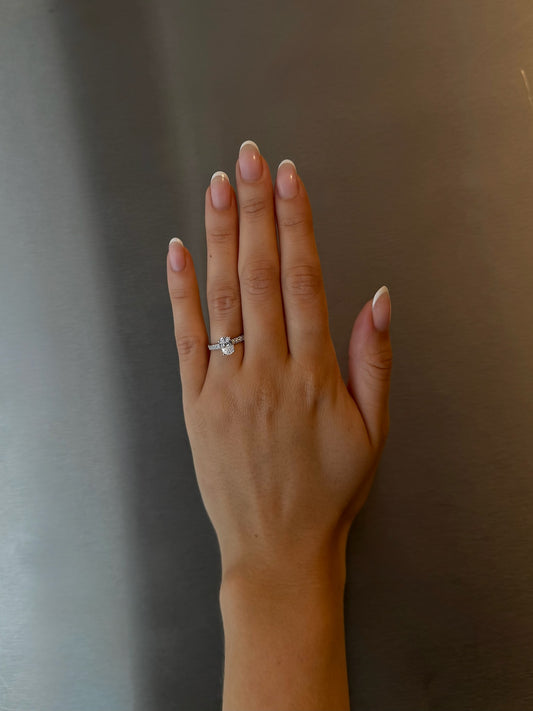

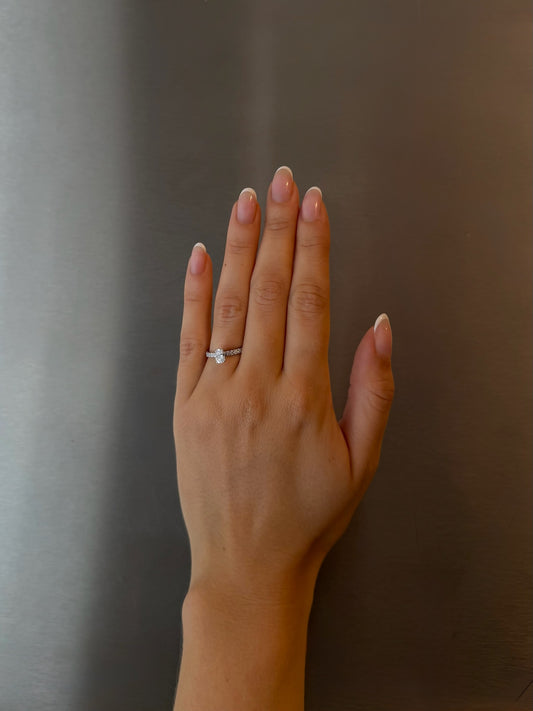

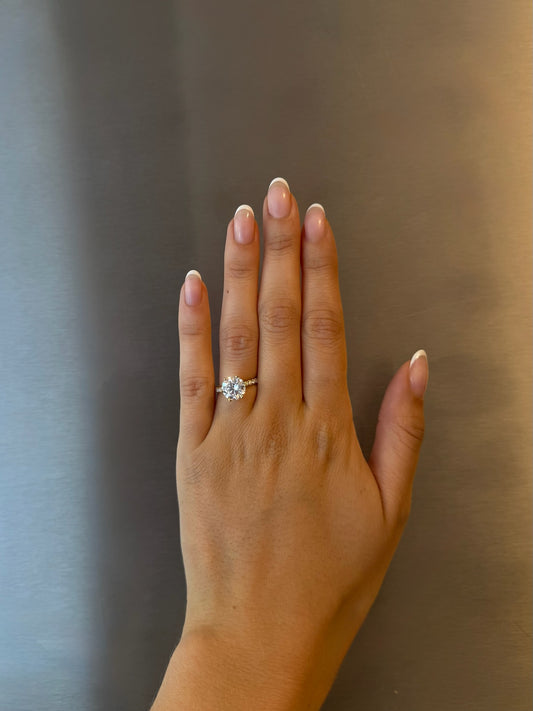

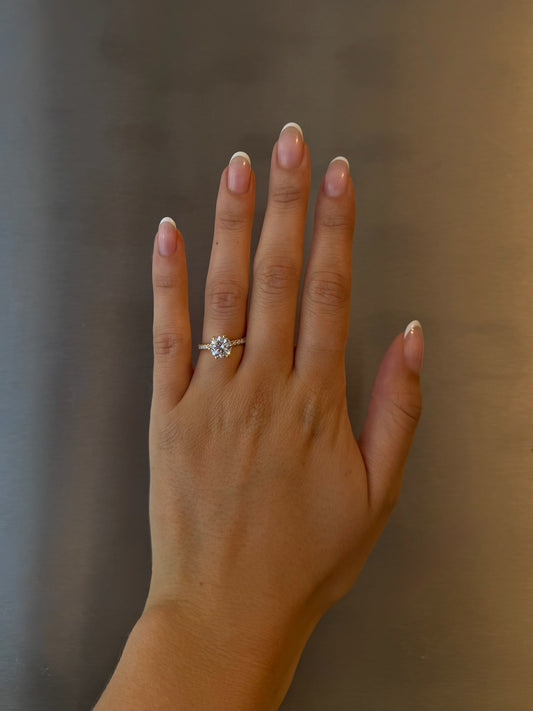

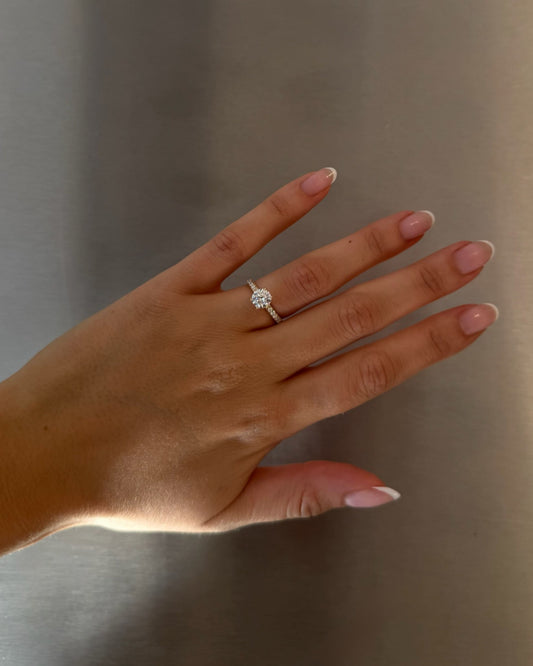

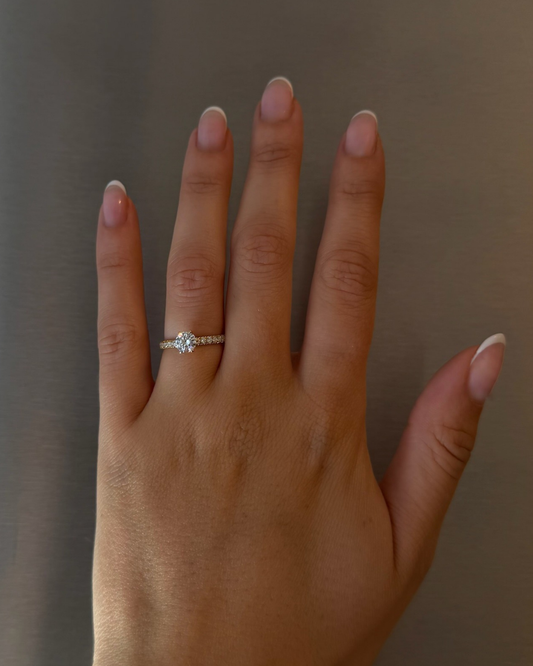










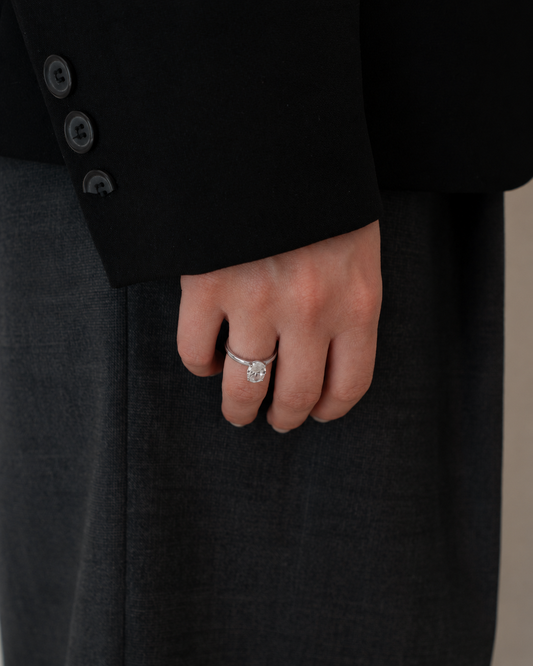

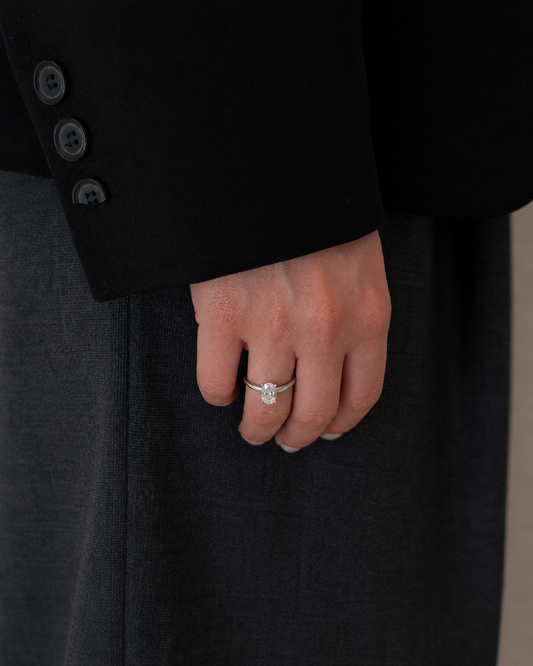

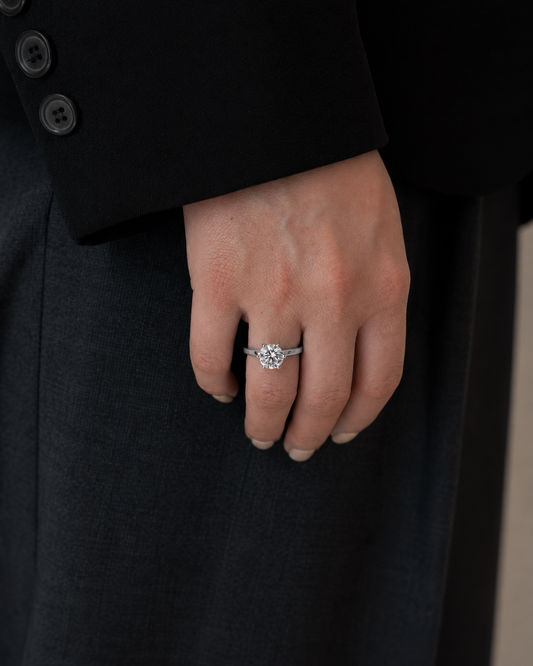

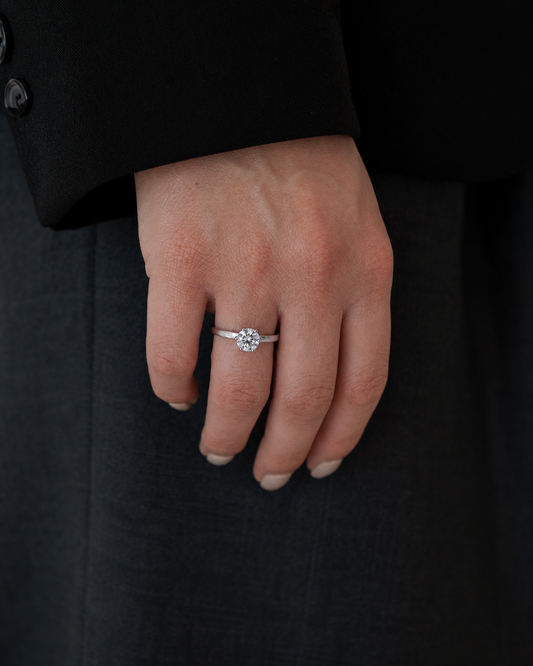





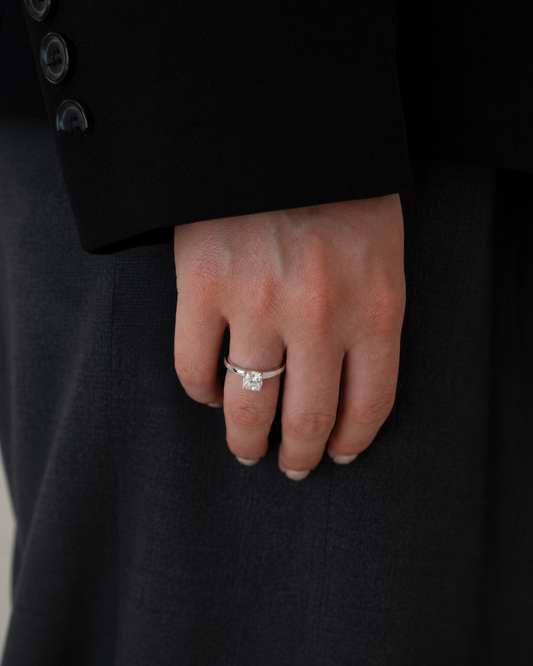

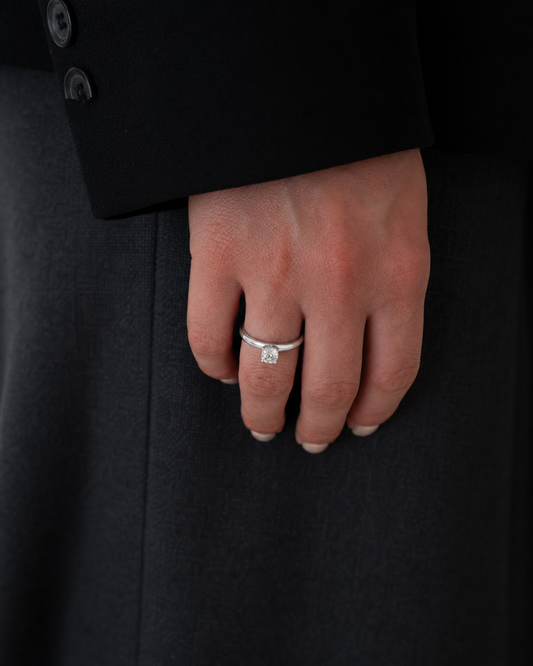

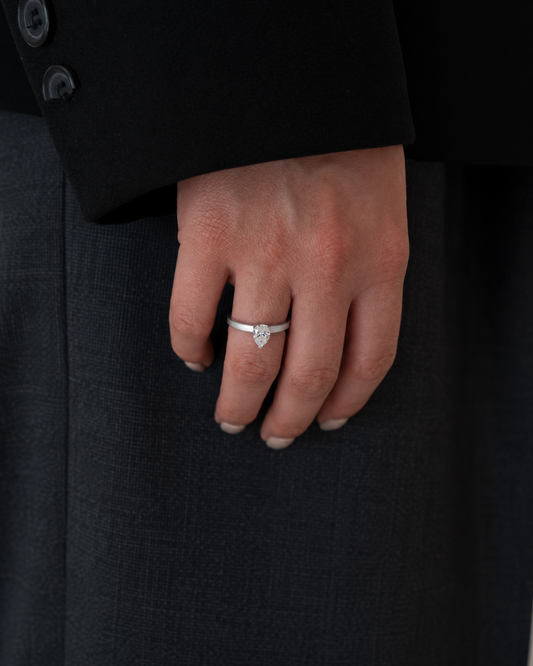

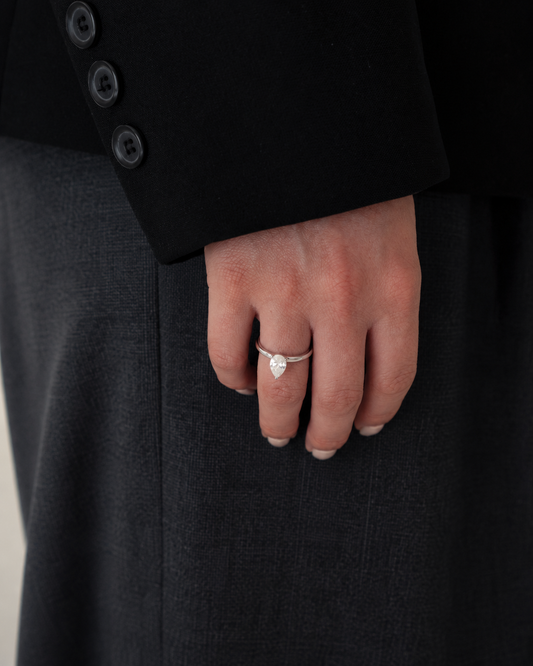

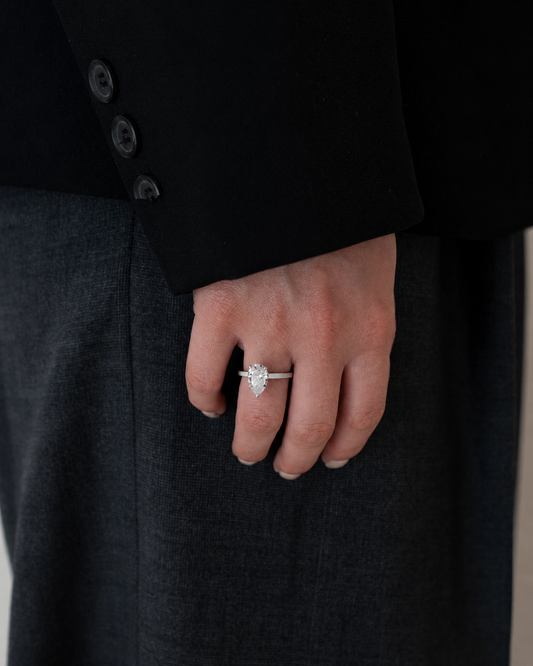

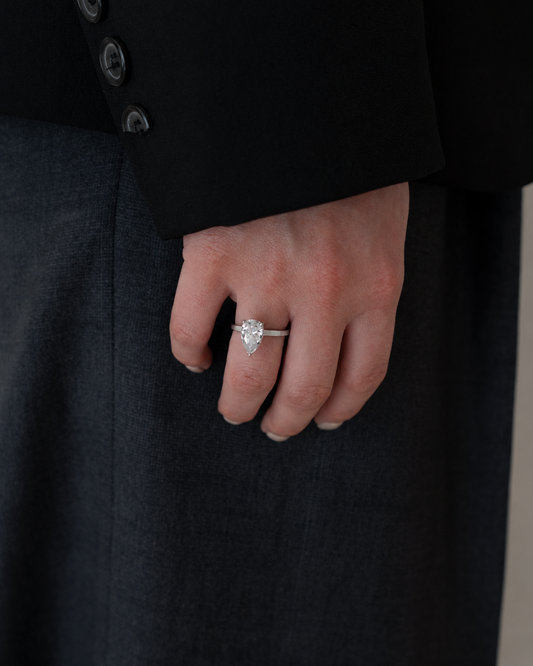

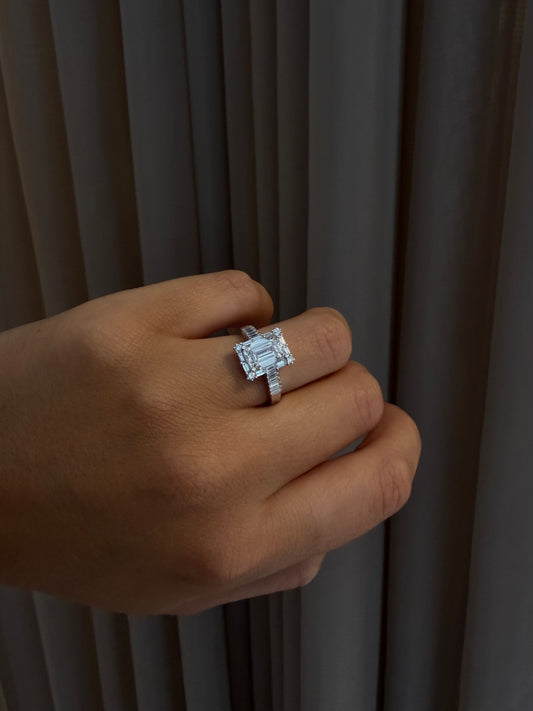

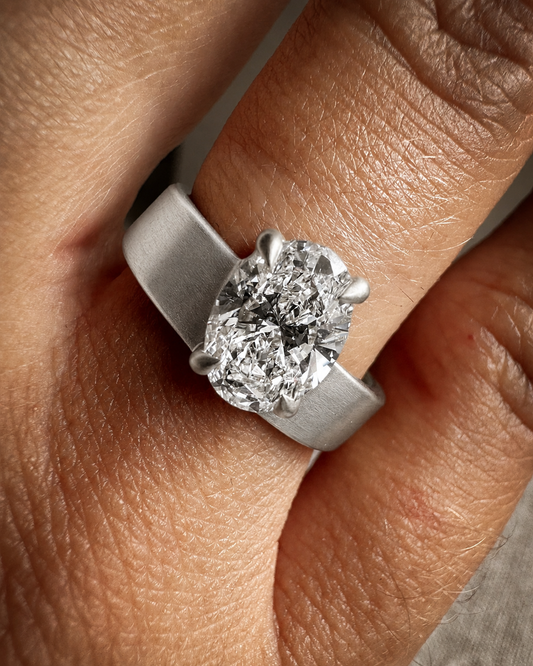

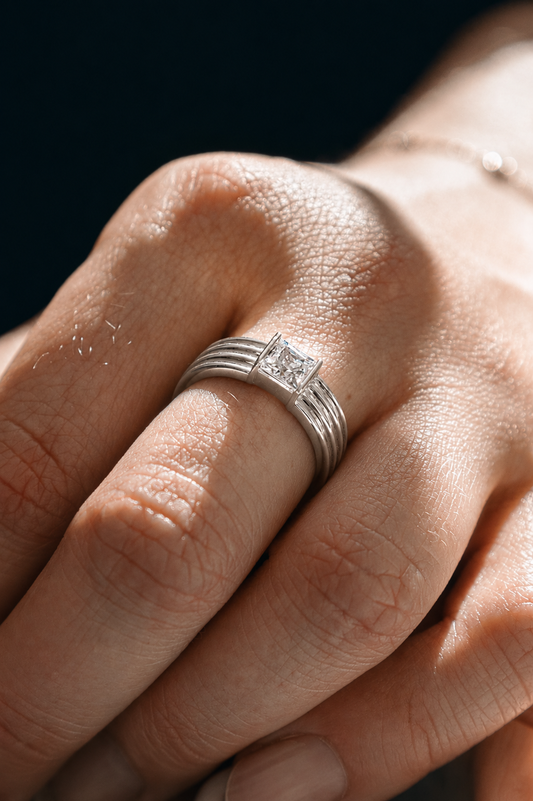

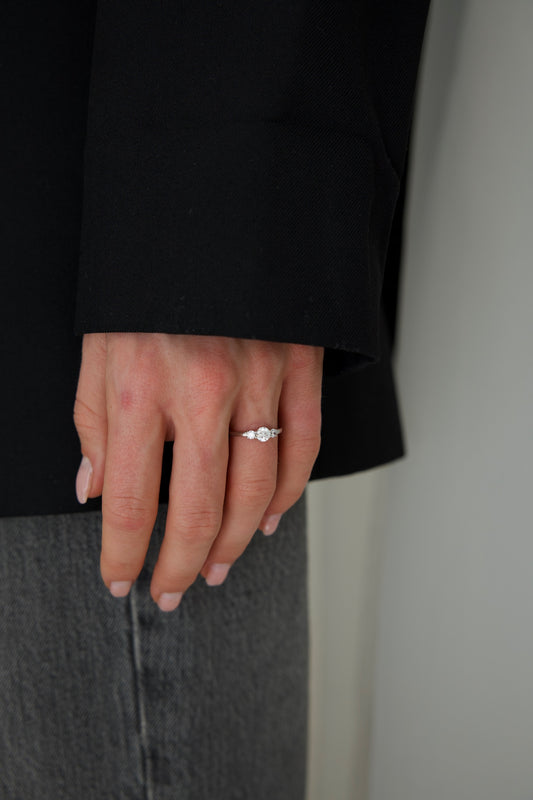
White gold as a frame for the diamond
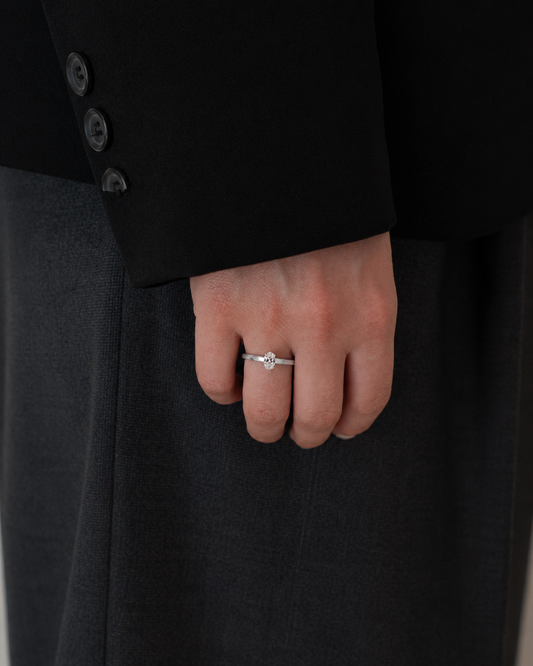
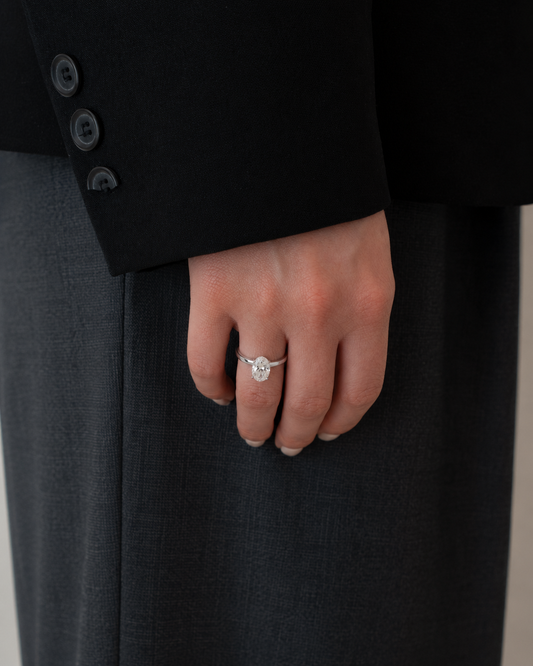
White gold has a cool, silvery-white colour that lets a colourless diamond stand completely pure without a warm tint from the metal. That is the reason many choose white gold specifically for the engagement ring, where the centre stone should be the first thing the eye falls on. At Longvé, the engagement rings are made in 14K white gold, an alloy of pure gold mixed with white metals, so it gets both the bright colour and a hardness that withstands daily wear. An engagement ring sits on the finger every day for years, and that is why the choice is not only about the colour, but also about the shape of the stone, how many diamonds should sit on the ring, and getting the right size.
In the following, the differences between white gold and 14K gold are reviewed, the diamond shapes the engagement ring comes in, and how to find the right ring size.
How white gold differs from 14K gold
The difference between white gold and classic 14K gold is solely the colour. Both are 14 carat, that is the same proportion of pure gold in the alloy, and therefore equally durable for daily wear. White gold gets its silvery-white colour by mixing the gold with white metals, while gold keeps the warm, golden tone from the pure gold.
The colour determines how the diamond stands out. On white gold, a colourless centre stone appears cool and clear, because the metal does not add any warm tint. On 14K gold, the ring gets a warmer look, which some prefer. Many choose white gold because it matches the other silver-coloured jewellery they already wear. If you want to read more about what distinguishes the two metals, the article what is the difference between gold and white gold goes into depth. The same design is often available in both metals, so the choice comes down solely to the look you want on your finger.
Solitaire, pavé, trilogy and eternity
The engagement ring in white gold comes in several basic forms, and the choice is about how prominently the diamonds should feature.
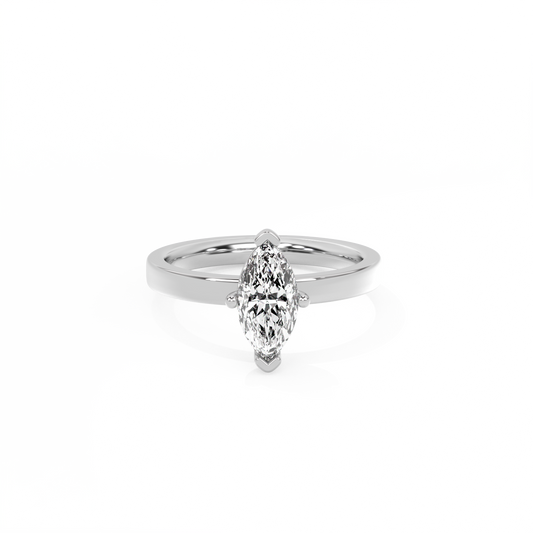
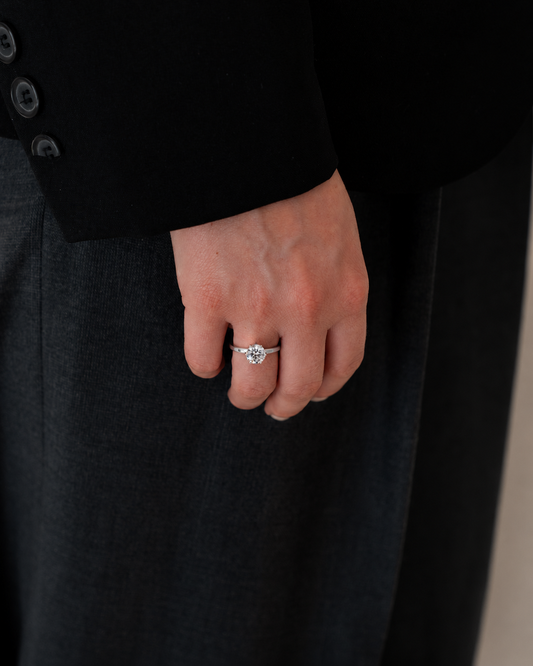
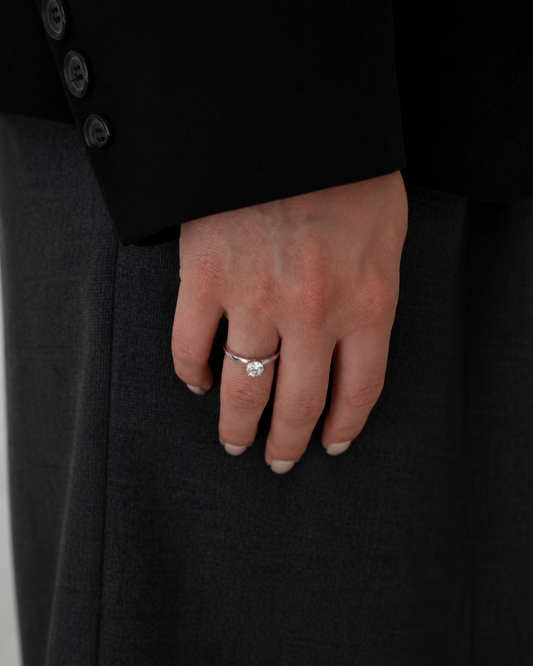
A solitaire ring has one centre stone in a claw setting that lifts the stone up and lets the light reach it from all sides. It is the classic engagement ring, and it comes in several diamond shapes, more on those below. One example is a round solitaire, which is available from 0.5 to 2 carat.
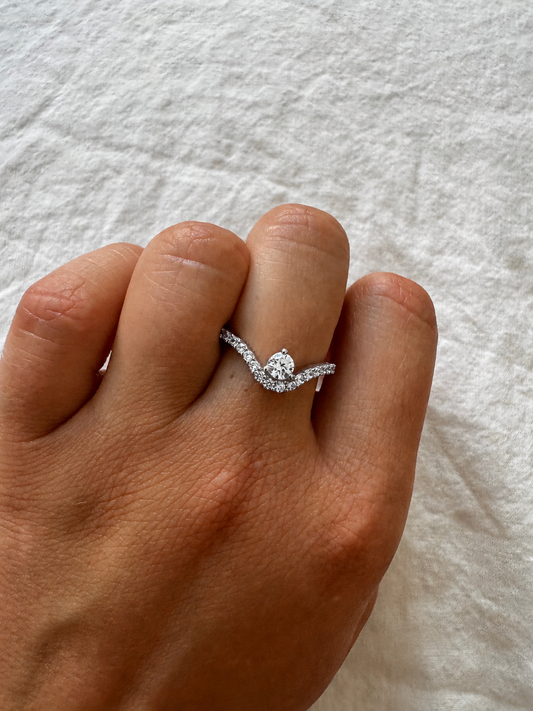
A pavé ring has many small diamonds set closely in the ring band, so the whole ring sparkles. Some combine the two, such as a round pavé solitaire with a centre stone and pavé details along the band.
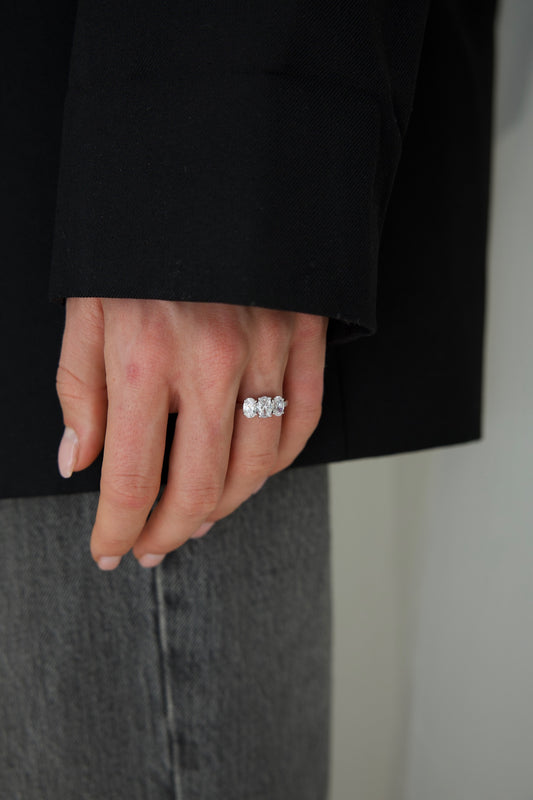
A trilogy ring has three stones in a row, where the middle one is the largest. An oval trilogy gathers 1.7 carat distributed across the three stones.
An eternity ring has small diamonds all the way around the band and gives a thoroughly sparkling look, while a half eternity ring has diamonds halfway around. Both are often chosen as an engagement ring by those who prefer an even row of stones rather than one large centre stone. Several of the designs are collected under eternity rings.
Round, oval, pear, cushion and marquise
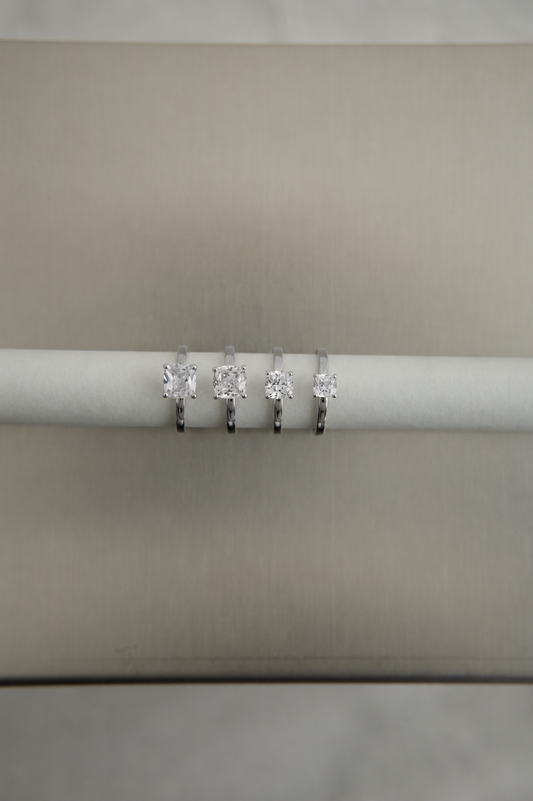
The cut of the centre stone changes the ring's look more than anything else. Longvé's solitaire rings in white gold come in five shapes, and all are available with both lab-grown and natural diamonds.
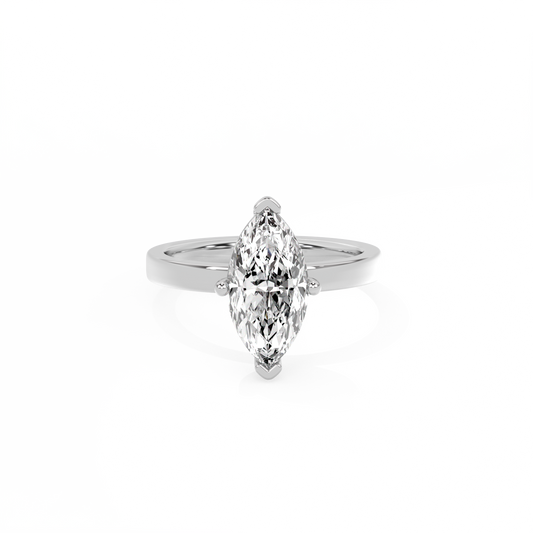
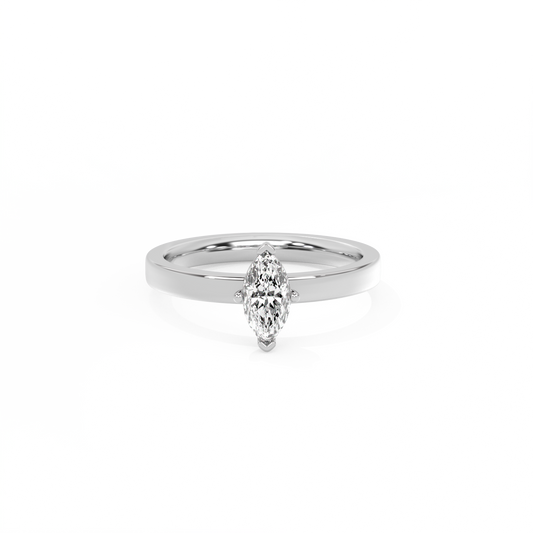
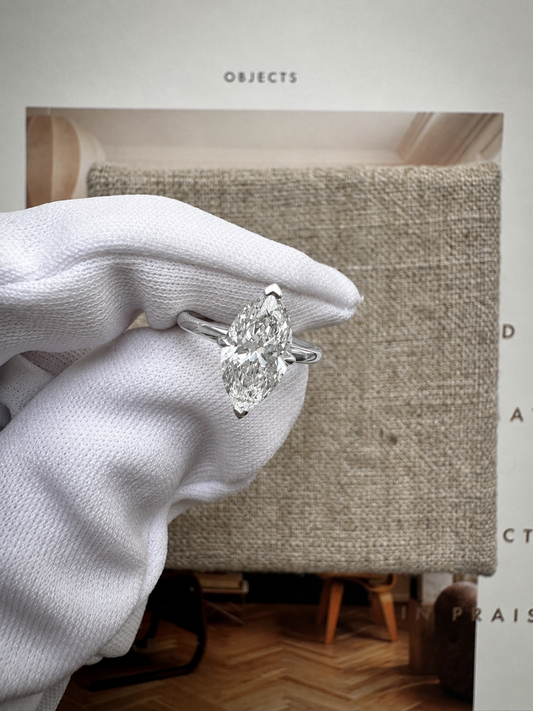
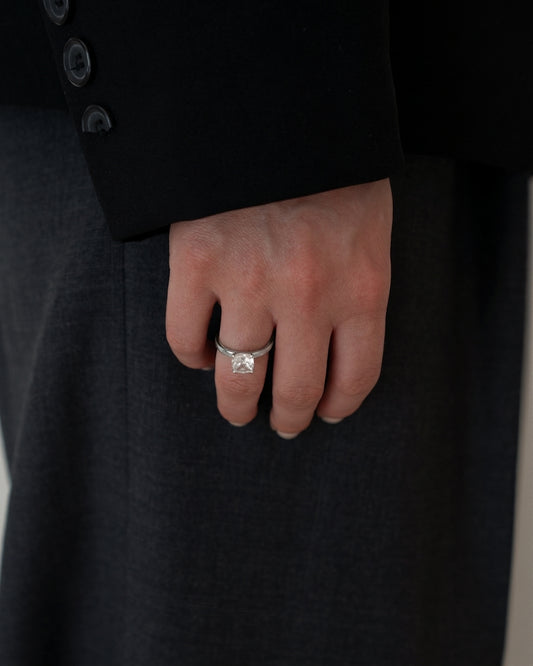
Round is the classic brilliant cut, which throws back the most light and suits by far the most people. Oval resembles the round but optically draws the finger longer and appears slightly larger at the same weight, as in an oval solitaire. The pear shape is teardrop-shaped with a pointed end and a round end, see a pear solitaire. Cushion is the square shape with soft, rounded corners, as in a cushion solitaire. Marquise is the elongated shape with a point at both ends that fills the finger a lot, like a marquise solitaire.
The shape is a matter of personal taste, and it is hard to change later, so it is worth sensing which one feels right.
Lab-grown or natural diamond in white gold
Most engagement rings in white gold at Longvé are available with both lab-grown and natural diamonds in the same design. A lab-grown diamond has exactly the same physical and chemical properties as a natural diamond and is just as hard, namely 10 on the Mohs scale, the highest on the scale. The difference lies in where the stone was formed, not in how it looks, and the two cannot be distinguished with the naked eye.
For the same budget, a lab-grown diamond typically gives a larger or cleaner stone. If you want to understand how they are formed, what are lab-grown diamonds explains it in more detail. Both variants are available across solitaire, pavé, trilogy and eternity, so the choice of stone is independent of which ring shape you land on.
How to find the right ring size
The engagement rings are available in sizes 48 to 60, which correspond to the ring's inner diameter in millimetres. Size 54 corresponds to a diameter of 17.2 millimetres, while 50 is 15.9 millimetres and 58 is 18.5 millimetres.
If the ring is to be a surprise, you can measure a ring the recipient already wears on the right finger and compare the inner diameter with the sizes. You can also borrow a ring and have it measured at a goldsmith. An engagement ring is normally worn on the ring finger of the left hand here in Denmark, so measure a ring from there if you can. If you miss slightly, most rings can be adjusted afterwards. If you need more help, how to measure ring size reviews the methods step by step.
Engagement ring and wedding ring that match
Many today choose two rings, one engagement ring and one wedding ring, worn together on the same finger. If you choose the engagement ring in white gold, it is worth considering the wedding ring from the start, so the two rings have the same metal colour and lie flat against each other.
A slim eternity or half eternity ring in white gold works well as a wedding ring alongside a solitaire, because it follows the finger without competing with the centre stone. If you are in doubt about what distinguishes the two rings, what is the difference between an engagement ring and a wedding ring explains it. Several of Longvé's rings in white gold are collected under rings, where you can see the shapes side by side.