











How the selection is structured
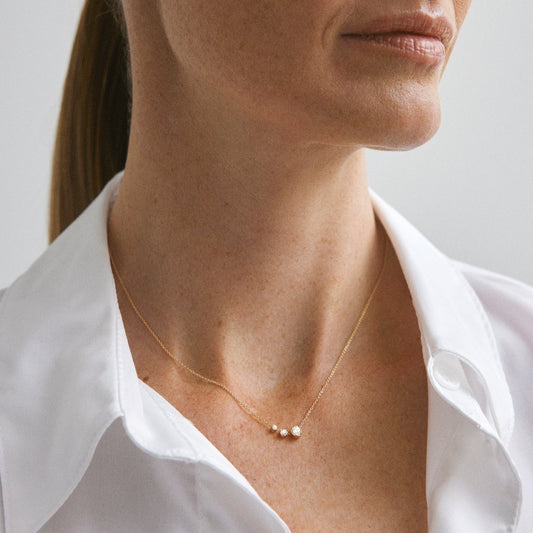
A diamond necklace at Longvé consists of a single diamond or a row of diamonds set in a chain of 14 karat gold or white gold. The selection ranges from an almost invisible little stone of 0.03 carat to striking solitaire pendants of 1, 1.5 and all the way up to 2 carat, and each model is available with both a natural diamond and a lab-grown diamond.
Two things determine how the necklace looks: how the diamond is set, and how large it is. The setting determines the expression, and the carat determines how much it takes up at the neck. The rest of the choices (gold or white gold, a single stone or a row) are about what suits the wearer and the occasion. The following sections go through the choices one at a time, so it is easy to see what sets the models apart.
The difference between a bezel and a prong setting
The setting is the way the diamond is held in place in the pendant, and it is what gives the necklace its expression.
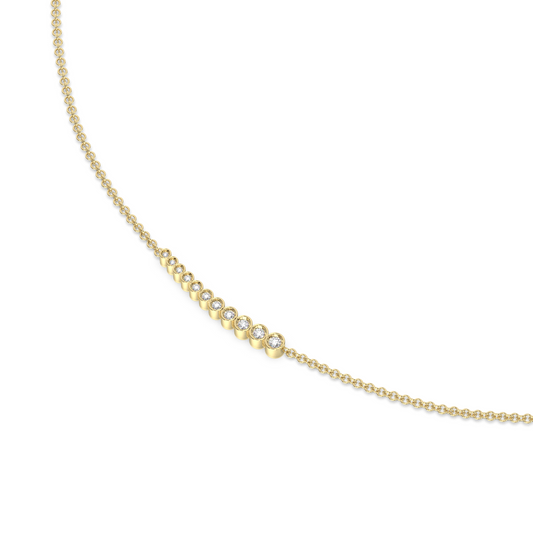
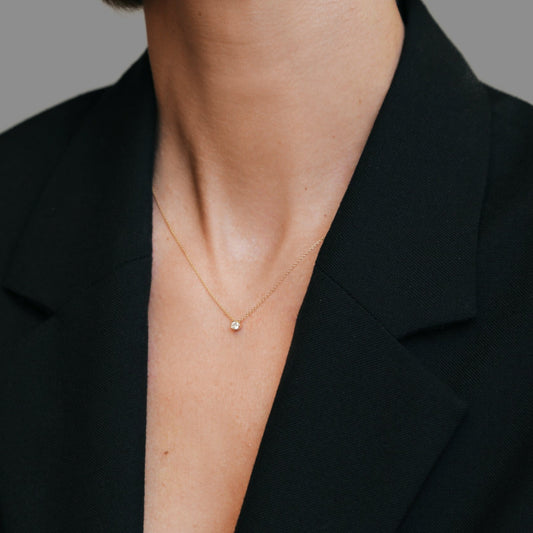
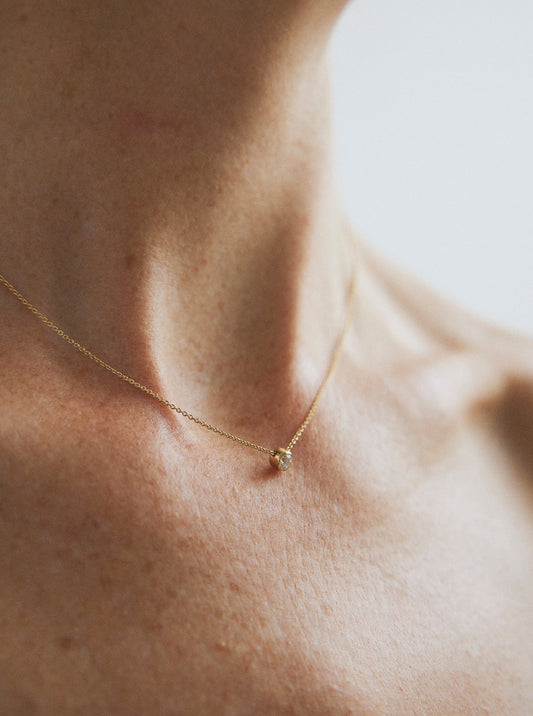
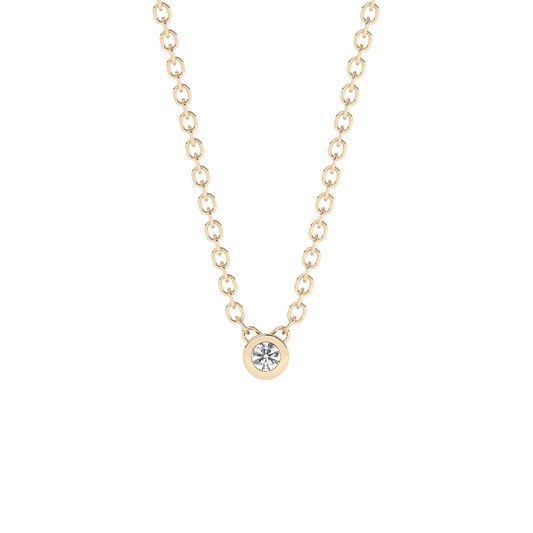
In a bezel setting the diamond is enclosed by a rim of gold all the way around. This gives a clean, rounded look, and the rim protects the stone from knocks and from catching on clothing and hair. That makes the bezel a good choice for a necklace meant to be worn every day. See the selection of bezel jewellery if that expression appeals to you.
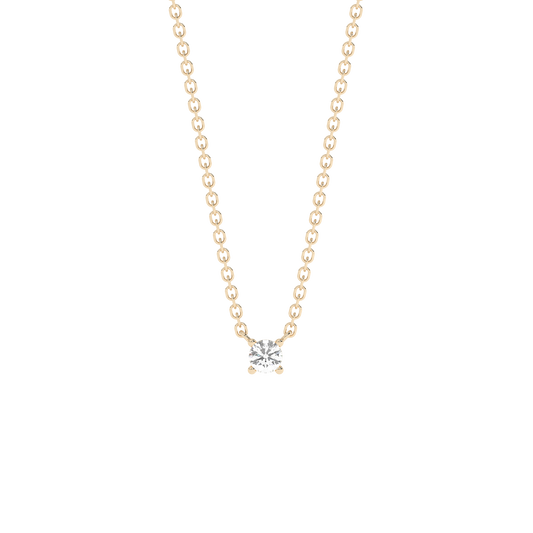
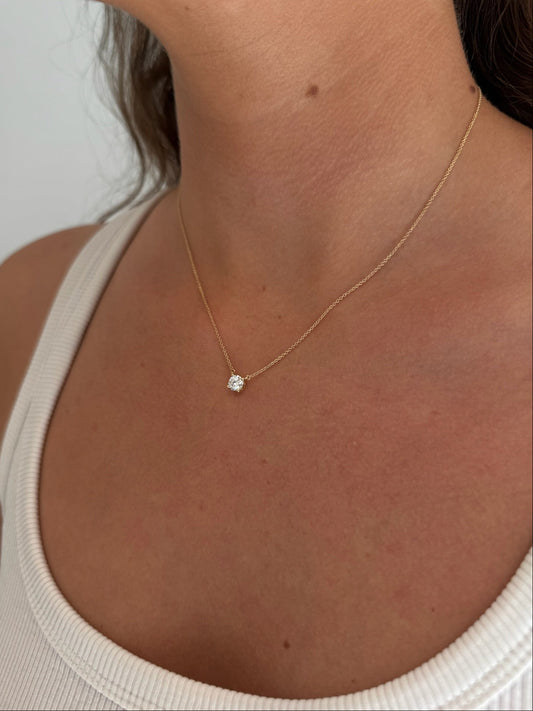
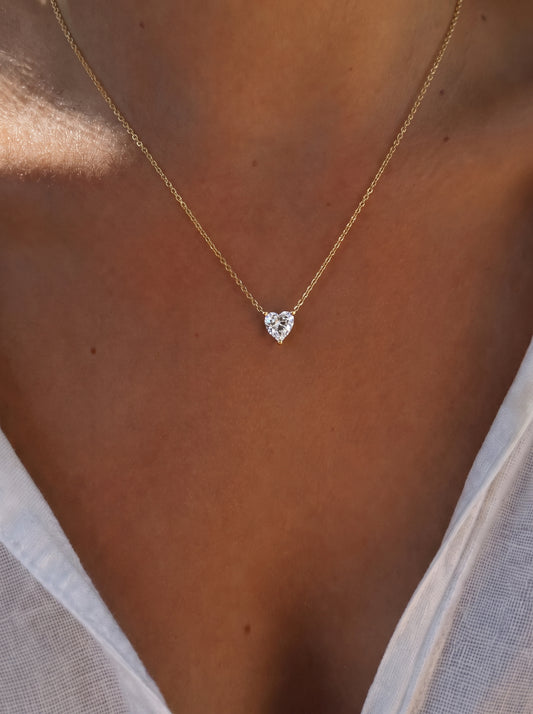
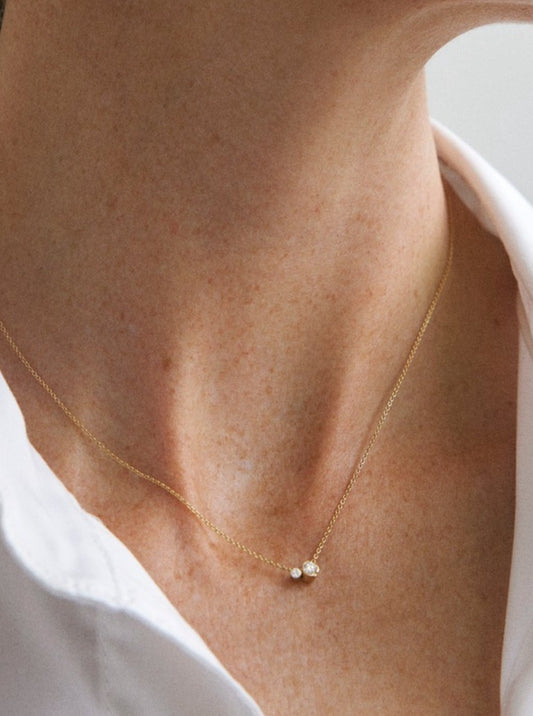
In a prong setting the diamond is held by fine claws, so the metal takes up as little space as possible. The light hits the stone from several sides, and the diamond appears more open and sparkling. It is the classic solitaire way of showing a diamond. Longvé carries corresponding prong jewellery across categories.
Both settings are available across the entire carat range, so the choice between them is about expression and use, not about the size of the stone.
How to choose carat for a diamond necklace
Carat is the weight of the diamond, and it is the figure most often confused with the karat in gold. Here it is about the stone: the more carats, the larger and more visible the diamond.
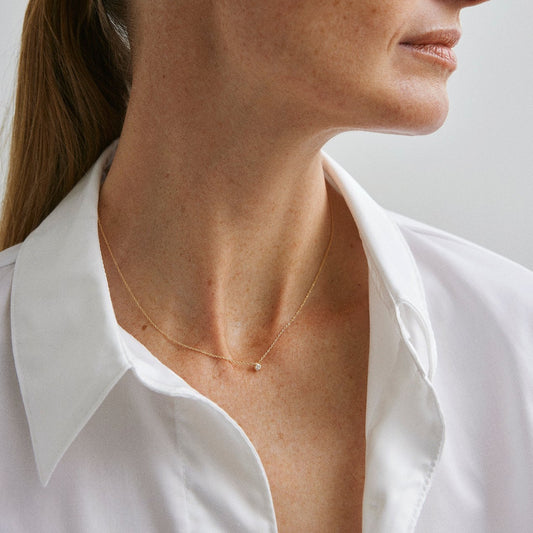
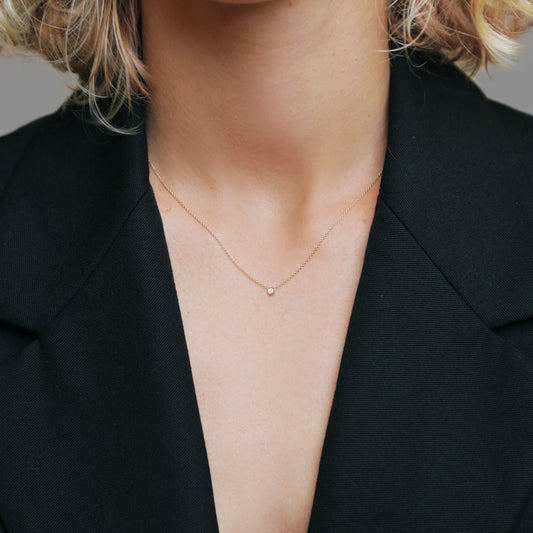
At the low end sit models of 0.03 carat, such as the Tiny Bezel Diamond Necklace. It is a discreet glint that works for everyday wear and lets itself be layered with other chains without taking all the attention.
In between lie stones of 0.10 to 0.26 carat, where the diamond becomes clear at the neck but still keeps a subdued expression.
At the high end sit solitaire pendants of 1, 1.5 and 2 carat, where the stone becomes a real eye-catcher. A model like the Prong Diamond Necklace - 14K White Gold (1 ct.) is a clear statement and is suitable for gifts for milestones. Consider whether the necklace is mostly to be worn every day or for special occasions when you choose the carat.
Gold or white gold
All diamond necklaces are available in 14 karat gold or 14 karat white gold, and the choice is mostly about skin tone and wardrobe.
Gold gives a warm contrast to the diamond and suits most skin tones. It is the classic choice and is found throughout the gold selection.
White gold has a cool, silvery-white surface that blends more with the diamond and lets the stone step into the foreground. It goes well together with other white metals you already wear. See the options in white gold.
White gold is made by alloying gold with white metals and typically gets a rhodium-plated surface, which over the years may need to be polished up. If you want to read more about what white gold actually is, Longvé has an overview in the article what is white gold.
The difference between natural and lab-grown diamonds
Each model in the collection comes in two versions: with a natural diamond or with a lab-grown diamond. A lab-grown diamond is grown in a laboratory under conditions that mimic those deep in the earth, where natural diamonds form over a very long time.
Chemically and optically the two are identical. A lab-grown diamond is real carbon in the same crystal structure as a natural diamond, has the same hardness and refraction of light, and you cannot tell the difference between a lab-grown and a natural diamond with the naked eye. The difference lies in the origin and in the price: a lab-grown diamond typically costs considerably less for the same carat, so you can get a larger stone for the same amount.
If you want to understand the process behind it, Longvé goes through it in the article what are lab-grown diamonds. The entire selection of lab-created diamonds is gathered on its own.
Solitaire, letter or tennis
In addition to the single diamond there are a couple of designs, each with its own idea.
The solitaire pendant is the classic form: one diamond hanging freely in the chain, either in a bezel or a prong setting. It is the cleanest way to wear a diamond and what most people picture with a diamond necklace.
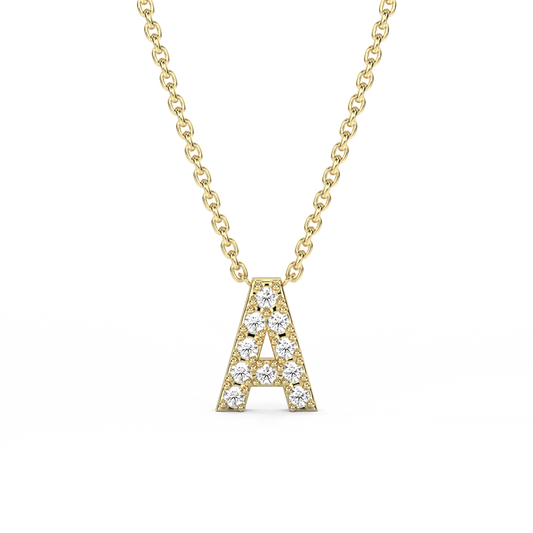
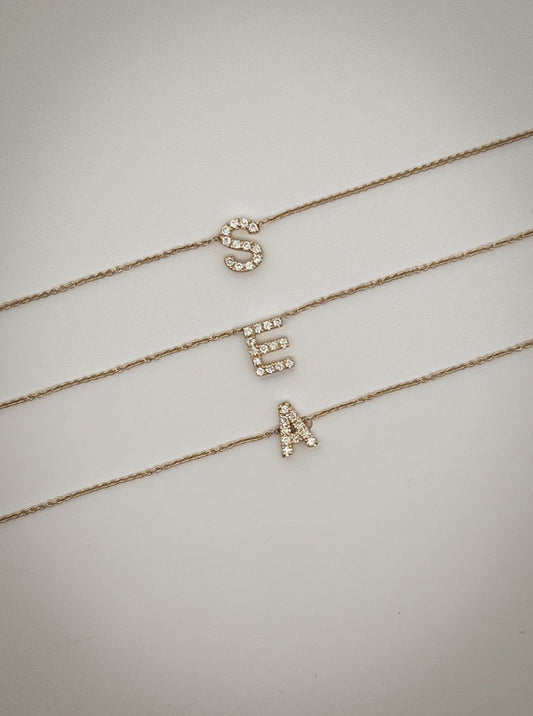
A letter pendant like the Letter Diamond Necklace | A-Z | sets an initial with a small diamond and makes the necklace personal. It is an obvious choice for a gift with a name or a meaning attached to it.
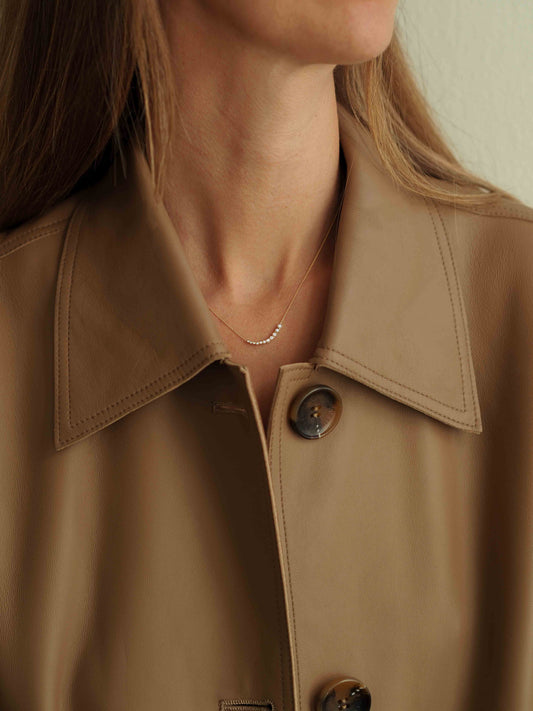
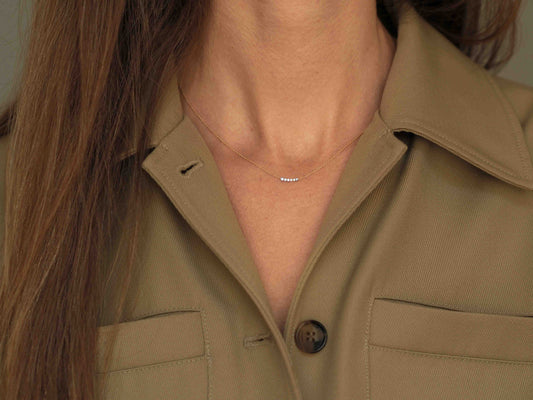
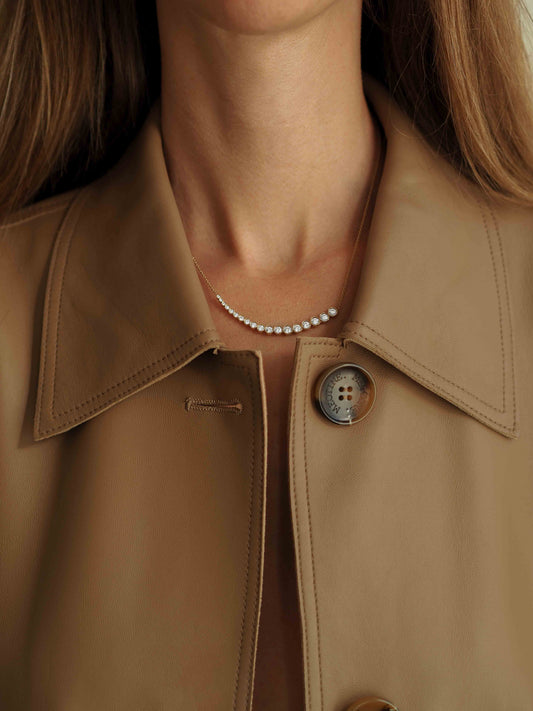
A tennis pendant carries a row of diamonds set in a line. The Bezel Tennis Diamond Necklace Tiny keeps it fine and discreet, while the medium version of 1.53 carat gives a continuous line of sparkle along the neck. The name tennis comes from the tennis bracelet, whose story Longvé tells in why is it called a tennis bracelet.
A diamond necklace for men
A diamond necklace does not have to be feminine. The most discreet models, where a single small stone of 0.03 or 0.07 carat sits close in a sturdy chain, work just as well for men. A bezel setting often suits better here, because the rounded rim gives a more subdued, masculine expression than the fine claws in a prong setting. Also see the full selection of necklace for men if you are looking for something for him.
How to choose the length of the necklace
The products come in a fixed chain length, but it is worth considering where the pendant should fall on the wearer. A shorter chain places the diamond high on the chest, close to the hollow of the throat, while a longer chain lets the pendant fall lower, where it is more visible over an open neckline.
If the necklace is to be worn together with other chains in layers, it helps that they have different lengths, so the diamonds do not lie on top of each other. Longvé goes through the common lengths and how they fall in the article how long should a necklace be.
The diamond necklace as a gift
A diamond necklace is a classic gift for a milestone birthday, a wedding anniversary or another mark in life, and the carat range makes it possible to hit widely different budgets. A small bezel model of 0.03 carat is an affordable first diamond, while a solitaire pendant of 1 or 2 carat marks a bigger occasion.
If you are in doubt about the amount, it can help to start from a price range. Longvé gathers gift ideas by price in collections such as gifts under 3000 DKK and gifts over 4500 DKK. Choosing lab-grown over a natural diamond can also free up budget for a larger stone, if the size means the most to the recipient.
How to care for the diamond necklace
A diamond is the hardest natural material that exists, and it is not harmed by ordinary use. It is the gold around it that requires care: it can be scratched, and a bezel setting protects better against daily knocks than an open prong setting.
Skin, cream and soap settle over time as a film on the stone and dull the shine. A soft brush, lukewarm water and a little mild soap are enough to bring the sparkle back. Longvé has a concrete procedure in how to clean jewellery. Preferably take the necklace off before bathing and exercise, and store it separately from other jewellery, so the chain does not tangle or get scratched.