What is a tennis bracelet?
-

-
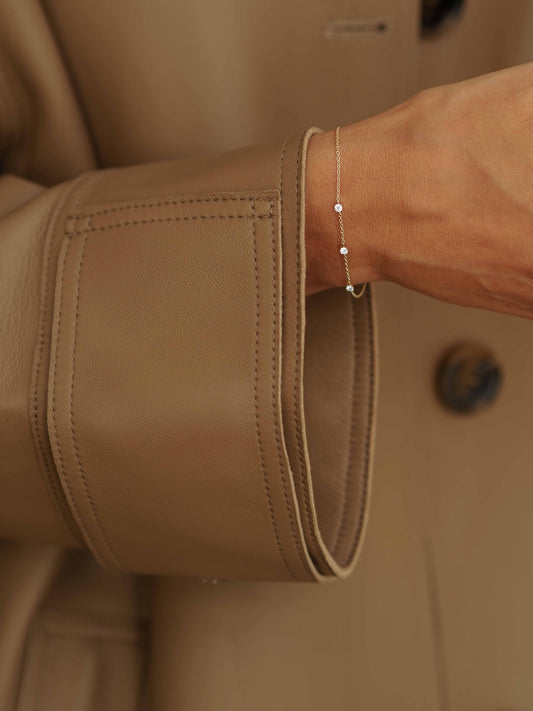
A tennis bracelet is a bracelet where a long row of identical cut diamonds sit in settings all the way around, connected by small links, so the bracelet is supple and follows the wrist. The stones have the same size and cut from end to end, and the metal itself takes up as little space as possible, so it is the diamonds that carry the expression. The result is an unbroken line of light around the wrist.
The name therefore refers to a very specific construction, not just a bracelet with diamonds. At Longvé, the tennis bracelet comes in both 14K gold and 14K white gold and with either lab-grown diamonds or natural diamonds in the same design, so the same bracelet is available in several variants.
How is a tennis bracelet constructed?
The basic principle is a chain of small, almost identical links, where each link holds one diamond in its own setting. Because the links are hinged together, the bracelet can bend freely and lie close to the wrist, while the stones maintain their spacing and orientation relative to one another. It is that combination of firmness around each individual stone and mobility between the links that distinguishes a tennis bracelet from an ordinary chain bracelet with single pendants.
The diamonds are typically round and brilliant-cut, and they are set in one long, continuous row. That is precisely why the term is often used in the plural: there is no single center stone, but many stones of the same size repeated evenly all the way around.
The length is chosen so that the bracelet fits without tightening. A clasp holds the two ends together and is often supplemented with a safety lock, because there are diamonds along the entire band.
Why is it called a tennis bracelet?
The name comes from the world of tennis. During a match, a well-known tennis player lost her diamond bracelet on the court, and play was paused while the bracelet was found. The incident led to that type of diamond bracelet being referred to as a tennis bracelet, and the term has stuck ever since.
This also explains why the safety lock plays a role: a bracelet worn in motion needs to stay put.
The setting: prong or bezel
The way the diamonds are held in place determines a large part of the expression. Two settings recur on tennis bracelets.
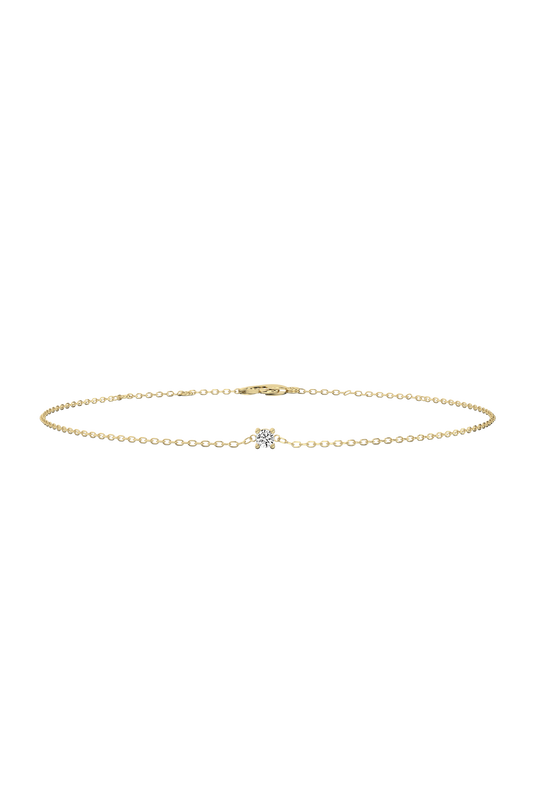
In a prong setting, each diamond is held by small claws that grip the stone and lift it slightly clear of the metal. This gives an open expression where light can reach the stone from several angles. This classic variant is available at Longvé as a tennis bracelet with a continuous row of brilliant-cut diamonds.
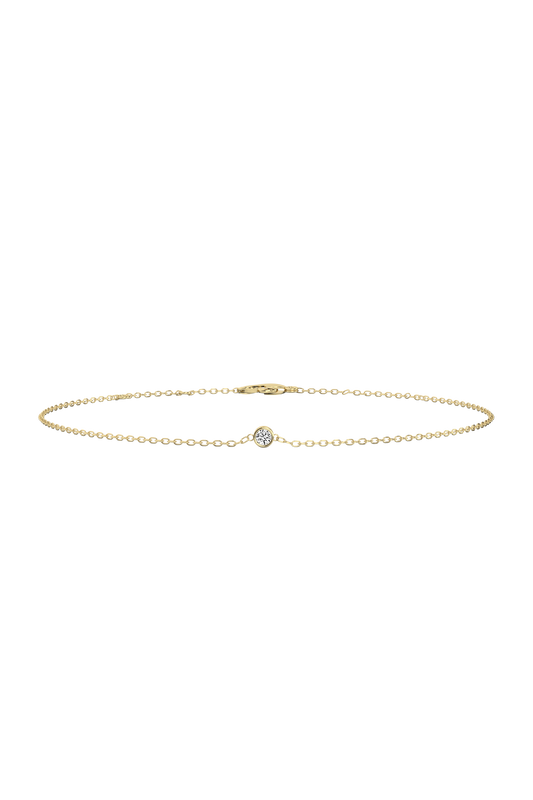
In a bezel setting, each diamond is surrounded by a thin metal rim all the way around. The rim protects the edge of the stone and gives a more rounded, robust line. If you want that expression, there is a bezel tennis bracelet, where the metal ring around each stone stands out more clearly.
What does the carat weight mean for a tennis bracelet?
Carat is a unit of weight for diamonds, where 1 carat equals 0.2 grams. On a tennis bracelet, the carat figure indicates the total weight of all the stones combined, not the weight of a single diamond. The higher the total carat figure, the larger the individual stones, and the wider the line of diamonds around the wrist becomes.
Longvé's tennis bracelets come in a wide range of total carat weights, so you can choose anything from a fine, discreet line to a striking bracelet with noticeably larger stones. A lighter bracelet has smaller diamonds set closely, while a heavier bracelet has larger stones and takes up more visual space. What they all have in common is that the stones are the same size as one another, regardless of which level you choose.
Diamonds are also the hardest material that exists, scoring 10 on the Mohs scale. That makes a tennis bracelet well suited to being worn often, even though it sits somewhere exposed to knocks and contact.
Gold or white gold for the tennis bracelet
The metal changes how the diamonds appear. In 14K gold, the bracelet takes on a warm tone, where the yellow metal creates contrast with the clear stones. In 14K white gold, the setting blends in more with the diamonds and gives a cooler, more uniform line.
Both metals are available for the tennis bracelet, and the choice mostly comes down to which other pieces of jewelry the bracelet is to be worn with. If you want to see Longvé's entire selection of jewelry in one metal, you can look at the 14K yellow gold collection or the 14K white gold one.
Lab-grown or natural diamonds
Longvé carries tennis bracelets with both lab-grown diamonds and natural diamonds. A lab-grown diamond has the same physical and optical properties as a natural diamond and is also a genuine diamond material, grown under controlled conditions instead of formed in the earth. This means that a tennis bracelet with lab-grown diamonds and one with natural diamonds can look the same and be worn in the same way.
Because both types are available in the same design, you can choose based on which carat level and metal you want, without having to compromise on the model itself. The entire selection of jewelry with grown stones is gathered in the lab-grown diamonds collection.
The tennis bracelet's relatives in the same style
The same idea of a continuous row of identical diamonds recurs in other types of jewelry. A bezel tennis necklace carries the line of set diamonds up around the neck instead of around the wrist, and a pavé diamond bangle sets many small stones closely in a rigid bangle rather than in a supple chain.
If you want to compare models side by side, all the bracelets with the continuous diamond line are gathered in the tennis bracelets collection.