How do you best store jewellery?
-

-
Most people put their jewellery in the same place when they take it off in the evening, and that is rarely the place that is best for it. Jewellery lying loose together in a bowl or a drawer scratches each other, chains get tangled, and it tarnishes faster than it otherwise would. How you store your rings, necklaces and earrings largely determines how long they stay beautiful. Here you get concrete advice on how to do it at home, and what is particularly important for gold, white gold, silver and diamonds.
Dry, separate and dark is the basic rule for all storage
Jewellery keeps best when it lies dry, each piece on its own and away from light and air. Moisture is the biggest enemy, because it accelerates the tarnishing of silver and causes metal to lose its shine. A bathroom is therefore one of the worst places to store jewellery, even though this is often where it ends up. A drawer in the bedroom or a cabinet away from windows and radiators provides a stable temperature and low humidity.
Keeping jewellery separate is about more than tidiness. When two pieces lie on top of each other, metal rubs against metal, and a diamond is hard enough to scratch almost anything else it touches. Each piece of jewellery should therefore have its own compartment or its own pouch, so the surfaces do not work against each other.
How to prevent chains from tangling
Necklaces are the items that most often end up in a hopeless knot, and the thin chains are the worst. A chain lying loose together with others twists around itself and around the neighbouring pieces, and the finer the links are, the harder it is to free again. The simplest solution is to close the clasp and hang the chain up, so it hangs straight down at full length.
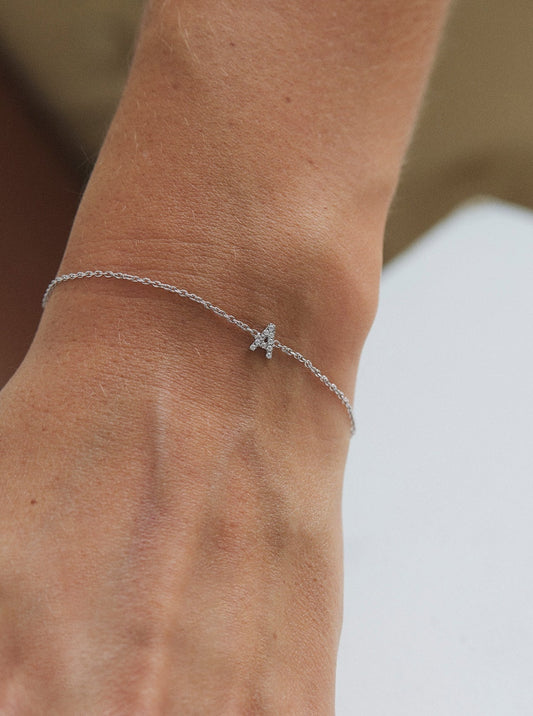
If you do not have the option to hang them, lay each chain flat in its own pouch or its own compartment, and always close the clasp first. A closed clasp keeps the ends together and prevents the chain from slipping through itself. The same applies to bracelets with a clasp. If you are unsure how the clasp is opened and closed without bending the links, you can read more in the article about how to close a bracelet with a clasp
Rings and earrings should each have their own compartment
Rings tolerate lying together worse than you might think. A diamond in a ring can scratch the gold on the neighbouring ring, and gold is a soft metal that easily picks up small marks. Therefore, place your rings each in their own compartment, or roll them in a soft cloth so the stones do not reach each other. A box with padded grooves, where each ring sits on its own, serves the same purpose.
Earrings are small and easy to lose, and the second earring always disappears first. Keep the pairs together and store earrings in pairs, preferably on a cushion with holes or in small compartments, so the posts and backs do not tear at other jewellery. Put the back on the ear posts so it does not get lost, and so the sharp pin does not scratch anything.
Silver should lie airtight so it does not tarnish
Silver tarnishes when it reacts with sulphur in the air, and this happens faster in humid rooms and close to rubber, wool and certain types of paper. A piece of silver lying out in the open turns greyish within weeks. If you store it in a closed zip-lock bag, you keep the air out and significantly slow down the tarnishing.
Longvé's signet rings and a few chains and bracelets are made of sterling silver, and they benefit from lying on their own in a tightly sealed bag when not in use. The rest of the silver follows the same principle. If a piece tarnishes anyway, it can be polished clean again, and the procedure is described in the article about how to clean jewellery
Good to know
Never store silver together with rubber bands or elastics. The sulphur in rubber causes silver to tarnish quickly and often leaves dark streaks where the band has touched the metal.Gold and white gold tolerate storage better than silver
Gold does not tarnish the way silver does and is less sensitive to air. Both 14K gold and 14K white gold therefore stay beautiful with simpler storage, but they still scratch if they lie against diamonds or other jewellery. The key for gold is to avoid wear from other surfaces, not to keep the air out.
White gold often has a surface of rhodium, which gives the white, cool colour. That surface wears down slowly over the years, and unnecessary rubbing against other jewellery accelerates it. If you give white gold its own compartment, it retains the white colour longer.
Diamonds scratch everything else and should lie on their own
A diamond is the hardest material in your jewellery and sits at 10 on the Mohs scale, which measures how hard materials are. This means that a diamond can scratch gold, silver and even other diamonds if two stones rub against each other. Both lab-grown diamonds and natural diamonds have exactly the same hardness, so both should be treated the same way.
Therefore, store diamond jewellery so the stones do not touch other jewellery. A separate compartment, a soft pouch or a cloth between the individual pieces is enough. This applies to diamond rings, diamond necklaces and diamond ear studs alike, regardless of whether the stones are small or large.
Clean the jewellery before you put it away
Skin oils, cream and sweat settle on jewellery over the course of a day, and if you put it away like that, the film stays on and can over time make the surface dull. A quick wipe with a soft, dry cloth before the piece is put back removes most of it. Be particularly careful with chains and claw settings, where dirt easily collects.
Jewellery you use daily rarely needs more than a wipe between uses. If it needs a more thorough treatment, you will find the procedure for the individual metals in the article about cleaning jewellery. Clean jewellery put away dry stays beautiful the longest.
A fixed system makes it easy to keep up
The best storage is the one you actually use every day. Choose a fixed spot away from the bathroom, give each piece of jewellery its own compartment or its own pouch, and always close clasps on chains and bracelets before putting them away. Keep silver airtight, give diamonds space on their own, and wipe the jewellery before putting it back. With that routine you avoid the scratches, knots and dark spots that otherwise come from the jewellery lying together and wearing on each other.