What are diamonds made of?
-

-
A diamond is made of a single element: carbon. The same carbon is found in the pencil, in coal and in all living things, but in a diamond the atoms are arranged in a very specific way. Each carbon atom is bonded to four neighbouring atoms in a rigid, three-dimensional lattice, and it is precisely this structure that gives the diamond its hardness and its ability to reflect light.
The difference between a pencil and a diamond is therefore not what they are made of, but how the atoms are put together. Graphite in a pencil has carbon atoms in loose layers that slide apart. In a diamond the same atoms are locked in a rigid pattern that does not give way.
Carbon in a crystal structure: why the bonds mean everything
In a diamond each carbon atom forms four equally strong bonds to the surrounding atoms. The bonds point in four directions and connect the atoms in a continuous lattice, where no part of the structure is weaker than the rest. It is this uniform, dense bonding that makes the diamond the hardest known natural material.
Hardness is measured on the Mohs scale, which ranges from 1 to 10. Diamond sits at 10 and is thereby the highest-ranked material on the scale. In practice this means that the surface is not scratched by the materials a ring or a pendant encounters in everyday life, and that the facets keep their sharpness over time.
The carbon also explains why a diamond can be cut with such precise surfaces. Because the structure is uniform, the stone can be cut into facets that send light in and back through the top. It is the interplay between material and cut that gives the characteristic brilliance.
How a natural diamond forms
Natural diamonds form deep in the earth's mantle, where carbon is exposed to very high pressure and very high temperatures over long periods of time. Under these conditions the carbon atoms arrange themselves in the diamond lattice instead of in graphite. The stones are later brought closer to the surface through geological processes, where they can be extracted.
The decisive factor for a natural diamond is the combination of pressure, heat and time. Without all three parts, the same carbon would remain graphite or other forms of carbon instead of becoming a diamond.
Lab-grown diamonds: same carbon, controlled formation
A lab-grown diamond is made of exactly the same carbon in the same crystal structure as a natural diamond. The difference lies in where the formation takes place: instead of in the earth's mantle, the stone grows in a controlled environment where the necessary conditions are recreated. The result is a genuine diamond with the same physical and optical properties, including the hardness of 10 on the Mohs scale.
There are two widely used methods for growing diamonds. In the HPHT method (High Pressure High Temperature) the high pressure and temperature conditions that also cause carbon to crystallise in nature are imitated. In the CVD method (Chemical Vapor Deposition) carbon is supplied in gas form, and the atoms are deposited layer by layer onto a small diamond seed that gradually grows into a larger stone.
Because the material and structure are identical, a lab-grown and a natural diamond cannot be told apart with the naked eye. At Longvé, many designs are therefore available in both variants, so the same piece of jewellery can be had both with a lab-grown diamond and with a natural diamond. The entire selection can be seen under lab-grown diamonds and natural diamonds.
How the carbon shows in the finished jewellery
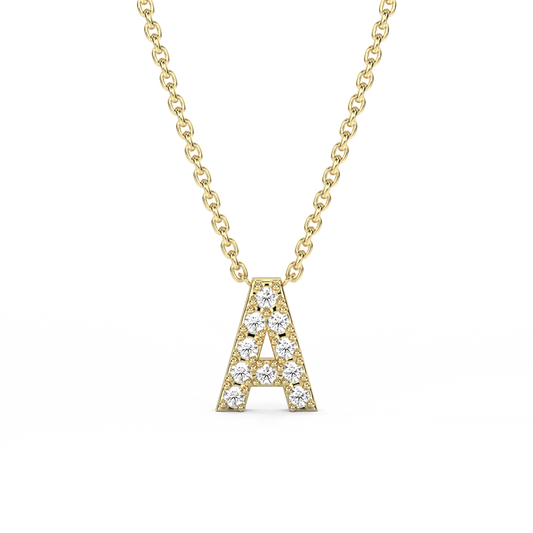
Even though a diamond is made only of carbon, there is a big difference in how the stone appears once it has been cut and set. The shape of the cut determines how the light moves through the stone, and the setting determines how much of the diamond is visible.
A round brilliant cut has many facets designed to reflect light, while shapes such as oval, pear, cushion and marquise give the stone a different silhouette. This is clearly seen in a solitaire ring, where one diamond sits as the centre stone and carries the entire expression. One example is a round solitaire ring in 14K gold, where the round cut stands alone in the prong setting.
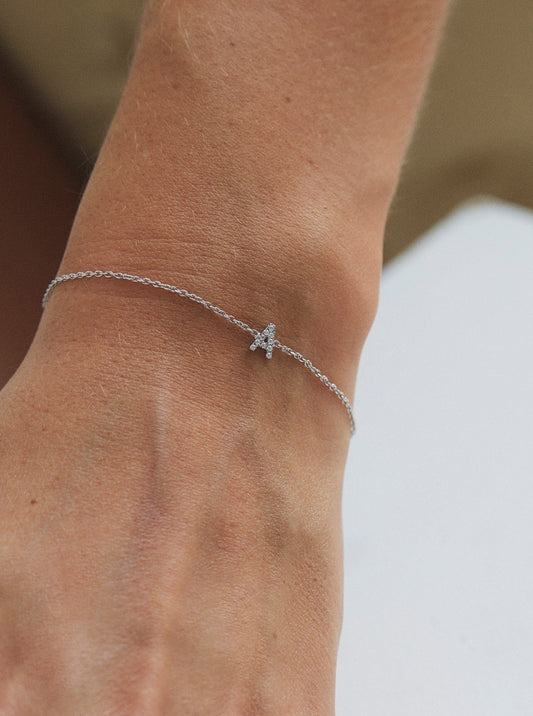
If you want several stones that play together, there are designs where the brilliance of the carbon recurs all the way around. An eternity ring has small diamonds along the entire ring band, while a tennis bracelet sets a row of identically cut stones in settings around the wrist. In both cases it is the same base material, carbon, that gives each individual stone its light.
Carbon is the answer, structure is the explanation
In short, the question of what diamonds are made of requires two answers at once: the material is carbon, and the properties come from the way the atoms are bonded together. This applies both to the natural diamond, formed in the earth over long periods of time, and to the lab-grown diamond, grown under controlled conditions. Both are genuine diamonds with the same hardness, the same structure and the same brilliance when set in a piece of jewellery.