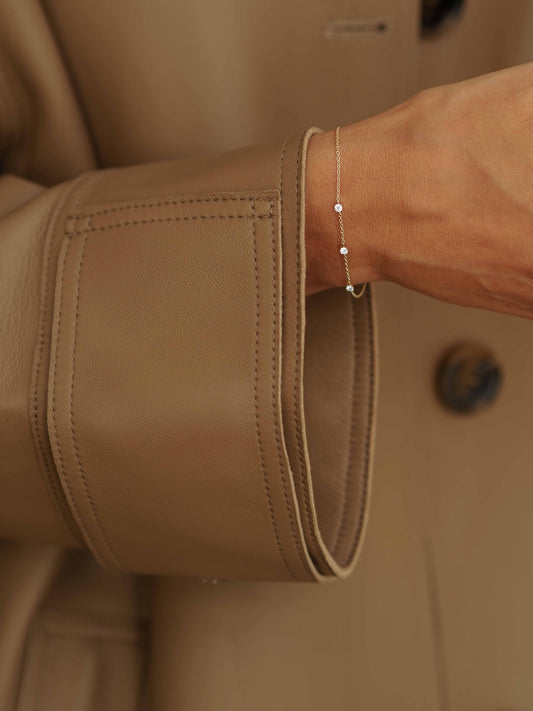
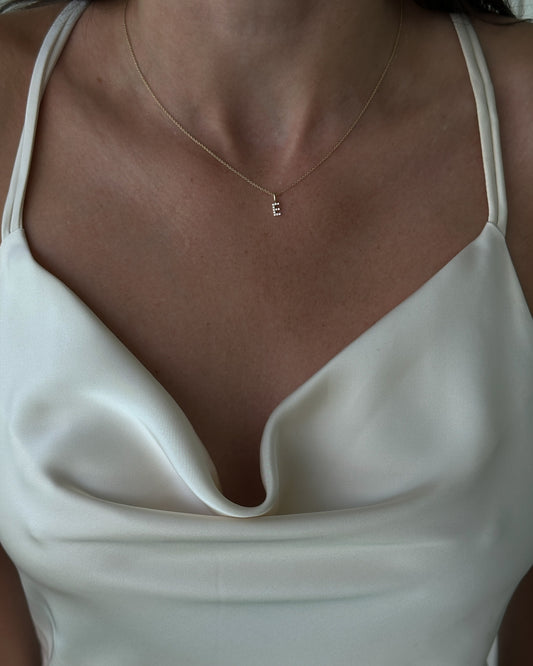
Jewelry lasts best when each piece is kept on its own, dry and without being able to rub against other jewelry. The two most common types of damage occur because the jewelry lies in a shared pile: harder stones scratch softer metal and other stones, and thin chains tangle together so they break when you pull them free. The rest is about keeping moisture, air and lanolin from the skin away from the surfaces.
A diamond is the hardest material that exists, sitting at 10 on the Mohs scale. That is precisely why it is a problem in a jewelry box: a loose diamond ring can scratch the gold on a neighboring piece and grind against other stones. This is the reason separation is the most important principle in all jewelry storage, no matter how expensive or inexpensive the jewelry is.
Why each piece of jewelry should be kept separate
Scratches in gold and white gold almost always come from contact with other jewelry, not from ordinary wear. 14K gold and 14K white gold are relatively soft metals, and a hard stone lying loosely on top of a smooth gold surface leaves fine lines over time. If a diamond ring and a smooth necklace lie in the same compartment, it is the necklace that loses.
The simplest solution is a jewelry box with separate compartments, a case with padded slots for rings, or small zip pouches for one piece at a time. Soft fabric such as cotton or microfiber between the pieces does the same. Chains keep their shape best if they are hung up or laid out flat, so they cannot twist together.
Keep the jewelry dry and out of direct light
Moisture is the primary cause of silver tarnishing and turning dark. A bathroom is therefore the worst place to store jewelry, because the humidity fluctuates every time you take a shower. A dry place in the bedroom or a cabinet is better.
Sunlight and heat are most relevant for colored stones. Gold and diamonds are not harmed by light, but colored stones can change hue over time with strong, sustained sun exposure. If you own jewelry with colored stones, such as single earrings with pink sapphire, a closed case or a drawer is preferable to an open bowl on the windowsill.
A small pouch of silica gel in the box keeps the air dry and slows the tarnishing of silver. It can be reused and replaced once it has absorbed moisture.
How to store rings, chains and earrings separately
The different types of jewelry have different weaknesses, and storage therefore follows the type.
Rings with stones
A ring with a center stone, such as a solitaire ring or a trilogy ring, should lie so that the stone does not touch other jewelry. A ring holder with slots or a separate compartment is ideal. Take rings off before you use hand sanitizer, cleaning products or cream, as film from these products settles into the setting and makes the stone dull. Among Longvé's
rings you will find both slim eternity rings and wider statement models, and the more a ring takes up, the more important it is that it has its own compartment.
Chains and pendants
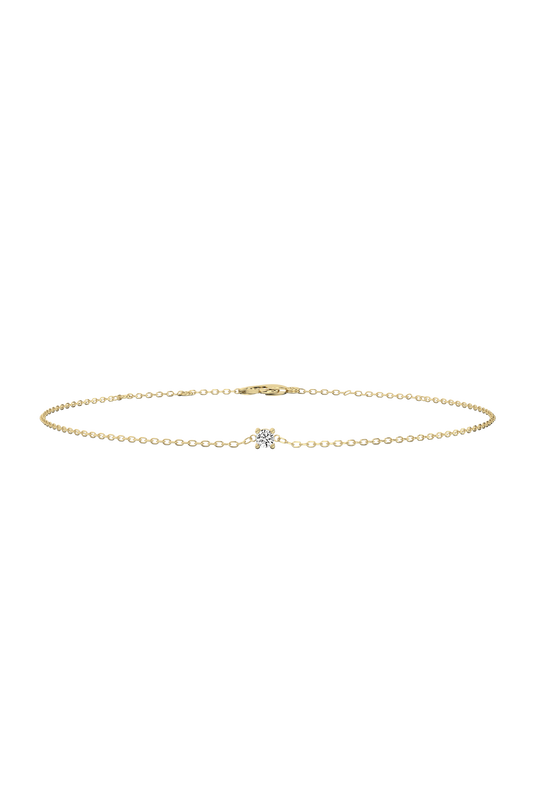
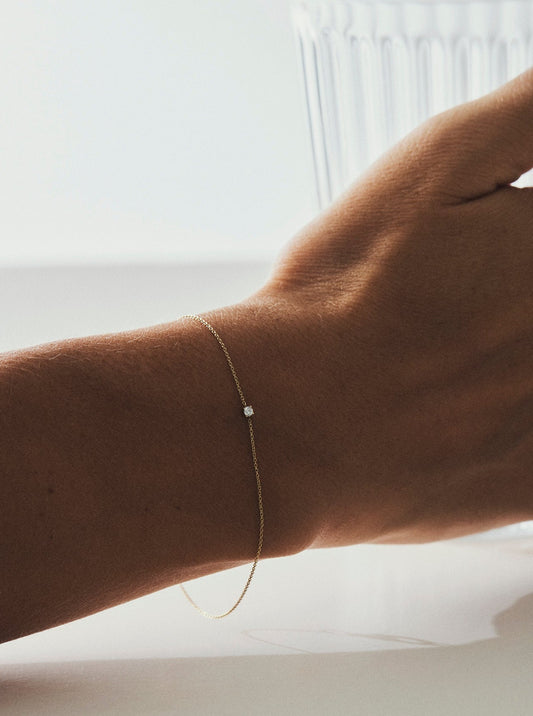
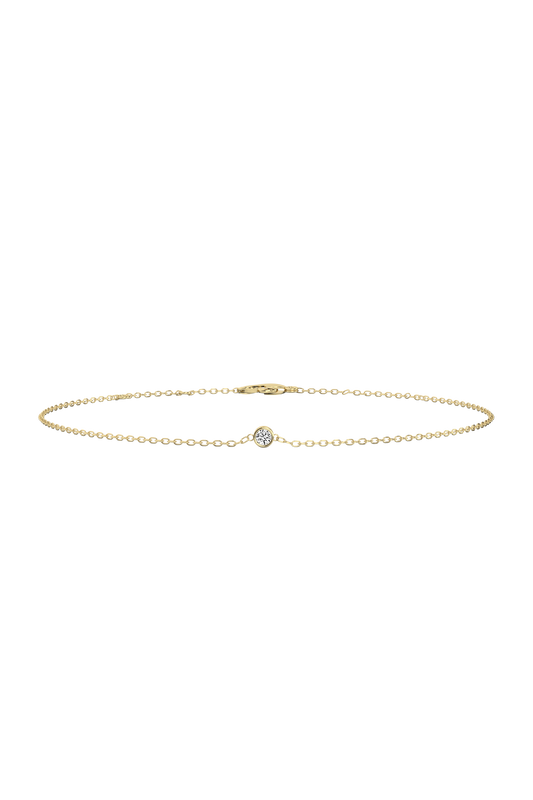
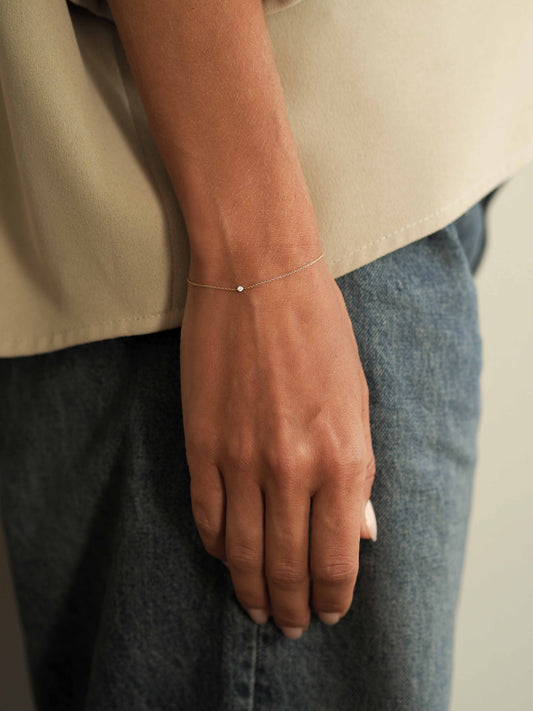
Thin chains are what most often get ruined in storage, because they tangle together and break with mishandling. Close the clasp and hang the chain up or lay it out flat. A pendant is bought separately from the chain, and it can be an advantage to store them apart, so the pendant does not knock against the links of the chain. Among Longvé's
necklaces, several are very fine in the links and benefit from hanging freely rather than lying in a pile.
Earrings and huggies
Earrings are easily lost, and small, snug hoops like huggies are particularly easy to drop. Collect pairs in a small compartment or on an earring card, so you don't lose one. Posts and closures should be wiped off after use. Longvé's
earrings range from simple studs to diamond-set models, and the most delicate ones should lie somewhere they won't be crushed.
How to clean jewelry before putting it away
Clean jewelry keeps better in storage, because skin oils and cream otherwise dry onto the surface. Wipe the jewelry with a soft cloth after use, before putting it back. Gold and diamonds can tolerate lukewarm water with a little mild soap and a soft brush, after which they are dabbed thoroughly dry, so no moisture remains in the setting.
Silver requires a little more attention, because it tarnishes. A dry silver polishing cloth removes early tarnish without scratching. Some signet rings in sterling silver come with black agate, and here you should avoid soaking the stone, as agate does not respond well to prolonged contact with water.
How to store jewelry when traveling
When traveling, the same principles apply, just in a smaller format. A folding case with separate compartments for rings, a closed roll for chains and a fixed spot for earrings prevents things from rubbing against each other in the bag. Always pack jewelry in your carry-on rather than in your checked suitcase.
Never put several rings loosely in the same small pouch, even for a short trip. It is precisely loose contact between hard stones and soft gold that causes scratches, and a weekend trip is just as hard on the jewelry as a fixed storage spot at home, if the pieces lie on top of each other.