How long should a bracelet be?
-

-
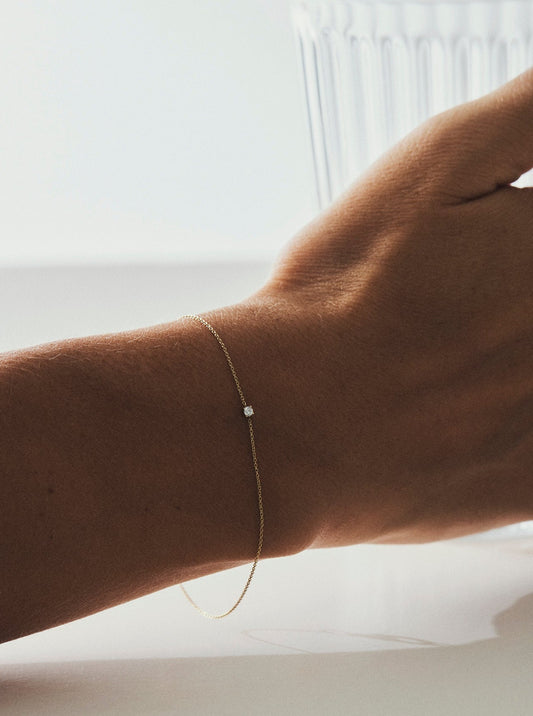
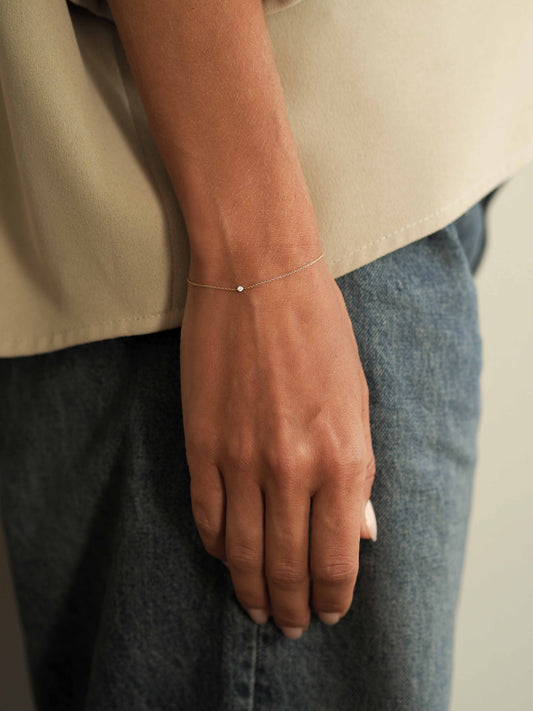
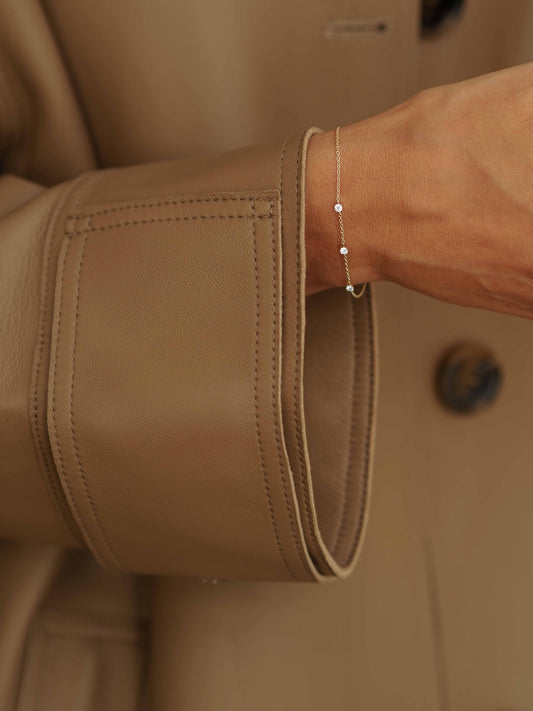
A bracelet should typically be about 1 to 2 cm longer than the wrist's own circumference. If your wrist measures 16 cm, a bracelet of 17 to 18 cm sits comfortably: it rests on the back of the hand without pinching, yet doesn't slide off over the hand. That's the entire basic principle, and the rest comes down to how loosely you personally like to wear it, and what type of bracelet it is.
Start by measuring your wrist. Place a tape measure around your wrist just below the bone that sticks out - where a bracelet naturally rests. If you don't have a soft tape measure, you can use a strip of paper or a piece of string, mark where it meets, and measure the length with a ruler. That number is your starting point.
From the wrist circumference you add on, depending on how you want the bracelet to sit. If you want it close-fitting, add about 1 cm. If you prefer a more relaxed fit, where the bracelet can move freely, add 2 cm or a little more. A finger trick works well along the way: if you can fit a finger between the bracelet and your skin, it sits comfortably loose without being too big.
How many centimetres suit your wrist?
Most adults have a wrist circumference between 14 and 19 cm, and bracelet lengths therefore typically fall in the range of 16 to 21 cm. A slim wrist of 14 to 15 cm often suits a bracelet around 16 to 17 cm, while a stronger wrist of 18 to 19 cm needs 20 to 21 cm to sit properly.
Women usually have a slightly slimmer wrist than men, but that's a rule of thumb, not a rule you can rely on. Your own measurement means far more than gender or an average size, precisely because wrist circumference varies greatly from person to person. That's why the measurement itself is always what determines the length.
How the bracelet type changes the right length
Not all bracelets need to be the same length, even if they sit on the same wrist. A flexible chain bracelet conforms to the wrist and can sit more snugly, while a rigid type doesn't give and therefore needs room to pass over the hand. That's why it's worth knowing the three basic types before you decide on a measurement.
Chain bracelets and tennis bracelets
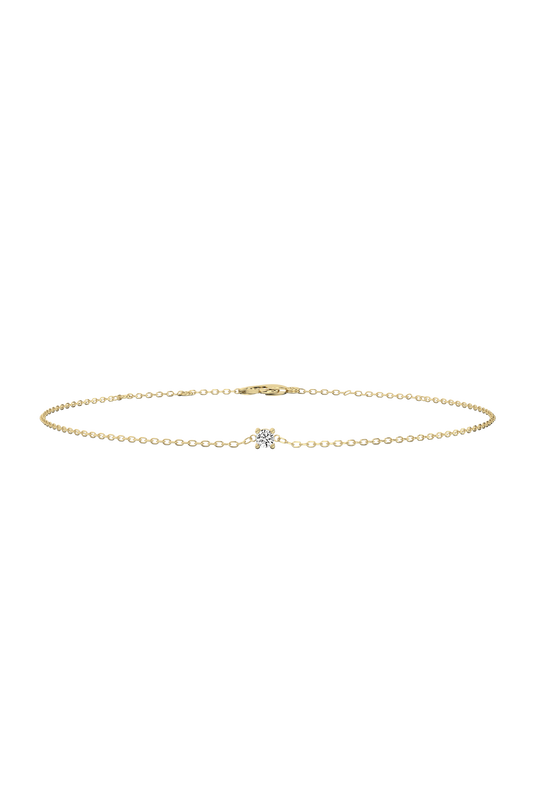
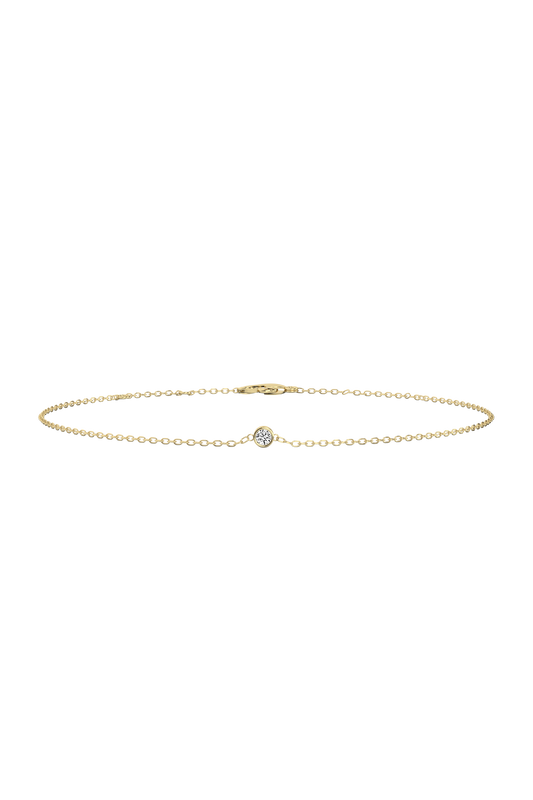
A chain bracelet follows the shape of the wrist and lies softly against the skin. Here the usual rule of 1 to 2 cm on top of the wrist measurement works well. A tennis bracelet, where a row of identical diamonds sits in settings all the way around, belongs to the same category: it's flexible and bends with the wrist, but because the diamonds run along the entire bracelet, many people like it to sit a touch looser, so it can rotate freely and catch the light. A couple of extra centimetres provides that movement.
If you prefer a simpler chain without stones, there are several lengths to choose from among the bracelets, so you can find the one that suits your wrist and your fit.
Bangles and rigid bracelets
A bangle is a fixed, round ring without a clasp, and it isn't measured the same way as a chain bracelet. Since it can't be opened, it has to be able to slide over the hand and still stay on the wrist. Here it's the widest point of the hand - typically across the knuckles when the hand is closed - that determines whether it can be put on at all. A bangle therefore, by definition, sits looser than a chain bracelet and rests freely on the back of the hand. Among Longvé's bangles there are models with diamonds, where the fit is about the circumference of the hand rather than the wrist.
How do you fasten a bracelet while it's on?
Part of the question of length is tied to how the bracelet is fastened. If the length is right, but the clasp is hard to grip with one hand, the bracelet can feel too short, even though the measurement is correct. Most chain bracelets have a spring ring clasp or a lobster clasp, which fastens onto a ring at the other end.
It's easiest to lay the bracelet across your wrist with the clasp facing up, hold the ring end against your skin with your thumb, and guide the clasp into the ring with your other hand. A short extension chain by the clasp makes it easier to reach and at the same time lets you adjust the length slightly up or down. If you need a more detailed walkthrough, it can be found in the article on how to fasten a bracelet with a clasp.
Which hand and which fit suit you best?
Most people wear a bracelet on the hand they use least, that is, the left hand for right-handed people. This is because a bracelet on the passive hand gets in the way less in everyday life and is exposed to fewer knocks. If you choose that option, you can safely go for a fit at the looser end, because the bracelet won't be in the way during work or writing.
The hand you choose also affects how tightly the bracelet should sit. On the active hand the wrist moves more, and a bracelet that's a touch too big will slide back and forth and risk getting caught. A bracelet closer to the wrist's own measurement sits more steadily. If you'd like to read more about choosing the side, it's covered in the article on which arm you wear a bracelet on.
The comfortable length is ultimately personal. Some people prefer the feel of a bracelet that sits snugly and barely moves, while others prefer one that slides easily back and forth on the wrist. If you measure your wrist first and add on according to the feel you're happy with, you'll hit a length that both sits well and stays put.