Can you sleep with jewellery on?
-

-
Yes, you can sleep with jewellery on, and for most people it is neither dangerous nor wrong. But sleep is the situation in which jewellery is exposed to the most unnoticed wear: you turn over, grab the pillow and lie for eight hours straight with full pressure on a ring or a clasp. That is why, for most jewellery, it is a good habit to take it off at night - while freshly pierced ears are the clear exception, where the studs should on the contrary stay in place. The difference lies in what the jewellery has to withstand. A solid pair of earring studs rarely takes any damage from a night's sleep, while a delicate chain, a loose-fitting bracelet or a ring with a stone in a prong setting has a far greater risk of catching, twisting or picking up small scratches. Below we go through which jewellery can safely stay on, which is better taken off, and why fresh piercings follow completely different rules.
Which jewellery can you safely sleep with on?
Earring studs are the type of jewellery that best tolerates the night. A small, flat stud lies close against the earlobe and has no loose parts that can twist or catch in the pillow. A pair of polished stud in 14K gold or a discreet prong stud is therefore what most people can keep in with a clear conscience while they sleep. Close-fitting hoops also do fine. Huggies close right around the earlobe and do not stick out, so they have a hard time catching in the bedding. If you want a pair of earrings that can stay on around the clock, huggies are an obvious choice. The same applies to simple rings without protruding stones: a wide, flat band without edges that can catch rarely bothers anything at night.
Why it can still pay off to take jewellery off at night
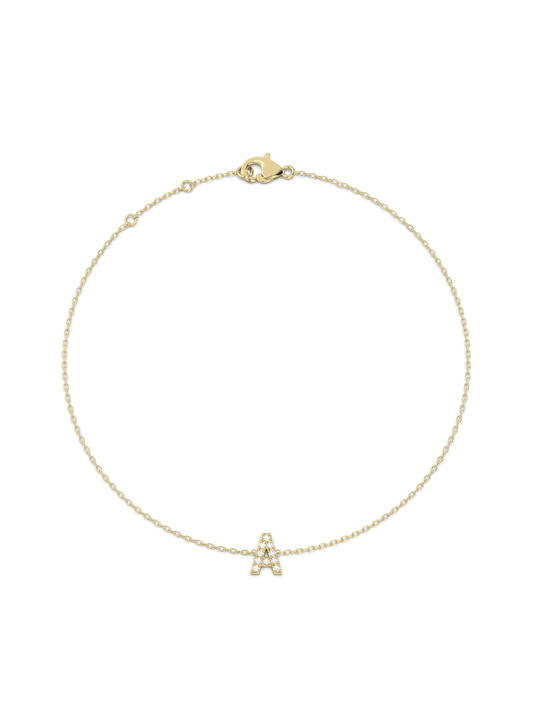
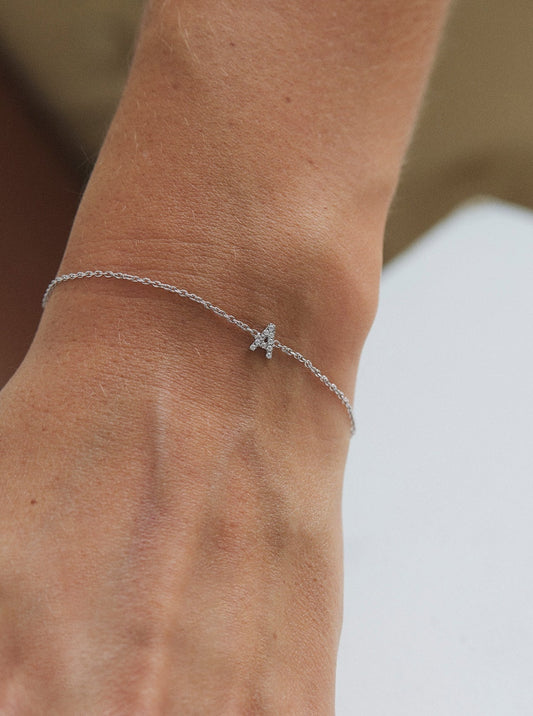
Even though it is rarely directly harmful, there are several reasons to set your jewellery aside before going to bed. Over time, the night is in fact one of the places where jewellery gets the most wear without you noticing it. Chains are particularly exposed. A fine necklace can twist, get knots or pull on the clasp when you turn over in your sleep, and a single strong tug can be enough to bend a link. Bracelets are in the same category: a tennis bracelet with a long row of diamonds in settings often lies loosely around the wrist and can press against the edge of the bed or catch in the duvet when the arm lies over the head. Rings with a stone in a prong setting also belong to those that are best taken off. The prongs that hold the stone are small metal grips that can catch in knitwear and bedding, and repeated small tugs slowly loosen them. A solitaire ring with a single raised centre stone is built exactly that way, and it is best protected by lying in a fixed place at night rather than on the finger. On top of this, grease, soap residue and skin cells collect under stones and in settings when the jewellery is worn around the clock. This makes diamonds in particular less sparkling, because dirt settles on the underside of the stone. A piece of jewellery that gets a break at night and regular cleaning stays both cleaner and nicer for longer.
When can you change earrings for the first time after piercing?
Here the rule reverses completely. When the ears have just been pierced, the first studs must stay in place throughout the entire healing period - including at night. The hole is a fresh wound, and the stud keeps the channel open while it heals. If the earring is taken out too early, the hole can contract or partly close up within a few hours. For pierced earlobes, around six weeks is typically reckoned before you may change earrings for the first time, while cartilage in the upper part of the ear heals more slowly and often requires several months. It is therefore crucial not to fiddle with the studs before the wound has healed through - and to follow the healing time you were given where the ears were pierced. Throughout that entire period you therefore deliberately sleep with earrings on. They must stay where they are, both day and night, until the hole is stable.
When can you sleep without earrings after the first change?
Once the healing period is over and the first pair of studs has been changed without problems, the hole is usually mature enough that you can take the earrings out at night without risk. For most earlobes this happens after the first few weeks, but a new hole still closes up faster than one you have had for years. A good cautious principle for the first few months is to change to a new pair of earrings straight away if you take the old ones out, rather than leaving the ears completely empty overnight. The older and more established the hole becomes, the longer you can leave the ears without studs without the hole contracting. If you are in doubt about whether your own hole is ready, a good rule of thumb is to leave the stud in a while longer rather than risk the hole closing up. Once the hole is fully established, it is a matter of taste whether you want to sleep with your earrings on or not. If you choose to keep them in, a close-fitting model such as a tiny huggies is more comfortable to lie on than a stud with sharp edges or an earring that dangles.
How to store your jewellery when it comes off at night
If you take your jewellery off before bedtime, it is important that it does not just end up in a pile on the bedside table. If several pieces of jewellery lie on top of each other, hard stones scratch the softer gold, and fine chains tangle into knots that are hard to loosen without pulling on the links. Instead, store each piece of jewellery separately. Chains should be hung or laid out flat so they do not twist, and rings and earring studs should be kept apart so that stones and metal do not rub against each other. A fixed spot also means you take the jewellery off every evening instead of only remembering it once it has already spent one night too many on your finger. Diamonds are the hardest natural material that exists and sit at the top of the hardness scale - but precisely for that reason a diamond can scratch both gold and other stones if the jewellery is stored together. This applies whether they are lab-grown or natural diamonds, as the two have the same hardness and the same physical properties. By keeping them apart, you avoid the night's break from the finger instead turning into small scratches in the drawer.